Theopolis Logo

Writing

Explore our collection of theological essays, biblical studies, and reflections on faith and culture.

See all
temp_bg
Biblical Studies

Biblical Allusion and the Meaning of Othello

Understanding Shakespeare’s Biblical references is vital for the interpretation of many, if not all, of Shakespeare’s plays. For Othello , it is especially important, not only because the interpretation of the play is contested among various approaches — feminist, homosexual, post-colonial, Marxist, Freudian, new historical, and others — but also…

by Ralph Allan SmithJune 16, 2017

e99a9492-2
Ecclesiology

Attaining Unity: A Reply to Mike Allen

Mike Allen of Reformed Theological Seminary, Orlando, scores some points in his review of The End of Protestantism . He lodges the fair complaint that my rhetoric sometimes outruns my evidence. He argues that more stress on the present reality of the church’s unity deepens the tragedy of division; divisions…

by Peter LeithartJune 13, 2017
trinity-1-2
Eschatology

Comic Trinity

I begin with two observations. First, on any millennial view, the Christian account of history is progressive, moving from the garden to the city. It is eschatological not only in that there is an end, but that the end is a glorified beginning, not merely a return to origins. To…

by Peter LeithartJune 8, 2017
e99a2225
Ecclesiology

Political Church

The church is a new form of polity that erupts into the world as much as the Son of God comes into the world. It’s a real-world political alternative to the polities of the ancient world. It resolves many of the political dilemmas of the ancient world, though not simply…

by Peter LeithartJune 6, 2017
img_1456
Baptism

Baptism Impasse: Baptists vs. Presbyterians, (Part 2)

In my last post , I explained how Baptists really have a “one-ordinance-one sacrament” ecclesiology. I said this: “what Baptists really believe, in modern parlance, is that there is one ordinance (baptism which is a sign or symbol only) and one sacrament (the Lord’s Supper in which feeding upon Jesus…

by Mani MarprelateMay 30, 2017
medieval-knights
Political Theology

Obedience of Rulers

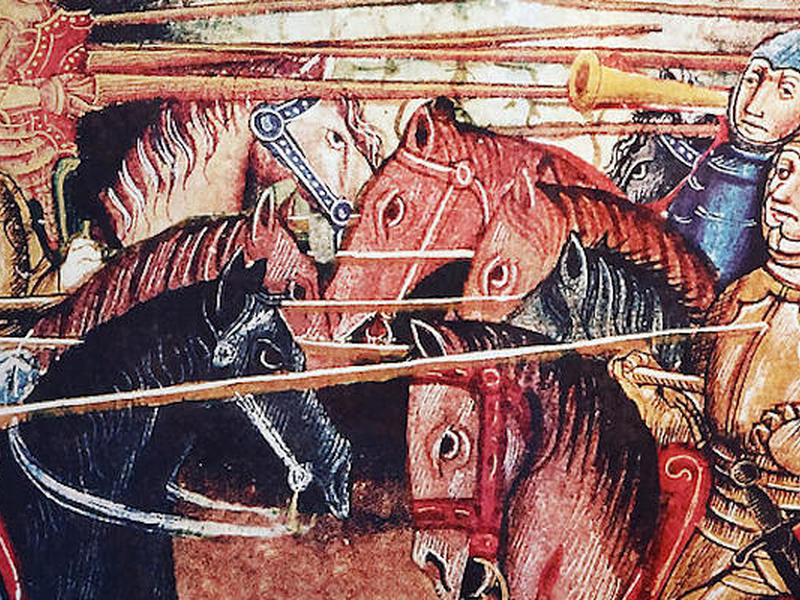
One of the most extensive and penetrating responses to the Yoder-Hauerwas attack on Constantiniansm is found in Oliver O’Donovan’s Desire of Nations , in a chapter entitled “The Obedience of Rulers.” O’Donovan defines the word “Christendom” as “a historical idea,” specifically “the idea of a professedly Christian secular political order,…

by Peter LeithartMay 30, 2017

Showing page 111 of 309

See all
See all

Kiss of peace

David Cunningham writes, “What was one a ‘kiss of peace,’ uniting bodies in an almost frighteningly intimate way, now often consists only of a tentative handshake and a mumbled greeting.  Of course, this does still provide an opportunity to meet the other face to face, body to body; and so…

November 12, 2009

Children in the church

In his Adults and Children in the Roman Empire (1989), Thomas Wiedemann remarks on the difference between pagan and Christian conceptions of infant death: “For the pagan, premature death was a disaster because the child’s life was wasted; for Augustine, a child who died prematurely might have had as complete…

November 12, 2009
Philosophy

Prodigal words revisited

A friend, Aaron Cummings, writes in response to my comments about Derrida and prodigal words: “A few days ago, you alluded to Derrida, that words run prodigal from the speaker/writer. You said that this was true of Mankind’s words, but not of God’s. It seems to me that this is…

November 11, 2009

Multiplicity

For Athanasius, creation’s multiplicity is not a defect but part of its glory.  No created thing supplies all need; no single light illuminates day and night.  So there are many lights.  Each light is its own essence, but these essences cooperate to fill what is lacking in the others.  The…

November 11, 2009
Theology

God of small things

Arianism is not just about Christology.  It’s about theology proper. Arius said that God made His Son before the creation because the creation could not endure the “untempered hand” of the Father.  It needed the Son as mediator.  Athanasius sees in this a false idea of God.  God, He says,…

November 11, 2009

Cur Deus Homo?

Athanasius notes that before the incarnation humanity was under the dominion of false gods, enslaved to corruption and idolatry.  The Word took flesh to deliver us from that slavery, and the form of that deliverance was an act of worship: “in this body offering Himself for all, He might deliver all from false worship and…

November 11, 2009

Showing page 1324 of 2212

Browse by Category

In Medias Res

Your weekly digest for all things Theopolis.

Donate

Theopolis is nearly 100% donor-supported. Consider joining us on our mission.