
Theopolis Logo

Writing

Explore our collection of theological essays, biblical studies, and reflections on faith and culture.

See all
2001_a_space_odyssey_1-970x545
Biblical Horizons

2001: A Space Odyssey

In the November 1993 issue of Open Book Peter Leithart commented briefly on gnosticism. The film 2001 is a great specimen of gnosticism, and is worth viewing as a Sunday School project for an adult class. The author of the basic story was Arthur C. Clarke, an old-school science fiction…

by James B. JordanJanuary 6, 1994
alfred-hitchcock
Biblical Horizons

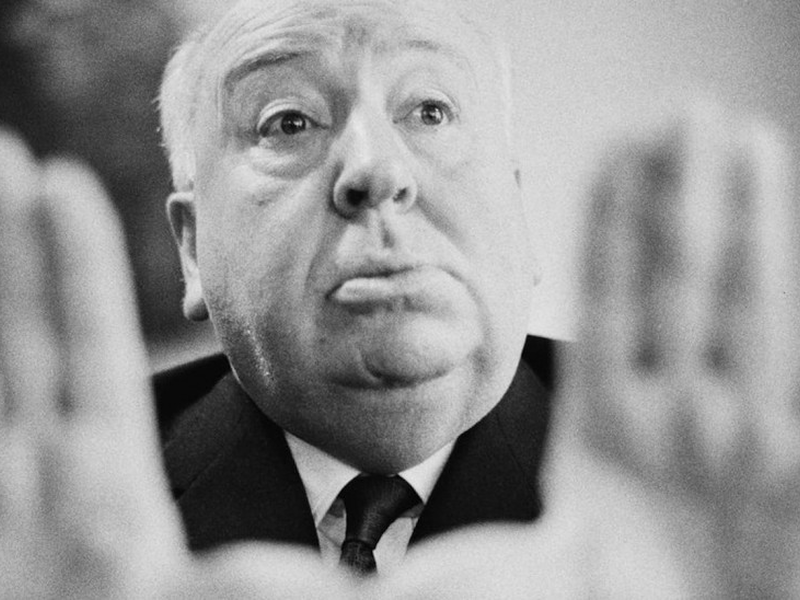
Two Films by Alfred Hitchcock

Alfred Hitchcock’s earlier movies display a strongly moral, even Christian, point of view, and certainly can be enjoyed by Christian viewers. His later works, such as Psycho , The Birds , and his television series, are not as clearly moral in tone. In these later efforts, Hitchcock brought humorous or…

by James B. JordanJanuary 6, 1994

david-weber-fwuo_zluhnw-unsplash
Leviticus

Cult and Communication

“What art thou, thou idol ceremony?” asked Henry V during his midnight rounds of the English camp near Agincourt. His answer was that ceremony was both nothing and everything. It was nothing in the sense that it offered no guarantee that the king would be fit for office. Contrary to…

by Peter LeithartDecember 20, 1993
screenshot-2023-07-27-at-10-25-35-am
Biblical Studies

Which Sacred Writings?

You, however, continue in the things you have learned and become convinced of, knowing from whom you have learned them; and that from childhood you have known the sacred writings which are able to give you the wisdom that leads to salvation through faith which is in Christ Jesus. All…

by Peter LeithartDecember 20, 1993
daniel-day-media-bzkf1nk-vpq-unsplash
Biblical Horizons

The Production of the New Testament Canon: A Revisionist Suggestion

My research has led me to the conviction that there are three major periods of Biblical history, which lead to a fourth. These are the Ages of the Father, the Word, and the Spirit. The First Age, that of the Father, is recorded in the book of Genesis. It focuses…

by James B. JordanDecember 6, 1993
Exodus

Egypt in Biblical History

Both Bible history and the current consensus chronology of the ancient world are tied up intimately with Egyptian history and chronology. Thus, as we broaden Biblical Chronology beyond the matter of adding up numbers and try to integrate Biblical chronology with the ancient world, the place to start would seem…

by James B. JordanDecember 6, 1993

Showing page 282 of 309

See all
See all

Hegel on Trinity

From an article by Anselm Min. “The three Persons are thus mutually internal in the unity and totality of the divine process, of which the Father is the originating principle, the Son the pluralizing, and the Spirit the reintegrating and unifying principle, and from which none could be separately considered.…

October 20, 2009
Theology

Israel’s Difference

Robert Jenson writes, “the identity of Israel’s God, his difference from other gods, is precisely that Israel’s God is not eternal in the way other gods are, not God in the same way.  That the past guarantees the future is exactly the deity of the gods, but Yahweh always challenges…

October 19, 2009

Consider the doves

Consider the birds, Jesus said.  And the lilies. Solomon had: “How beautiful you are, my darling, how beautiful you are!  Your eyes are doves” and “Like a lily among the thorns, so is my darling among the daughters.” Jesus assures us that our Father feeds and clothes us.  He might…

October 19, 2009
Philosophy

Hegel’s project

Hegel wants to rebut the Enlightenment dismissal of Christianity.  He doesn’t do this by reaching back to pre-critical forms of faith, but by ingesting criticism, deconstructing traditional theology, and reconstructing what he claims is a purer form of faith.  Rowan Williams captures the reconstructive process very concisely: “from the fundamental…

October 19, 2009

Not Good For Man

It is not good for man to be alone.  Hegel says, It is impossible. “I have my self-consciousness not in myself but in the other.  I am satisfied and have peace with myself only in this other - and I am only because I have peace with myself; if I…

October 19, 2009
Philosophy

Thought and context

Summarizing “logic and spirit” in Hegel, Rowan Williams describes the pressure toward relationality that is inherent in any act of thought: “We think in relation to particulars; but we cannot, quite strictly cannot, think particulars simply as particulars, because we can’t concretely think a pure self-identity.  To think a particular…

October 19, 2009

Showing page 1339 of 2212

Browse by Category

In Medias Res

Your weekly digest for all things Theopolis.

Donate

Theopolis is nearly 100% donor-supported. Consider joining us on our mission.