Theopolis Logo

Writing

Explore our collection of theological essays, biblical studies, and reflections on faith and culture.

See all
e99a9334
Advent

Stretching Christmas

For many people Christmas comes on December 25 and is over December 26. The tree is taken down along with the lights and the other decorations, and everyone begins setting the house in order for the new year. No more Christmas hymns. No more celebrations (well, until New Year’s Eve).…

by Steve WilkinsDecember 24, 2016
ascension
Advent

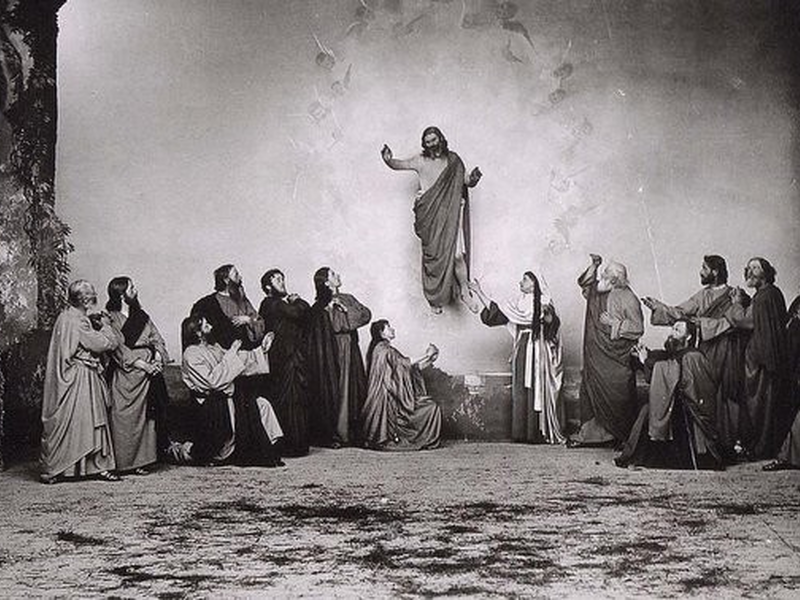
Ascension and Incarnation

The Ascension and the Incarnation should not be disconnected in our Christmas thinking or celebrations. As N.T. Wright notes, the ascension is "a central and vital feature without which all sorts of other things start to go demonstrably wrong. . . . where the ascension has been ignored or misunderstood,…

by Roy AtwoodDecember 23, 2016
nativity-rembrandt
Advent

Christmas Light

“In the Word was life, and the life was the light of men. And the light shines in the darkness.” Thus John describes the incarnation of the Son. He comes as the living and life-giving light of the world. That’s good news. In the beginning, God spoke and light shone…

by Peter LeithartDecember 23, 2016
nativity-chagall
Advent

The Spirit of Christmas

Christmas is all about Jesus. The angels announce Jesus’ birth, shepherds and wise men come to see Jesus, Herod wants to kill Jesus. We occasionally think of the Father who sent the Son, but we keep returning to the Son made flesh in Bethlehem’s manger. Meanwhile, as always, the Spirit…

by Peter LeithartDecember 22, 2016
nativity
Advent

The Humility of God

Christmas is about many things, but one of the chief things revealed in the gospel of Christmas is the humility of God. We don't often think of humility as an attribute of God. If God is glorious and exalted, we think, He must be haughty and proud and self-centered. We…

by Peter LeithartDecember 21, 2016
screenshot-2025-12-15-at-8-35-45-am
Advent

Advent of Unity

John famously begins his Gospel with a piece of theology: “In the beginning was the Word, and the Word was with God, and the Word was God.” Matthew starts with a genealogy. John celebrates Advent with a hymn, Matthew with a list. For John, Jesus is the Word of creation…

by Peter LeithartDecember 20, 2016

Showing page 120 of 309

See all
See all
Philosophy

Courtly love

A web summary of Lacan’s negative account of desire says, “In constructing our fantasy-version of reality, we establish coordinates for our desire; we situate both ourselves and our object of desire, as well as the relation between. As Slavoj Zizek puts it, ’ through fantasy, we learn how to desire’…

October 14, 2009

Desire

“I am my beloved’s, and his desire is for me,” says the bride in the Song of Songs (7:10). “Desire” is the same word used in Genesis 3:16 and 4:7, both of which describe a desire for authority, domination, rule, a threatening desire.  The bridegroom of the Song reverses the…

October 14, 2009

Up from deism

We’re all deists.  The design of the universe shows that a Great Intelligent Something is responsible for it. No, says Athanasius.  The design of the universe is the impress of eternal wisdom on the creation.  The cunning of creation doesn’t manifest “God,” but eternal creative Wisdom, the eternal Word, whose…

October 13, 2009

How we say what we say

Thomas writes that “to signify something by words or merely by the construction of images . . . yields nothing but the literal sense” and “poetic images refer to something other than themselves only so as to signify them; and so a signification of that sort goes no way beyond…

October 13, 2009

Typology and Allegory

Denys Turner notes that the Song of Songs presented challenges to the “minority” of medieval theologians who argued for a more rigorous grounding of spiritual in literal senses.  For these, the text speaks literally, referring to specific events; and these events, as Thomas says, providentially typify future events. To qualify…

October 13, 2009

Image and Likeness

The distinction of image and likeness has been a common one in the history of theology, East and West, and in the West at least it overlaps with the nature/grace dualism.  Image for Bonventure “denotes a kind of ‘shape,’ that is, a quantitative feature of quality or a qualitative feature…

October 13, 2009

Showing page 1342 of 2212

Browse by Category

In Medias Res

Your weekly digest for all things Theopolis.

Donate

Theopolis is nearly 100% donor-supported. Consider joining us on our mission.