Theopolis Logo

Writing

Explore our collection of theological essays, biblical studies, and reflections on faith and culture.

See all
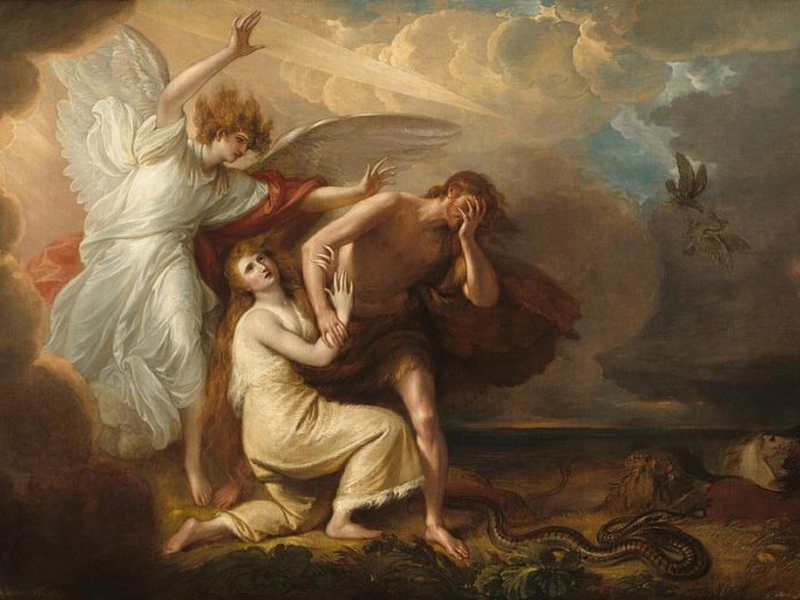
adam-and-eve-garden-768x512
Biblical Horizons

The Dominion Trap

In Genesis One, God told Adam and Eve to "be fruitful and multiply, and fill the earth, and subdue it; and rule over the fish of the sea and over the birds of the heavens, and over every living thing that moves on the earth" (Gen. 1:28). In Christian worldview…

by James B. JordanJuly 2, 1990

ivan-aleksic-16yxcjsoaek-unsplash
Biblical Studies

Building the Church

"And I also way to you that you are Peter, and upon this rock I will build My church; and the gates of Hades shall not overpower it" (Matthew 16:18). Matthew 16:13ff. has historically been one of the most oft-cited passages of Scripture. Throughout the Middle Ages, it was used…

by Peter LeithartJune 19, 1990
timothy-eberly-djj49s6ud2o-unsplash
Matthew

Ephraim in Redemptive History

One of the important themes of the synoptic gospels is Jesus’ rejection of Israel and the transfer of God’s favor to the New Israel, the Church. A clear statement of this theme is found in the parable of the vineyard owner in Matthew 21:33-46. Jesus explained the meaning of the…

by Peter LeithartJune 19, 1990
original
Biblical Horizons

Advice From a Sojourner, Part 7

11. There is a type of person [a generation] who curses his father, And does not bless his mother. 12. There is a type who is pure in his own eyes, Yet not washed from his filthiness [manure]. 13. There is a type — oh how lofty are his eyes!…

by James B. JordanJune 2, 1990
mick-haupt-eq2z9ay9wws-unsplash
Leviticus

A Male Without Defect

Under the Levitical law, whole-burnt offerings from the herd and flock had to be male. No such specification is made with respect to birds (cf. Lev. 5:7-10). Why did the Lord demand that only males be offered as whole-burnt offerings? The easy answer is that the whole-burnt offering typified Christ,…

by Peter LeithartMay 19, 1990
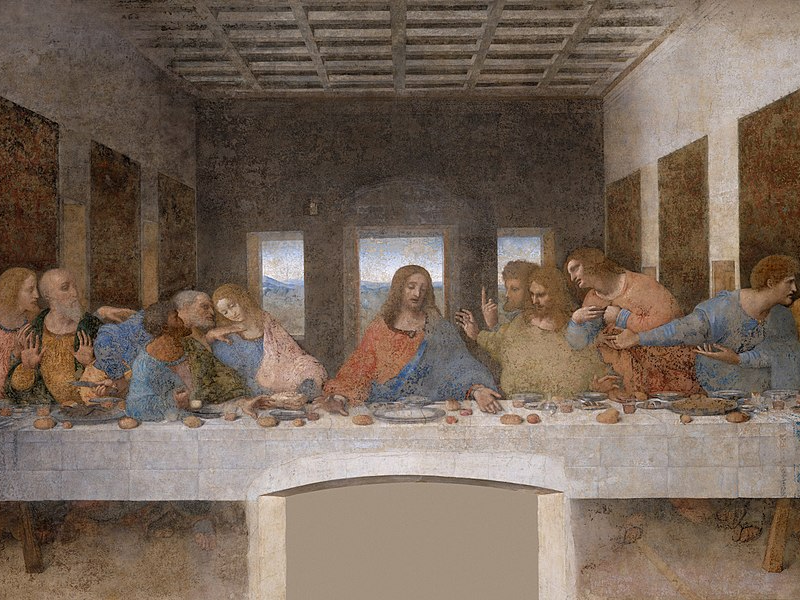
the_last_supper_-_leonardo_da_vinci_-_high_resolution_32x16
Matthew

He Shall Be Called A Nazarene

Matthew 2:13-23 has a tripartite structure, reporting briefly three events of the early years of Jesus’ life. Matthew ends his narrative of each event with a "fulfillment formula." Jesus’ flight to Egypt and His Exodus back into Israel was a fulfillment of Hosea’s words, "Out of Egypt I call my…

by Peter LeithartMay 19, 1990

Showing page 303 of 309

See all
See all
Art

Aesthetic enjoyment

Adorno writes that enjoyment is not the be-all of art.  Certainly it isn’t for the producers of art: “If you ask a musician if he enjoys playing his instrument, he will probably reply: ‘I hate it’ . . . People who have a genuine relation to art would rather immerse…

September 24, 2009

Soteriology in time

Soteriology is eschatology, and that means soteriology  has to have an already/not yet structure.  Rejecting either justification by faith or judgment according to works breaks the bond of eschatology and soteriology.  Another way to say this is soteriology is about what happens in time . The alternatives are: 1) Antinomian:…

September 23, 2009

God acknowledging God

Commenting on the “seal” in Song of Songs 4:12, Luther writes, “In the same way we Christians are now sealed by the Word, Baptism, and the Sacramental of the Altar, by which we are distinguished from all other races, not just before the world, but rather in God’s own judgment.”…

September 23, 2009

Film, actors and audience

In his classic essay on the “work of art in the age of mechanical reproduction,” Walter Benjamin made some trenchant observations on the way film affects actors and audiences.   Importantly, he believes these effects are not the result of some perversion of the medium of film, but inherent in…

September 23, 2009

Adam and Elohim

Paul Niskanen has an insightful analysis of Genesis 1:27 in the latest JBL .  He starts with the question of whether Barth’s view that the image of God is found in relationality and specifically in sexual difference has any exegetical support.  He reviews the current discussion, and notes that there…

September 23, 2009

Heidegger’s hermeneutics

Ouch!  Schaeffer again, this time on Heidegger’s interpretive methods: “Paraphrase, translation, dismantling of the syntax, making the text autonomous with regard to the concrete subject who utters it, absolute silence regarding the poetic form: to these five characteristics we must add hermeneutic authoritarianism,” the last of which “postulates an opposition…

September 22, 2009

Showing page 1346 of 2212

Browse by Category

In Medias Res

Your weekly digest for all things Theopolis.

Donate

Theopolis is nearly 100% donor-supported. Consider joining us on our mission.