Theopolis Logo

Writing

Explore our collection of theological essays, biblical studies, and reflections on faith and culture.

See all
aaron-burden-h8s0pf2rcqs-unsplash
Galatians

The Restoration of the Galatians

While controversies over the writings of Paul continue in various corners of the intellectual globe, the word of God given through Paul and his scribe and all of the church’s interpreters and translators over the last two millennia is still readily available to the lofty and the lowly. Paul, as…

by Grace LangnessMarch 25, 2013

kiwihug-l4gw27xzn1i-unsplash
Deuteronomy

Law and History: How to Read the Law of Moses (Part 2)

The second in a series of studies in Deuteronomy. Deuteronomy 22:30: A man shall not take his father’s wife, and shall not uncover his father’s wing (Hebrew: kanaf ). There are a number of unusual features in this law that mark it out from the previous context, indicating that it…

by Ralph Allan SmithMarch 20, 2013
200403-moss-pilate-tease_pncfq5
History

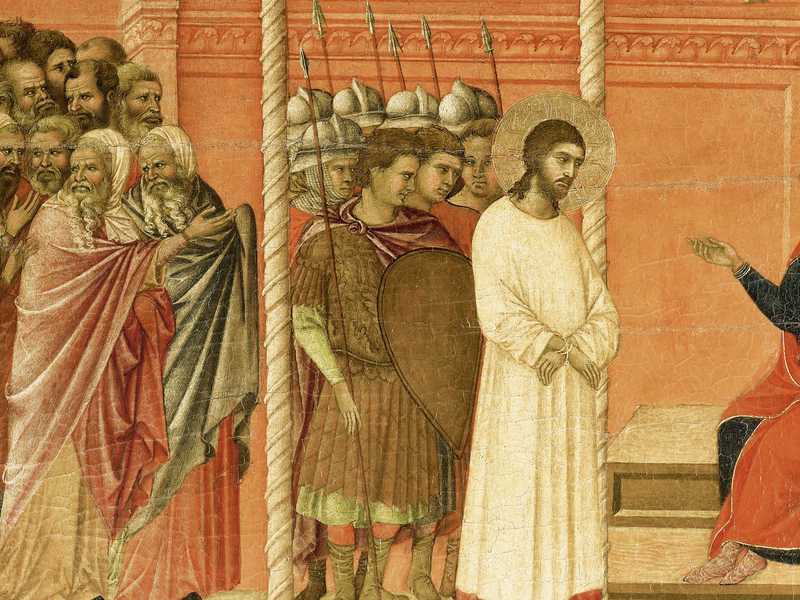
Victimhood and the Gospel

The texts of Christianity have been slowly at work, under the power of the Holy Spirit for 2000 years now. If we could be magically transported back into the world of two millennia ago, modern Americans would be shocked at the cruelty of that world. There was no concern for…

by Richard BledsoeMarch 18, 2013
aaron-burden-1ebsmyrau-s-unsplash
Luke

The Dysfunctional Family of the Gadarene Madman

The Story of the Gadarene Madman is told in all three synoptic Gospels (Matthew 8:28-34, Mark 5:1-20, Luke 8:26-37). Jesus ventures into a Gentile area when He passes over the Sea of Galilee. Upon disembarking from his boat, he is immediately met by a demon-possessed madman. Upon meeting Jesus, he…

by Richard BledsoeMarch 13, 2013
aaron-burden-1ebsmyrau-s-unsplash
Deuteronomy

Law and History: How to Read the Law of Moses

Part 1 of a multi-part series of studies on Deuteronomy 22:30-23:8. Eric Auerbach, in his classic work on Western literature, devotes his first chapter to contrasting Homer with the Bible. Of Homer, he writes of the “need of Homeric style to leave nothing which it mentions half in darkness and…

by Ralph Allan SmithMarch 12, 2013
markus-winkler-aid-xyrtlec-unsplash
Theopolis News

James Jordan in Korea, Japan

Trinity House Fellow James B. Jordan will be a speaker at an International Conference on Biblical Symbolism that will be held in Seoul on Monday, May 27 in 2013. He will address "The Importance of Biblical Symbolism and Symbolic Interpretation of the Bible." The conference will have three other speakers…

by Peter LeithartMarch 9, 2013

Showing page 197 of 309

See all
See all
Art

Anxiety of influence

RG Collingwood has a whale of a time excoriating individualistic conceptions of art.  He recognizes a theological motif behind the post-romantic notion of the isolated artistic genius: “Individualism conceives a man as if he were God, a self-contained and self-sufficient creative power whose only task is to be himself and…

September 18, 2009

Triune concreteness

Hegel writes that the Trinity enables Christianity and especially Christian art to attain a concreteness impossible in Judaism and Islam: “When we state . . . of God thathe is simple One, the Supreme Being as such, we have thereby merely given utterance to a lifeless abstraction of the traditional…

September 18, 2009

Proverbs 27:12-18

PROVERBS 27:12 As we have seen repeatedly in our study of Proverbs, wisdom is a kind of foresight, an ability to foretell the future, an ability to see down the road. The prudent or “crafty” ( arum ) man can see the evil ahead and does what he needs to…

September 18, 2009

Medieval economics

Henri Pirenne, in his Economic and Social History of medieval Europe, describes the regulation of economic life in medieval towns during the twelfth and thirteenth centuries. Pirenne is admittedly old news, and perhaps more recent studies have corrected some of his claims. The town government had two main aims: “publicity…

September 17, 2009
Economics

Bad Samaritans

Ha-Joon Chang argues in Bad Samaritans: The Myth of Free Trade and the Secret History of Capitalism that highly developed economies impose unfair and hypocritical demands on developing economies.  In particular, the nations that control the international trade and monetary agencies require that developing economies open their markets to imports,…

September 17, 2009

Byzantine economics

A discussion this morning concerning the economic impact of the gospel got me to thinking about Byzantium.  What kind of economic system did the Eastern Christian empire, with its centralized state and luxurious capital, have? I found some help in Angeliki Laiou and Cecile Morrison’s The Byzantine Economy.  I include some…

September 17, 2009

Showing page 1349 of 2212

Browse by Category

In Medias Res

Your weekly digest for all things Theopolis.

Donate

Theopolis is nearly 100% donor-supported. Consider joining us on our mission.