Theopolis Logo

Writing

Explore our collection of theological essays, biblical studies, and reflections on faith and culture.

See all
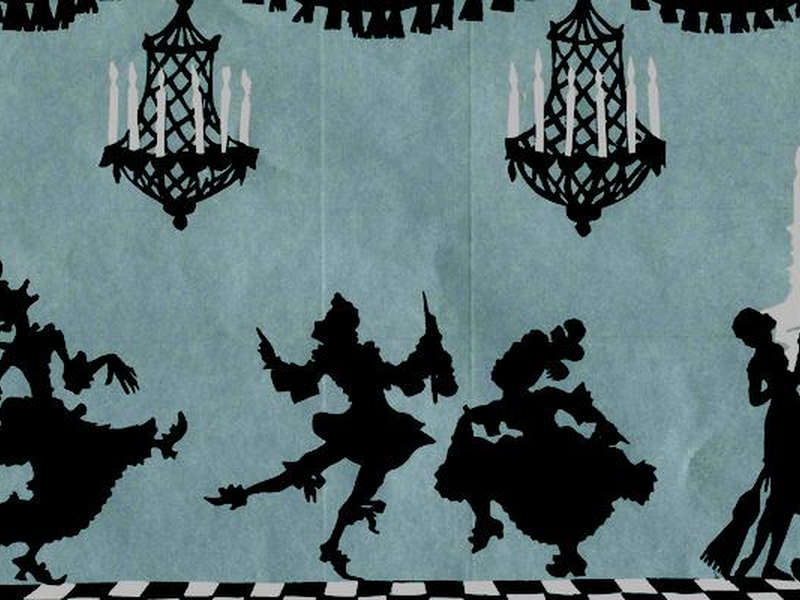
cinderella
C. S. Lewis

On Reading Fairy Tales

One of the main characters of That Hideous Strength by C. S. Lewis is Mark Studdock, who was a sociologist but his true passion was being a part of the so called “inner circle.” He wanted to belong to the elite that would bestow glory and power. On the other…

by Bogumil JarmulakMay 26, 2015

ceilingfromtheimmaculateconceptionchapel
Acts

By the Spirit

The first Pentecost meant many things, fulfilling many types, shadows, and prophecies from the Old Testament. Pentecost marked the beginning of a new creation, and a new humanity. Just as the Spirit hovered over the waters of the original formless and void creation to shape and fill it, so the…

by Peter LeithartMay 21, 2015
tim-marshall-k2u71wv2ei4-unsplash
Interview

Student Profile - Clint Hail

Clint Hail has had an exciting, varied life. A West Point graduate and a former infantry officer, he now serves as Community Transformation Director in Costa Rica for e3 Partners Ministries. Clint has also attended two Theopolis Institute courses. Clint recently told Theopolis about his experiences in the military, his…

by TheopolisMay 20, 2015
skyler-gerald-oygna91tfis-unsplash
Homosexuality

Music in Wartime

Before the summer is out, the US Supreme Court will hand down a decision in Obergefell v. Hodges , the same-sex marriage case. Every other week, ISIS releases a new video of masked fighters beheading Christians, and the rest of the Middle East is in chaos. Boko Haram terrorizes parts…

by Peter LeithartMay 19, 2015
banner
Theopolis News

New Theopolis Board Members

The Theopolis Institute Board added three new Board members at its semi-annual Board meeting on May 16: Dr. Roy Atwood, Pastor Uri Brito, and Rod Olps, Jr. Formerly President of New Saint Andrews College in Moscow, Idaho, Atwood was recently appointed Abraham Kuyper Distinguished Professor of Classics at Morthland College…

by TheopolisMay 18, 2015
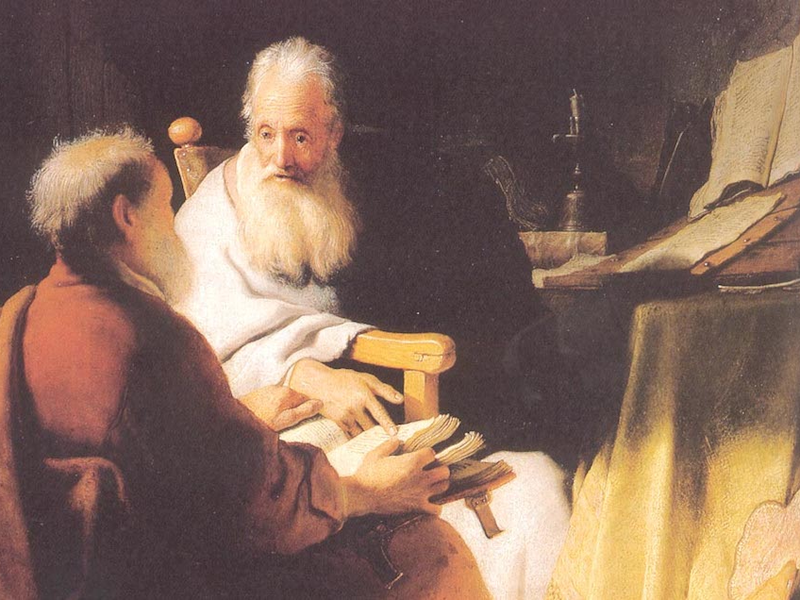
peter-and-paul
Galatians

Galatian Temptations

The kingdom of God has come upon us, Jesus said. The justice of God is revealed in the gospel, Paul said. Whoever is in Christ, there is new creation. Isaiah's visions of lions and lambs and a peaceable kingdom are visions about the effect of the Messiah's first advent. If…

by Peter LeithartMay 14, 2015

Showing page 153 of 309

See all
See all

Articulated time

According to Pickstock, Augustine’s musical ontology is not a mere subordination of space to time, or a univocal “Dionysian flow”: “just as important as the priority of time, for Augustine, is the insistence on articulation into distinct musical units or phrases, the very move which allows a stress upon the simultaneity…

September 14, 2009

Creation ex nihilo

Nothing comes from nothing.  That seems obvious, and Christians have traditionally had some difficulty explaining why creatio ex nihilo is a defensible violation of that basic principle. According to Catherine Pickstock, Augustine viewed creation ex nihilo as the most rational position.  All around us, “things are continuously coming to be…

September 14, 2009
Politics

Secular

In responding to Milbank’s analysis of Augustine on the secular, RA Markus ( Christianity And the Secular (Blessed Pope John XXIII Lecture Series in Theology and Culture) ) borrows MJ Hollerich’s summary of Milbank that there is no “neutral public sphere in which people can act politically without reference to…

September 14, 2009
Art

Kantradictions

Jean-Marie Schaeffer ( Art of the Modern Age: Philosophy of Art from Kant to Heidegger (New French Thought Series) has a blast pointing out the contradictions in Kant’s aesthetics. Most of them arise from Kant’s insistence that the judgment of taste is founded on “the form of a finality” that…

September 12, 2009
Philosophy

Effects and Causes

Can effects double as causes? Kant, still working with some form of final causality, thinks so: There are cases when “the thing that for the moment is designated effect deserves none the less, if we take the series regressively, to be called the cause of the thing of which it…

September 12, 2009
Art

Gnostikant

Evidence that Hamann had Kant right: In explaining taste as a common sense, he notes that this common sense of beauty can be arrived at by a process of stripping off whatever belongs to our perception and prejudice. That is, we put “ourselves in the position of every one else,…

September 12, 2009

Showing page 1351 of 2212

Browse by Category

In Medias Res

Your weekly digest for all things Theopolis.

Donate

Theopolis is nearly 100% donor-supported. Consider joining us on our mission.