Theopolis Logo

Writing

Explore our collection of theological essays, biblical studies, and reflections on faith and culture.

See all
pawan-sharma-vt2efwhbs-e-unsplash
Authority

Eldership and Maturity, (Part 2)

(continued from previous issue) Between 30 and 50 What did the Levites do between age 30 and 50? Numbers 4 shows us that they carried the house of God on their shoulders. Lifting up the Lord is an image of worship in the Bible, and David’s restructuring of the Levites…

by James B. JordanJuly 8, 1995

venice-la-distruzione-del-tempio-di-gerusalemme-francesco-hayez-gallerie-accademia-venice
Romans

The Great Hangover, Parts 1-2

When God created the world, He created two lands: the Throne-land of Eden (entered through the sanctuary-garden, the Garden of Eden), and the Outlying Lands, such as the lands of Havilah and Cush. This essentially bi-polar world is the world of the Old Creation, and it continued to exist until…

by James B. JordanJuly 5, 1995
Architecture

Concerning Colors, Architecture, and Sacraments

Color is inescapable, except for those who are color blind. In our church architecture, we either employ color schemes that are helpful to worship, or we employ color schemes that are not helpful. Of course, this assertion merely begs the question: What color schemes are most helpful. God showed interest…

by James B. JordanJuly 4, 1995
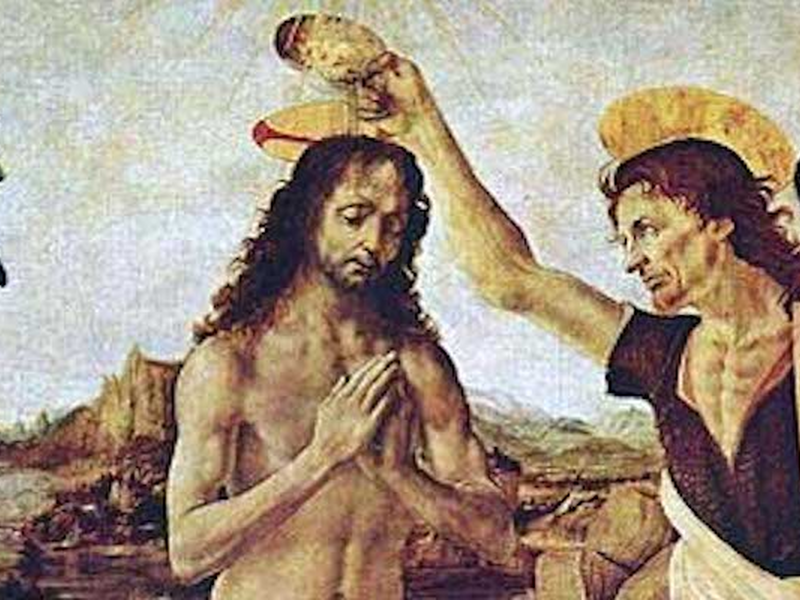
baptism-of-christ
Baptism

Jesus’ Baptism Into Priesthood

As I noted in an earlier article in Rite Reasons , the Church Fathers Tertullian, Ambrose, and Augustine all claimed that baptism inducts the baptized person into membership in the royal priesthood of the church, and Thomas Aquinas said that baptism, by imprinting an indelible “character” on the soul, confers…

by Peter LeithartMay 26, 1995
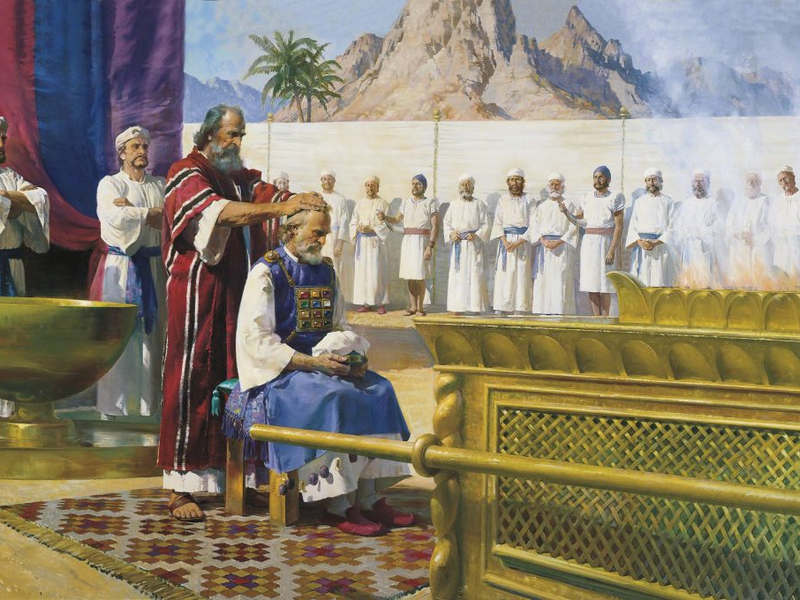
moses-gives-aaron-priesthood-39465-wallpaper
Baptism

Renewing Circumcision

When the Aaronic priests were ordained, the blood of the ram of "filling” was placed on the lobe of the right ear, the right thumb, and the right big toe (Lev. 8:22-24). Similarly, the cleansing rite for a leper included smearing the right ear lobe, thumb, and big toe with…

by Peter LeithartMay 14, 1995
sixteen-miles-out-ki3hr9t8t7a-unsplash
Daniel

A Correction on Daniel 7

In my Preliminary Commentary on Daniel , which many of you have obtained, I argued in chapter 13 that the four monsters called up from the sea by the evangelistic work of the four winds (the saints) represented the deep hatred of God that evangelistic work brings to the fore…

by James B. JordanMay 7, 1995

Showing page 270 of 309

See all
See all

Articulated time

According to Pickstock, Augustine’s musical ontology is not a mere subordination of space to time, or a univocal “Dionysian flow”: “just as important as the priority of time, for Augustine, is the insistence on articulation into distinct musical units or phrases, the very move which allows a stress upon the simultaneity…

September 14, 2009

Creation ex nihilo

Nothing comes from nothing.  That seems obvious, and Christians have traditionally had some difficulty explaining why creatio ex nihilo is a defensible violation of that basic principle. According to Catherine Pickstock, Augustine viewed creation ex nihilo as the most rational position.  All around us, “things are continuously coming to be…

September 14, 2009
Politics

Secular

In responding to Milbank’s analysis of Augustine on the secular, RA Markus ( Christianity And the Secular (Blessed Pope John XXIII Lecture Series in Theology and Culture) ) borrows MJ Hollerich’s summary of Milbank that there is no “neutral public sphere in which people can act politically without reference to…

September 14, 2009
Art

Kantradictions

Jean-Marie Schaeffer ( Art of the Modern Age: Philosophy of Art from Kant to Heidegger (New French Thought Series) has a blast pointing out the contradictions in Kant’s aesthetics. Most of them arise from Kant’s insistence that the judgment of taste is founded on “the form of a finality” that…

September 12, 2009
Philosophy

Effects and Causes

Can effects double as causes? Kant, still working with some form of final causality, thinks so: There are cases when “the thing that for the moment is designated effect deserves none the less, if we take the series regressively, to be called the cause of the thing of which it…

September 12, 2009
Art

Gnostikant

Evidence that Hamann had Kant right: In explaining taste as a common sense, he notes that this common sense of beauty can be arrived at by a process of stripping off whatever belongs to our perception and prejudice. That is, we put “ourselves in the position of every one else,…

September 12, 2009

Showing page 1351 of 2212

Browse by Category

In Medias Res

Your weekly digest for all things Theopolis.

Donate

Theopolis is nearly 100% donor-supported. Consider joining us on our mission.