Theopolis Logo

Writing

Explore our collection of theological essays, biblical studies, and reflections on faith and culture.

See all
screen-shot-2022-05-12-at-12-07-23-pm
1 John

A Proposal to Read 1 John Considering Genesis 1-6 | Part 2

Part 2: Parallels Between Genesis 3, 1 John, and Revelation 2 Following part 1 that delineated the connectivity between 1 John 1-4 and Genesis 1-5, more evidence for the parallel between Genesis 3 and 1 John is found in the book’s parallel to the message to Ephesus in Revelation 2.…

by Matthew TibudanOctober 6, 2022
screen-shot-2022-05-12-at-12-07-23-pm
1 John

A Proposal to Read 1 John Considering Genesis 1-6

Part 1: Proposal to Read 1 John Considering Genesis 1-6 Introduction Many authors have recognized that the prologue of 1 John is related to the same author's Gospel and to the first line of Genesis. However, commentators have not noticed that John alludes to the themes in Genesis 1-6. The…

by Matthew TibudanOctober 4, 2022
223037fgsdl
Colossians

Children in the Lord: Colossians 3:20

I should begin by declaring my bias: I believe that the book of Colossians was written by the apostle Paul around AD 60, during the Roman imprisonment recorded in Acts 28. Douglas Moo offers a detailed defense of Pauline authorship, including dating the book in AD 60 during Paul’s Roman…

by Ralph Allan SmithSeptember 27, 2022
scancode-productions-bww7iiexixq-unsplash
Pastoral Ministry

Don’t Feed the Play-Preachers

There’s a rule of on-line life: don’t feed the trolls. There’s a kind of person on social media who is desperate for attention and so provokes arguments just so he can be at the center of the fray. He’s called a “troll.” The common advice: don’t feed the trolls. Don’t…

by John CarpenterSeptember 20, 2022
skyler-gerald-akljfvj5ym4-unsplash
Ephesians

How We Get Ephesians 2 Wrong | Part Two: Evangelism & Conversion

And you were dead in the trespasses and sins in which you once walked, following the course of this world, following the prince of the power of the air, the spirit that is now at work in the sons of disobedience—-among whom we all once lived in the passions of…

by Mark HorneSeptember 13, 2022
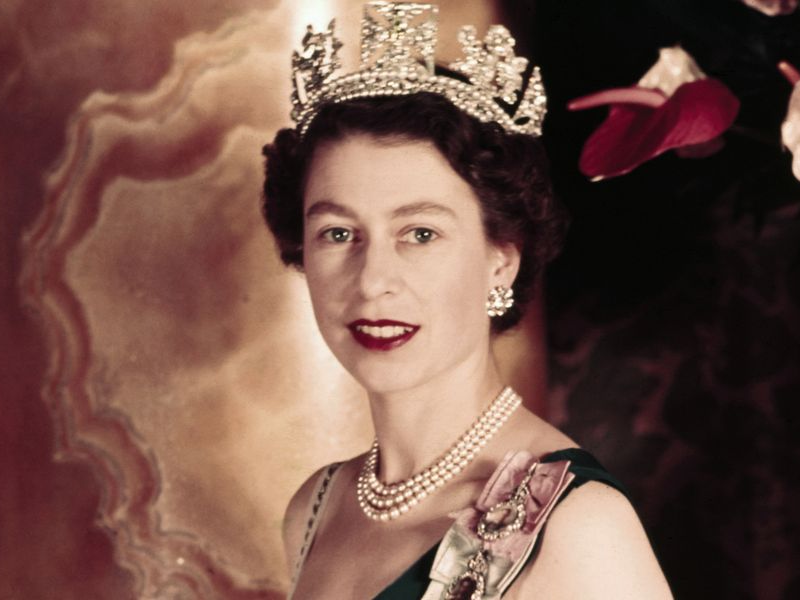
hbz-queen-elizabeth-through-the-years-00-index-gettyimages-515462734-1555601021
Culture

The Death of the Queen and a Christian Understanding of Sovereignty

On Thursday, September 8 th 2022, Her Majesty Queen Elizabeth II died. She was our longest-reigning monarch; the magnitude of her presence in the United Kingdom’s life defies most superlatives. The first of her fifteen British prime ministers was Winston Churchill; she appointed her final one, Liz Truss—who was born…

by Alastair RobertsSeptember 12, 2022

Showing page 39 of 309

See all
See all

Articulated time

According to Pickstock, Augustine’s musical ontology is not a mere subordination of space to time, or a univocal “Dionysian flow”: “just as important as the priority of time, for Augustine, is the insistence on articulation into distinct musical units or phrases, the very move which allows a stress upon the simultaneity…

September 14, 2009

Creation ex nihilo

Nothing comes from nothing.  That seems obvious, and Christians have traditionally had some difficulty explaining why creatio ex nihilo is a defensible violation of that basic principle. According to Catherine Pickstock, Augustine viewed creation ex nihilo as the most rational position.  All around us, “things are continuously coming to be…

September 14, 2009
Politics

Secular

In responding to Milbank’s analysis of Augustine on the secular, RA Markus ( Christianity And the Secular (Blessed Pope John XXIII Lecture Series in Theology and Culture) ) borrows MJ Hollerich’s summary of Milbank that there is no “neutral public sphere in which people can act politically without reference to…

September 14, 2009
Art

Kantradictions

Jean-Marie Schaeffer ( Art of the Modern Age: Philosophy of Art from Kant to Heidegger (New French Thought Series) has a blast pointing out the contradictions in Kant’s aesthetics. Most of them arise from Kant’s insistence that the judgment of taste is founded on “the form of a finality” that…

September 12, 2009
Philosophy

Effects and Causes

Can effects double as causes? Kant, still working with some form of final causality, thinks so: There are cases when “the thing that for the moment is designated effect deserves none the less, if we take the series regressively, to be called the cause of the thing of which it…

September 12, 2009
Art

Gnostikant

Evidence that Hamann had Kant right: In explaining taste as a common sense, he notes that this common sense of beauty can be arrived at by a process of stripping off whatever belongs to our perception and prejudice. That is, we put “ourselves in the position of every one else,…

September 12, 2009

Showing page 1351 of 2212

Browse by Category

In Medias Res

Your weekly digest for all things Theopolis.

Donate

Theopolis is nearly 100% donor-supported. Consider joining us on our mission.