Theopolis Logo

Writing

Explore our collection of theological essays, biblical studies, and reflections on faith and culture.

See all
jefferson-santos-fcejgbzakru-unsplash
Interview

The Way My Story Goes: Interview with Singer-Songwriter Jamie Soles

Jamie Soles is the reason I know my way around a guitar. When my guitar teacher put the sheet music for Eine Kleine Nachtmusick in my fourteen-year-old hands, I balked. He gave me “Foggy Mountain Breakdown.” I learned half of it. At home, I ignored my teacher’s instructions and tugged…

by Christian LeithartMarch 12, 2019
screenshot-2023-10-27-at-1-23-26-pm
Epistemology

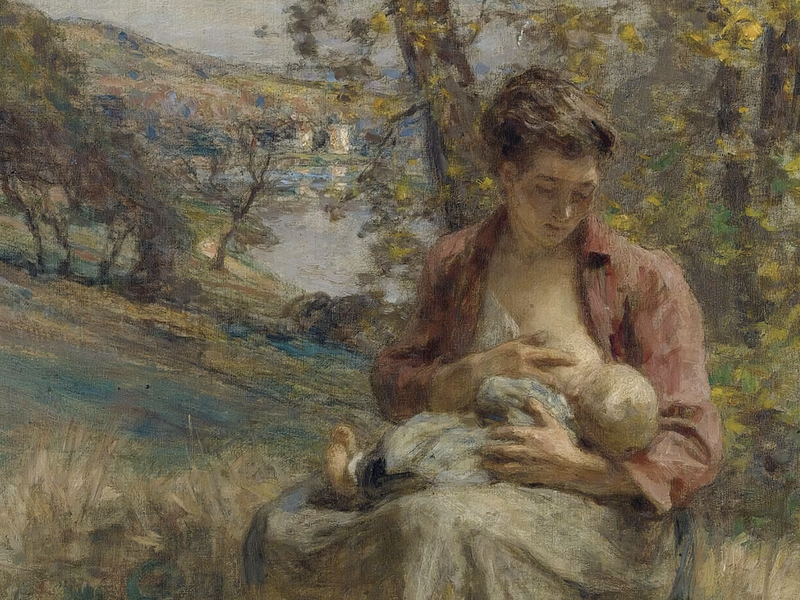
The Mother’s Smile: Integrative Beauty

This is a tough era for mothers. Regard for mothers, while it is always booming in some circles, is decidedly lacking in the prevailing winds of the milieu. In high demand by contrast is contribution to the work force, being a consumer, and basic economic survival, often as a solitary…

by Esther Lightcap MeekMarch 5, 2019
img_1456
Epistemology

Seeking Integration in a Fragmented World: D.C. Schindler: Are You Open to the Heart of Things?

After the dark quiet of the year’s beginning, I return now to pick up the threads of my reflection on integration. This is my own personal inquiry, and for me it is no academic exercise but rather the forefront of my personal quest for the real. My hope is that…

by Esther Lightcap MeekFebruary 26, 2019
tolkien
Chiasm

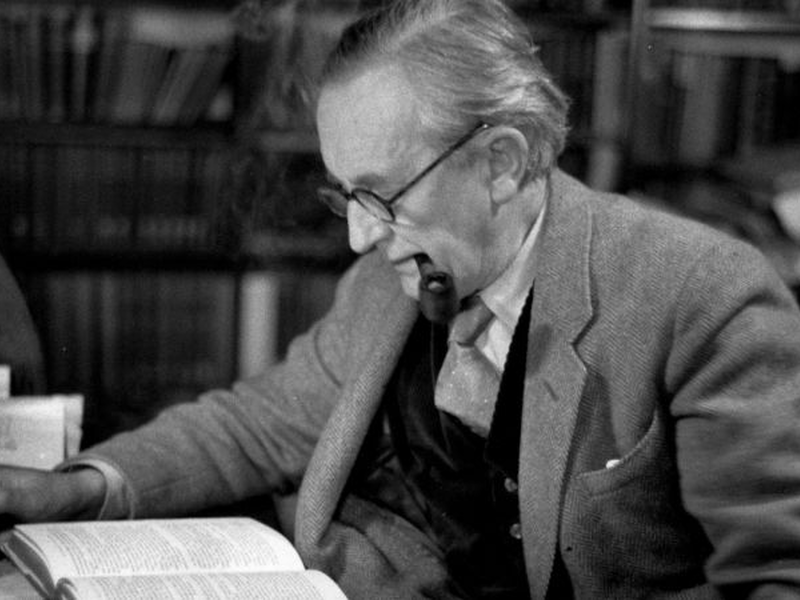
The Chiastic Structure of Lord of the Rings

The chiastic structure of The Hobbit we considered in the previous essay is highly suggestive of what might lie in store for The Lord of the Rings saga. It is undoubtedly the case that J. R. R. Tolkien was a literary craftsman. It may even be the case he is…

by Kelly KerrFebruary 19, 2019
tolkien
Chiasm

The Chiastic Structure of the Hobbit

Structure plays an important part of any literary work, whether poetry or prose. It adds to the beauty and depth of the work and allows insight to be gained about what the author is trying to communicate. The question that concerns us here is whether or not there exists an…

by Kelly KerrFebruary 5, 2019
a-giant-alien-spaceship-that-has-landed-in-montana-in-arrival-denis-villeneuves-film-adaptation-of-a-story-by-ted-chiang
Movies

Learning the Language of Arrival

Can we learn to communicate from an outside intelligence? Spoiler Alert! If you have not yet seen the movie, this article may provide you with a great deal more information than you wished to know at this point. Since the 1999 film The Matrix received careful scrutiny on many fronts…

by Eric RobinsonJanuary 29, 2019

Showing page 81 of 309

See all
See all

Articulated time

According to Pickstock, Augustine’s musical ontology is not a mere subordination of space to time, or a univocal “Dionysian flow”: “just as important as the priority of time, for Augustine, is the insistence on articulation into distinct musical units or phrases, the very move which allows a stress upon the simultaneity…

September 14, 2009

Creation ex nihilo

Nothing comes from nothing.  That seems obvious, and Christians have traditionally had some difficulty explaining why creatio ex nihilo is a defensible violation of that basic principle. According to Catherine Pickstock, Augustine viewed creation ex nihilo as the most rational position.  All around us, “things are continuously coming to be…

September 14, 2009
Politics

Secular

In responding to Milbank’s analysis of Augustine on the secular, RA Markus ( Christianity And the Secular (Blessed Pope John XXIII Lecture Series in Theology and Culture) ) borrows MJ Hollerich’s summary of Milbank that there is no “neutral public sphere in which people can act politically without reference to…

September 14, 2009
Art

Kantradictions

Jean-Marie Schaeffer ( Art of the Modern Age: Philosophy of Art from Kant to Heidegger (New French Thought Series) has a blast pointing out the contradictions in Kant’s aesthetics. Most of them arise from Kant’s insistence that the judgment of taste is founded on “the form of a finality” that…

September 12, 2009
Philosophy

Effects and Causes

Can effects double as causes? Kant, still working with some form of final causality, thinks so: There are cases when “the thing that for the moment is designated effect deserves none the less, if we take the series regressively, to be called the cause of the thing of which it…

September 12, 2009
Art

Gnostikant

Evidence that Hamann had Kant right: In explaining taste as a common sense, he notes that this common sense of beauty can be arrived at by a process of stripping off whatever belongs to our perception and prejudice. That is, we put “ourselves in the position of every one else,…

September 12, 2009

Showing page 1351 of 2212

Browse by Category

In Medias Res

Your weekly digest for all things Theopolis.

Donate

Theopolis is nearly 100% donor-supported. Consider joining us on our mission.