Theopolis Logo

Writing

Explore our collection of theological essays, biblical studies, and reflections on faith and culture.

See all
andriy-nestruiev-gdbrwwh6doc-unsplash
Biblical Studies

Funerals and Flutes

Matthew 8-9 records three clusters of miracles, interspersed with snatches of Jesus’ teaching about various aspects of discipleship. Just as the Sermon on the Mount displays the authority of Jesus’ Word in teaching, these chapters display the authority of Jesus’ Word over sickness, uncleanness, the creation, demons, and death. In…

by Peter LeithartApril 17, 1992

michal-parzuchowski-w9uljjwg2fa-unsplash
Baptism

Daddy, Why Was I Excommunicated?

Since the early 1980s, several of the conservative Reformed Churches have debated and wrestled with the issue of paedocommunion (infant communion). The PCA and the OPC assigned study committees to examine the question, both of which produced useful reports both in support of and against the position. Though the debate…

by Peter LeithartApril 13, 1992
skyler-gerald-akljfvj5ym4-unsplash
Biblical Chronology

Chronologies and Kings, Part 9: Jehu, Hazael, and Assyria

(This issue of Biblical Chronology concludes a discussion of the Biblical and Assyrian chronologies, begun in previous posts. Click on the category link of "Biblical Chronology" above to see previous issues. Did Shalmaneser Know Jehu? Allis writes: "The Black Obelisk of Shalmaneser contains, in addition to brief accounts of the…

by James B. JordanMarch 23, 1992
denise-jans-dpemksg59la-unsplash
American Culture

Arts and Play, Part 4

Movies Movies as an art form have a powerful impact because they take place in a dark room, on a large screen, with no distractions, and because they entail many of the arts: music, acting, choreography, design and color, etc. A movie can be an overwhelming experience for a young…

by James B. JordanMarch 23, 1992
sincerely-media-bhaswrjttzw-unsplash-2
Leviticus

The Ecology of the Tribute Offering

The Hebrew word translated as "grain offering" or "cereal offering" is minchah . Like the translation of `olah as "burnt offering," the translation of minchah as "grain offering" is somewhat deceiving, since minchah does not refer to grain or cereal. In liturgical contexts outside of Leviticus, in fact, the word…

by Peter LeithartMarch 13, 1992
sincerely-media-bhaswrjttzw-unsplash-2
Ascension

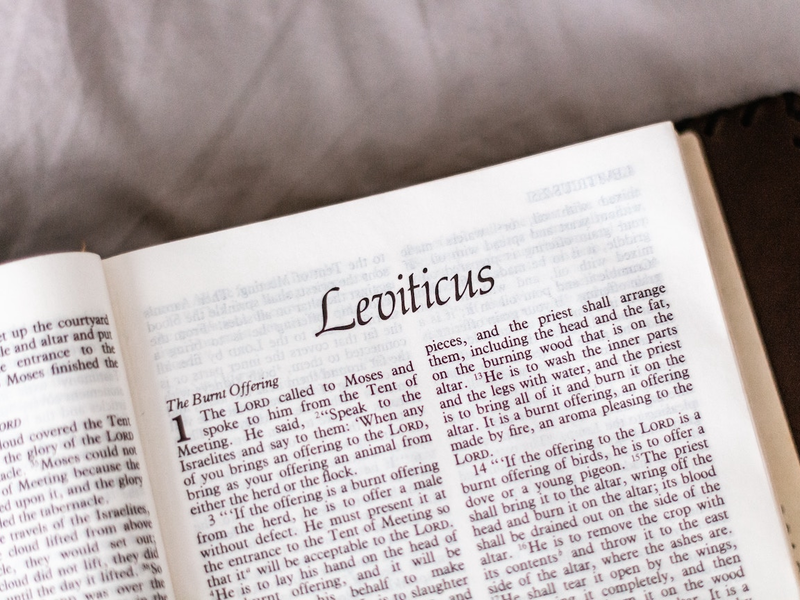
Skinned and Cut

"He shall then skin the burnt offering and cut it into its pieces" (Leviticus 1:6). The normal word ( `olah ) that is translated as "burnt offering" and "whole burnt offering" has nothing to do with either burning or wholeness. It is the noun form of a verb meaning "to…

by Peter LeithartMarch 13, 1992

Showing page 291 of 309

See all
See all

Doors, oil, and sleep

A 1974 JBL article by Karl Donfried explores some of the allegorical elements of the parable of the virgins in Matthew 25. He points out that the “door” is an important motif for Matthew: “This is an important theme for Matthew. On the eschatological day, Jesus will stand at the…

August 29, 2009

Twins

“When her days to be delivered were fulfilled, behold, there were twins in her womb.” That’s Genesis 25:24, and it’s talking about Rebekah pregnant with Jacob and Esau. “It came about at the time she was giving birth, that behold, there were twins in her womb.” That’s Genesis 38:27, and…

August 29, 2009

Twisted Fairy Tale

A man had three sons who went out into the wide world to see their fortune. Everyone thought the first two sons were smart and would be successful, but the last son was an oaf, and everyone knew he would return an utter failure . . . . We know…

August 29, 2009

Wise and Foolish

Matthew doesn’t talk about wisdom and foolishness very often, and only twice does he contrast the wise ( phronimos ) to the foolish ( moros ). The first comes at the end of the sermon on the mount, where Jesus contrasts wise and foolish builders; the other comes in the…

August 29, 2009
Philosophy

Humean natural law

Baylor’s Alexander Pruss offers this nifty Aristotelian critique of Humean natural law: “The most basic dichotomy between views of laws of nature is that between Humean views on which the laws of nature are merely descriptions of the actual states of affairs that obtain, and anti-Humean views according to which…

August 28, 2009

Boethian persons

“Persona est rationalis naturae individua substantia,” said Boethius in his treatise on the two natures. This has been viewed as a radically deficient definition of personhood, but Peter Simpson argues that it’s got more going for it than many imagine. In response to the charge that it relegates what really…

August 27, 2009

Showing page 1356 of 2212

Browse by Category

In Medias Res

Your weekly digest for all things Theopolis.

Donate

Theopolis is nearly 100% donor-supported. Consider joining us on our mission.