Theopolis Logo

Writing

Explore our collection of theological essays, biblical studies, and reflections on faith and culture.

See all
medievalilluminatedmanuscript
Biblical Studies

The Art of Why

“We have a God who hides things because He loves to be sought out, chewed out and found out.” As Christians, we are rightly taught that we must not question God’s Word. The problem is that the Scriptures record many things which appear to have been given to us for…

by Mike BullMay 12, 2015

last-supper
Revelation

Eucharistic Harvest

The book of Revelation is a liturgy. John begins “in the Spirit” on the “Lord’s day” (1:10). Jesus appears, and Jesus tells him to record messages to seven churches, words of encouragement and rebuke, like the call to worship and confession at the beginning of a Christian liturgy. In chapter…

by Peter LeithartMay 7, 2015
sunrise-2
Creation

Maker of Heaven and Earth, (Part 5)

In my previous posts, I looked at the theme of creation as it is found in a sequence of psalms devoted to Yahweh’s Kingship (Psalms 93-100). Among other matters, these psalms declare that when the Kingdom of Israel’s God comes, it is the Kingdom of the world’s own Creator .…

by Stephen LongMay 7, 2015
13071-probablyvalentindeboulogne-saintpaulwritinghi-1
Deuteronomy

Paul the Levir

The church in Corinth was a pastoral nightmare. Factionalism, sexual immorality, incipient syncretism, using the church as a stage for self-promotion, and denial of the final resurrection were just some of the problems. In Paul’s first letter to the Corinthian church, he confronts each of these problems directly and in…

by Bill SmithMay 5, 2015
creation-eve
Covenant

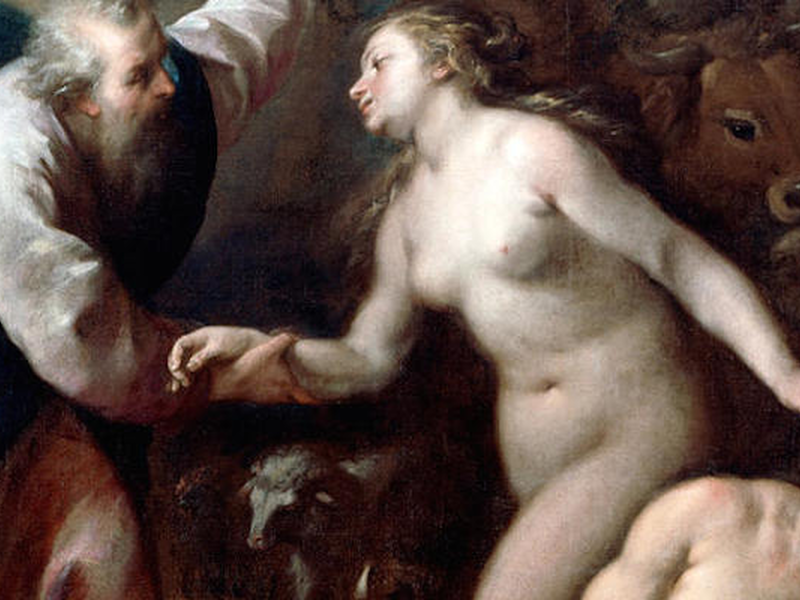
Covenant Structure in Genesis 2

The first chapters of the Word of God have a poetic rhythm. This is used to discredit their accuracy as historical narrative, but the truth is that these same rhythms continue far beyond the book of Genesis. In fact, the later texts shed light on the frustratingly succinct account of…

by Mike BullApril 30, 2015
light-bulb
Creation

Must A Light Bulb Be "Oriented Toward Illumination"?

Mr. Martian: What’s that there? Mr. Edison: (Edison holds up a standard, 60 watt lightbulb). It’s a lightbulb. Mr. Martian: A “lightbulb” you say? What exactly is a “lightbulb”? Mr. Edison: A lightbulb is an object used to illuminate a dark area, say a room. It’s made primarily of filament…

by Gerald HiestandApril 28, 2015

Showing page 154 of 309

See all
See all

Hebrew and Hellenist

Yoder argues that from the time of the Babylonian captivity, the Jews developed a proto-“free church” model of community life. True in some respects. Jews didn’t have their own polity. But I’ve got doubts if that’s a fair characterization of Jews in and after the exile. Why? The Bible for…

June 26, 2009
Politics

Maximilian the martyr

Maximilian of Tebessa is often cited as an example of early Christian pacifism. When Roman officials pressured him to accept a military seal and swear the sacramentum by reminding him that other Christians served without qualms, he still refued, saying “They know what is expedient for them; but I am…

June 26, 2009
History

Orientalizing revolution

Warwick Ball’s Rome in the East is a treasure trove. Instead of telling the story of Rome from an occidental standpoint, he goes east and looks back. What does Roman history look like from Arabia, Syria, Edessa, India? One of his remarkable conclusions is that before the triumph of the…

June 26, 2009
History

Monastic conformism

In reaction to the lax respectability of the majority church, many hardy souls retreated to the desert or the frontier. So the story goes. Only the monastery was another form of cultural conformity. RA Markus ( The End of Ancient Christianity ) says that “the ideal of the philosophical life…

June 25, 2009
History

Linguistic Girardianism

Florence Dupont points out in her Daily Life in Ancient Rome that in Latin enemy ( hostis ) andguest ( hospes ) “were formed from the same root, which had the meaning ‘the other who is similar to you.’”

June 25, 2009
History

Carthaginian Tophet

In her study of Roman gladiatorial combat and arenas ( Blood in the Arena: The Spectacle of Roman Power ) Alison Futrell describes the Phoenician practice of human sacrifice transplanted to Carthage: “The young victim was placed in the arms of the bronze image of Ba’al Hammon, arms that sloped…

June 25, 2009

Showing page 1366 of 2212

Browse by Category

In Medias Res

Your weekly digest for all things Theopolis.

Donate

Theopolis is nearly 100% donor-supported. Consider joining us on our mission.