Theopolis Logo

Writing

Explore our collection of theological essays, biblical studies, and reflections on faith and culture.

See all
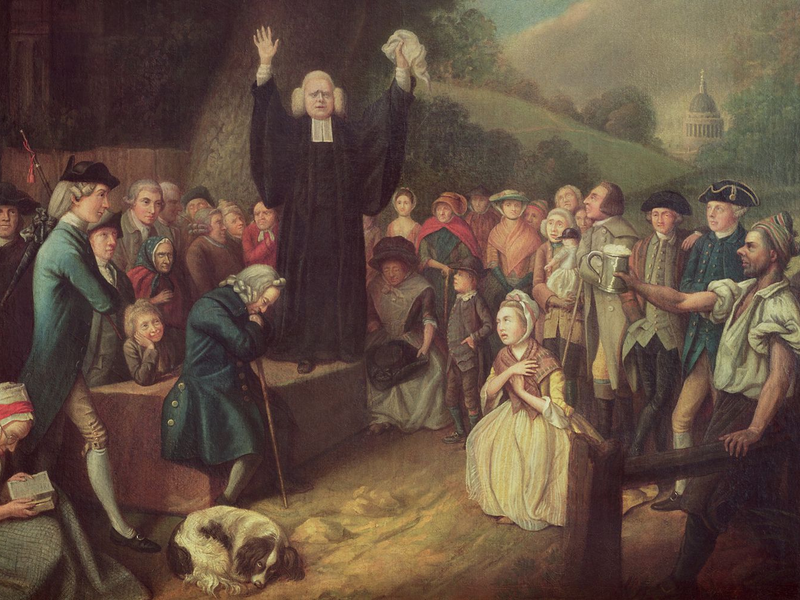
georgewhitefield-71901184-de237affa7764d6e95818a589190adf7
Biblical Horizons

The Great Awakening: A Critique

The following material was published in 1984 in Christianity and Civilization No. 4: The Reconstruction of the Church, pages 6-9, and are reprinted here as grist for the mill of the discussion of “evangelicalism.” Footnotes have not come through, of course. Though this material is offered in connection with a…

by James B. JordanJune 19, 2012

aaron-burden-1ebsmyrau-s-unsplash
Biblical Horizons

Concerning Regeneration

I wrote my beef about “regeneration” a decade ago, and I don’t really see the need to reopen what I think now. (Jordan, Thoughts on Sovereign Grace and Regeneration: Some Tentative Explorations. Biblical Horizons Occasional Paper No. 32) But. My pal Doug Wilson has been writing a series of essays…

by James B. JordanJune 19, 2012

jelleke-vanooteghem-gnxb59lgu1m-unsplash
John

Born From Above: Some Notes on John 3

Nicodemus’s conversation with Jesus in John 3:1-15 is sometimes regarded as an illustration of the tremendous stupidity of the Jews of our Lord’s day. Nicodemus is treated as just some guy who comes to Jesus at night because he doesn’t want to get into trouble by being seen with Him.…

by James B. JordanJune 18, 2012
screen-shot-2020-12-03-at-1-47-33-pm
Biblical Horizons

Is James B. Jordan an “Evangelical”?

During the last couple of weeks, Douglas Wilson has issued several posts over on his Blog and Mablog blog that deal with “evangelicalism” and who is and who is not an “evangelical.” In the course of these postings, Doug has written that while I am a fine Christian who has…

by James B. JordanJune 18, 2012
karsten-wurth-imegmbunara-unsplash
Biblical Horizons

Three Issues in Regard to Eastern Orthodoxy

Here are three issues in regard to the Eastern Church. First, here is the quote from Bavinck’s The Doctrine of God, page 317, Banner of Truth edition (1977) under the heading of Inter-Personal Relations. The Greeks derived the unity of God’s essence and the unity of the persons not from…

by Richard BledsoeJune 14, 2012
screen-shot-2020-12-03-at-1-47-33-pm
Biblical Horizons

Clerical Garb

Elsewhere on the blogosphere men are mocking the wearing of collars and albs to lead in worship. When it is pointed out that historically Reformed ministers have worn daily uniforms and robes in worship, it is replied that that was then and this is now. We ought to conform to…

by James B. JordanJune 9, 2012

Showing page 200 of 309

See all
See all

Hebrew and Hellenist

Yoder argues that from the time of the Babylonian captivity, the Jews developed a proto-“free church” model of community life. True in some respects. Jews didn’t have their own polity. But I’ve got doubts if that’s a fair characterization of Jews in and after the exile. Why? The Bible for…

June 26, 2009
Politics

Maximilian the martyr

Maximilian of Tebessa is often cited as an example of early Christian pacifism. When Roman officials pressured him to accept a military seal and swear the sacramentum by reminding him that other Christians served without qualms, he still refued, saying “They know what is expedient for them; but I am…

June 26, 2009
History

Orientalizing revolution

Warwick Ball’s Rome in the East is a treasure trove. Instead of telling the story of Rome from an occidental standpoint, he goes east and looks back. What does Roman history look like from Arabia, Syria, Edessa, India? One of his remarkable conclusions is that before the triumph of the…

June 26, 2009
History

Monastic conformism

In reaction to the lax respectability of the majority church, many hardy souls retreated to the desert or the frontier. So the story goes. Only the monastery was another form of cultural conformity. RA Markus ( The End of Ancient Christianity ) says that “the ideal of the philosophical life…

June 25, 2009
History

Linguistic Girardianism

Florence Dupont points out in her Daily Life in Ancient Rome that in Latin enemy ( hostis ) andguest ( hospes ) “were formed from the same root, which had the meaning ‘the other who is similar to you.’”

June 25, 2009
History

Carthaginian Tophet

In her study of Roman gladiatorial combat and arenas ( Blood in the Arena: The Spectacle of Roman Power ) Alison Futrell describes the Phoenician practice of human sacrifice transplanted to Carthage: “The young victim was placed in the arms of the bronze image of Ba’al Hammon, arms that sloped…

June 25, 2009

Showing page 1366 of 2212

Browse by Category

In Medias Res

Your weekly digest for all things Theopolis.

Donate

Theopolis is nearly 100% donor-supported. Consider joining us on our mission.