Theopolis Logo

Writing

Explore our collection of theological essays, biblical studies, and reflections on faith and culture.

See all
pawan-sharma-vt2efwhbs-e-unsplash
Authority

Eldership and Maturity, (Part 2)

(continued from previous issue) Between 30 and 50 What did the Levites do between age 30 and 50? Numbers 4 shows us that they carried the house of God on their shoulders. Lifting up the Lord is an image of worship in the Bible, and David’s restructuring of the Levites…

by James B. JordanJuly 8, 1995

venice-la-distruzione-del-tempio-di-gerusalemme-francesco-hayez-gallerie-accademia-venice
Romans

The Great Hangover, Parts 1-2

When God created the world, He created two lands: the Throne-land of Eden (entered through the sanctuary-garden, the Garden of Eden), and the Outlying Lands, such as the lands of Havilah and Cush. This essentially bi-polar world is the world of the Old Creation, and it continued to exist until…

by James B. JordanJuly 5, 1995
Architecture

Concerning Colors, Architecture, and Sacraments

Color is inescapable, except for those who are color blind. In our church architecture, we either employ color schemes that are helpful to worship, or we employ color schemes that are not helpful. Of course, this assertion merely begs the question: What color schemes are most helpful. God showed interest…

by James B. JordanJuly 4, 1995
baptism-of-christ
Baptism

Jesus’ Baptism Into Priesthood

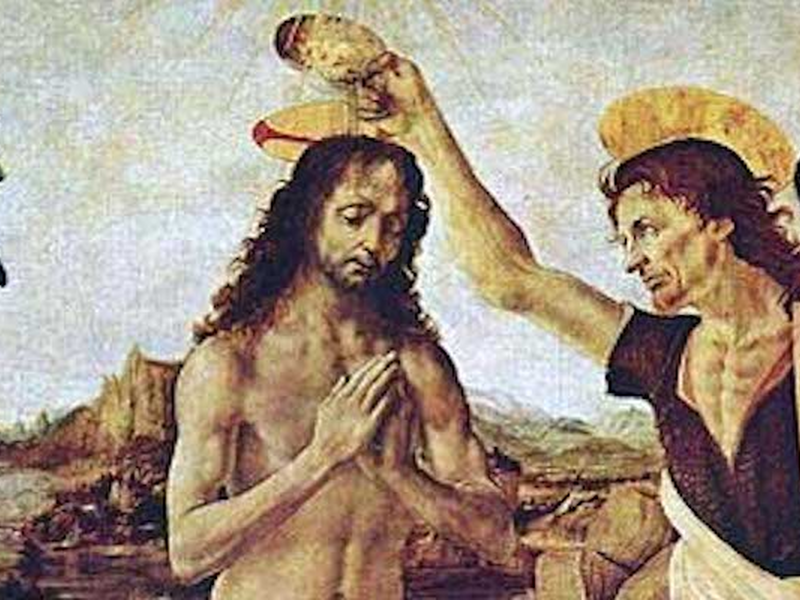
As I noted in an earlier article in Rite Reasons , the Church Fathers Tertullian, Ambrose, and Augustine all claimed that baptism inducts the baptized person into membership in the royal priesthood of the church, and Thomas Aquinas said that baptism, by imprinting an indelible “character” on the soul, confers…

by Peter LeithartMay 26, 1995
moses-gives-aaron-priesthood-39465-wallpaper
Baptism

Renewing Circumcision

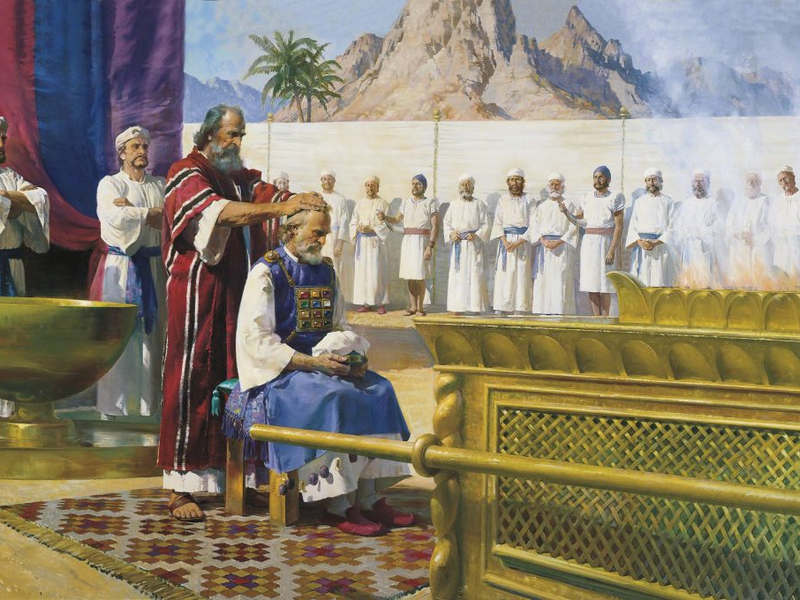
When the Aaronic priests were ordained, the blood of the ram of "filling” was placed on the lobe of the right ear, the right thumb, and the right big toe (Lev. 8:22-24). Similarly, the cleansing rite for a leper included smearing the right ear lobe, thumb, and big toe with…

by Peter LeithartMay 14, 1995
sixteen-miles-out-ki3hr9t8t7a-unsplash
Daniel

A Correction on Daniel 7

In my Preliminary Commentary on Daniel , which many of you have obtained, I argued in chapter 13 that the four monsters called up from the sea by the evangelistic work of the four winds (the saints) represented the deep hatred of God that evangelistic work brings to the fore…

by James B. JordanMay 7, 1995

Showing page 270 of 309

See all
See all

Hebrew and Hellenist

Yoder argues that from the time of the Babylonian captivity, the Jews developed a proto-“free church” model of community life. True in some respects. Jews didn’t have their own polity. But I’ve got doubts if that’s a fair characterization of Jews in and after the exile. Why? The Bible for…

June 26, 2009
Politics

Maximilian the martyr

Maximilian of Tebessa is often cited as an example of early Christian pacifism. When Roman officials pressured him to accept a military seal and swear the sacramentum by reminding him that other Christians served without qualms, he still refued, saying “They know what is expedient for them; but I am…

June 26, 2009
History

Orientalizing revolution

Warwick Ball’s Rome in the East is a treasure trove. Instead of telling the story of Rome from an occidental standpoint, he goes east and looks back. What does Roman history look like from Arabia, Syria, Edessa, India? One of his remarkable conclusions is that before the triumph of the…

June 26, 2009
History

Monastic conformism

In reaction to the lax respectability of the majority church, many hardy souls retreated to the desert or the frontier. So the story goes. Only the monastery was another form of cultural conformity. RA Markus ( The End of Ancient Christianity ) says that “the ideal of the philosophical life…

June 25, 2009
History

Linguistic Girardianism

Florence Dupont points out in her Daily Life in Ancient Rome that in Latin enemy ( hostis ) andguest ( hospes ) “were formed from the same root, which had the meaning ‘the other who is similar to you.’”

June 25, 2009
History

Carthaginian Tophet

In her study of Roman gladiatorial combat and arenas ( Blood in the Arena: The Spectacle of Roman Power ) Alison Futrell describes the Phoenician practice of human sacrifice transplanted to Carthage: “The young victim was placed in the arms of the bronze image of Ba’al Hammon, arms that sloped…

June 25, 2009

Showing page 1366 of 2212

Browse by Category

In Medias Res

Your weekly digest for all things Theopolis.

Donate

Theopolis is nearly 100% donor-supported. Consider joining us on our mission.