Theopolis Logo

Writing

Explore our collection of theological essays, biblical studies, and reflections on faith and culture.

See all
max-kukurudziak-qbc3zmxw0g8-unsplash
History

Report from Ukraine

We lost Crimea. That is very clear. Putin proved he was not lying when he said he would place women and children ahead of his soldiers to storm Ukrainian military bases. Russian soldiers did exactly that with women (some who volunteered and some who were forced). Russia now occupies all…

by San SanychMarch 28, 2014

screenshot-2023-09-21-at-3-59-23-pm
Church Calendar

God Gone Silent

Sound is an indicator of life and energy. “Sound signals the present use of power, since sound must be in active production to exist at all.” Things don’t have to be alive to make themselves visible, and “a primitive hunter can see, feel, smell, and taste an elephant when the…

by Peter LeithartMarch 26, 2014
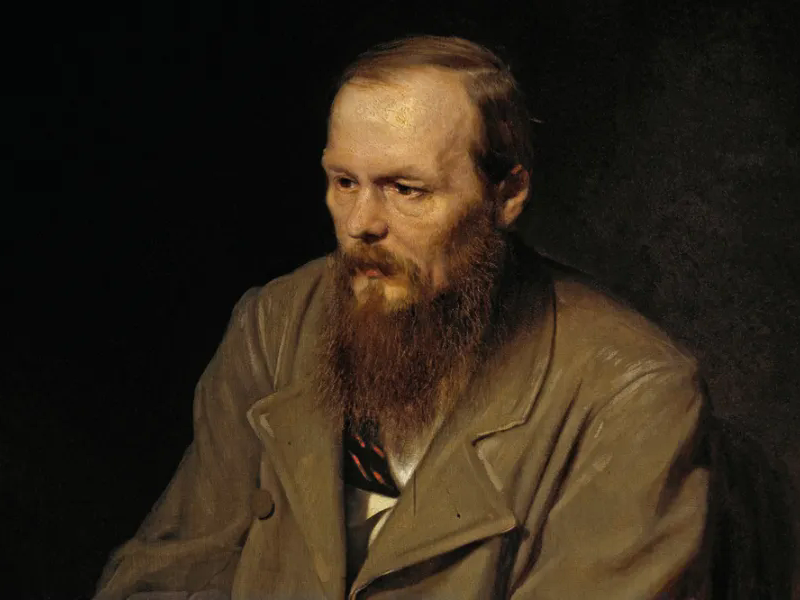
web-lead-image_final_dostoevsky
Books

Dostoevsky the Liberal

In the most famous section of his best-known novel, Dostoevsky’s Ivan Karamazov brings forward his case against God. He opens with a horrific litany of outrages against children. Turkish soldiers make a baby laugh and then shoot a pistol into his face. A little girl is beaten, thrashed, kicked by…

by Peter LeithartMarch 24, 2014
kelly-sikkema-ggs0_g6wi-i-unsplash
Epistemology

Subsidiary-Focal Integration and Liturgy

​At the heart of Esther Lightcap Meek's splendid ​Little Manual for Knowing is a concept she picked up from Michael Polanyi, "subsidiary-focal integration." The concept begins from the insight that all our knowing, all our experience, is double. We focus on something, but we are capable of "indwelling" that focal…

by Peter LeithartMarch 19, 2014
engin-akyurt-uz9qpvbol0e-unsplash
Revelation

White Stone

Jesus promises the overcomers of Pergamum "hidden manna" and a "white stone." The hidden manna is often linked with the manna stashed away in the ark of the covenant. The white stone has proved more elusive. Exodus tells us that manna was white (Exodus 16:31) and like bdellium (Numbers 11:7),…

by Peter LeithartMarch 17, 2014
226961fgsdl
Leviticus

A Theology of Festivity

Leviticus 23 begins with a reference to “Yahweh’s appointed times” ( mo’ade-YHWH ). Mo’ed is the common term for the feasts of Israel. A few dimensions to this term. First, it means “appointed time” or “designated time.” It is a time set by Yahweh. Yahweh has claimed certain times as…

by Peter LeithartMarch 12, 2014

Showing page 177 of 309

See all
See all
History

Martyrs and after

Bowersock contrasts the stance of Christians and Jews toward the Greco-Roman world: “it was precisely the Christians’ vigorous participation in the civic life and intellectual traditions of the Graeco-Roman world that grounded their martyrdoms in the life of the great cities. The Jews, by contrast, had conspicuously chosen a different…

June 13, 2009
History

Master of Spectacles

GW Bowersock ( Martyrdom and Rome (Wiles Lectures) ) cites an article by Louis Robert to explain Perpetua’s vision at her martyrdom. She saw “a man of enormous height, whose head rises above the very top of the amphitheater itself, and whose clothes show purple garments not only falling from…

June 13, 2009

Why We Needed Nietzsch

Jane Harrison begins her Prolegomena to the Study of Greek Religion (Mythos Books) with a quotation from Ruskin regarding the “genius of the Greeks”: “there is no dread in their hearts; pensiveness, amazement, often deepest grief and desolation, but terror never. Everlasting calm in the presence of all Fate, and…

June 13, 2009

Cult of the Greeks

David Gress’s excellent From Plato to NATO: The Idea of the West and Its Opponents shows that classics programs, the discipline of classics, great books programs, are founded on a highly questionable “grand narrative” of Western civilization. According to this narrative, Western history is a series of magic moments, beginning…

June 13, 2009
History

Alexander Reincarnate

Dio Cassius ( Roman History , 77.7) describes how Caracalla modelsed himself after Alexander the Great: “He was so enthusiastic about Alexander that he used certain weapons and cups which he believed had once been his, and he also set up many likenesses of him both in the camps and…

June 13, 2009
Art

Art and love

Kenneth Clark: “Facts become art through love, which unifies them and lifts them to a higher plane of reality.” Almost right, that. Right on the link between artifice (poetry, courtesy, ornamentation) and love. Right too on the unifying metaphoricity of art. Right too on the link of fact and art.…

June 13, 2009

Showing page 1370 of 2212

Browse by Category

In Medias Res

Your weekly digest for all things Theopolis.

Donate

Theopolis is nearly 100% donor-supported. Consider joining us on our mission.