Theopolis Logo

Writing

Explore our collection of theological essays, biblical studies, and reflections on faith and culture.

See all
aaron-burden-qjdzyt_k8xg-unsplash
Biblical Horizons

Twelve Fundamental Avenues of Revelation, Part 2

Theophanic revelation is historically progressive, or eschatological, in character. First of all, in Genesis 1:2, the Spirit appeared inside the creation, sent by the Father. After the creation of man, the Spirit worked and works with humanity to bring us to maturity, from Daughter to Bride to fruitful Mother. He…

by James B. JordanFebruary 28, 1997

gang-coo-nt7tyrsofwk-unsplash
Biblical Studies

The Calf of the Purification Offering

On the eighth day of the rite of "filling the hand," Aaron began his service at the altar. His first offering was a "calf" (Heb. `egel ), which served as a purification offering for himself and (apparently) his household (Leviticus 9:2, 8). This is striking for a couple of reasons.…

by Peter LeithartFebruary 27, 1997
sergey-shmidt-koy6flccy5s-unsplash
Exodus

A Blossom of Yahweh’s Garden

One of the distinctive items of the high priest’s clothing was the "golden plate" inscribed with the words "Holy to Yahweh" (Exodus 28:36-38). The word translated as "plate" is tsits , which literally means "flower." The verbal and noun forms are both used in Numbers 17:8, which describes Aaron’s rod…

by Peter LeithartFebruary 27, 1997
davide-ragusa-slgtmf8ejye-unsplash
Biblical Horizons

Squaring Off and Crossing Up

The square, rectangle, and cross shapes appear all over the sanctuaries God reveals in the Bible: Tabernacle, Solomon’s Temple, Ezekiel’s Temple, New Jerusalem. One thing that can be said right away about these designs, and the occasional perfect circle (the lavers), is that they do not occur in nature. They…

by James B. JordanJanuary 28, 1997
schlanger_jonah_prison_090913_620px
Biblical Studies

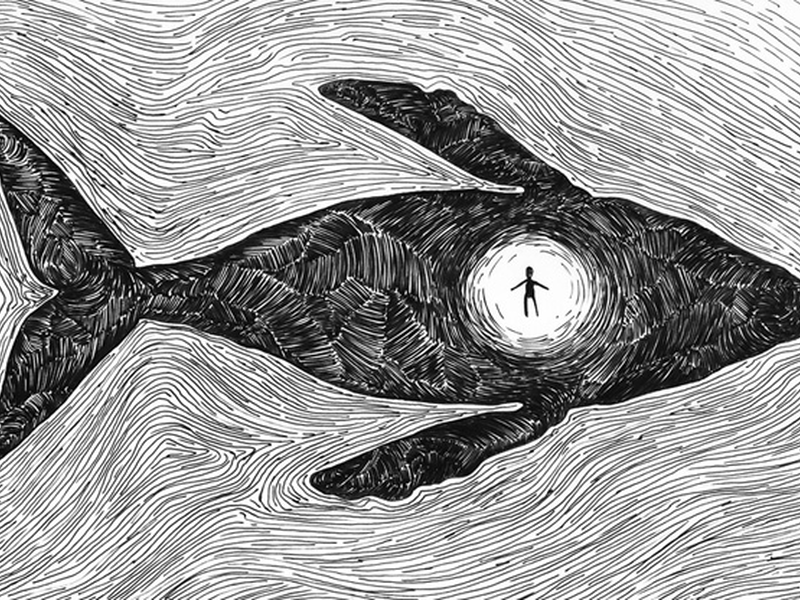
In the Fish: The Church as Tomb

"For just as Jonah was three days and three nights in the belly of the sea-monster, so will the Son of Man be three days and three nights in the heart of the earth" (Matthew 12:40). Some reflections on Jonah’s Big Fish have led to the following essay. Let me…

by James B. JordanJanuary 28, 1997
Hermeneutics

God Most High

Citing Melchizedek in Genesis 14:18-20, James Jordan has written that "the name of God in use among the nations was God Most High’" (Hebrew, `el `elyon ; in Through New Eyes , p. 176). In addition to Melchizedek, one could cite the example of Balaam, who invokes the Lord both…

by Peter LeithartJanuary 27, 1997

Showing page 260 of 309

See all
See all
History

Martyrs and after

Bowersock contrasts the stance of Christians and Jews toward the Greco-Roman world: “it was precisely the Christians’ vigorous participation in the civic life and intellectual traditions of the Graeco-Roman world that grounded their martyrdoms in the life of the great cities. The Jews, by contrast, had conspicuously chosen a different…

June 13, 2009
History

Master of Spectacles

GW Bowersock ( Martyrdom and Rome (Wiles Lectures) ) cites an article by Louis Robert to explain Perpetua’s vision at her martyrdom. She saw “a man of enormous height, whose head rises above the very top of the amphitheater itself, and whose clothes show purple garments not only falling from…

June 13, 2009

Why We Needed Nietzsch

Jane Harrison begins her Prolegomena to the Study of Greek Religion (Mythos Books) with a quotation from Ruskin regarding the “genius of the Greeks”: “there is no dread in their hearts; pensiveness, amazement, often deepest grief and desolation, but terror never. Everlasting calm in the presence of all Fate, and…

June 13, 2009

Cult of the Greeks

David Gress’s excellent From Plato to NATO: The Idea of the West and Its Opponents shows that classics programs, the discipline of classics, great books programs, are founded on a highly questionable “grand narrative” of Western civilization. According to this narrative, Western history is a series of magic moments, beginning…

June 13, 2009
History

Alexander Reincarnate

Dio Cassius ( Roman History , 77.7) describes how Caracalla modelsed himself after Alexander the Great: “He was so enthusiastic about Alexander that he used certain weapons and cups which he believed had once been his, and he also set up many likenesses of him both in the camps and…

June 13, 2009
Art

Art and love

Kenneth Clark: “Facts become art through love, which unifies them and lifts them to a higher plane of reality.” Almost right, that. Right on the link between artifice (poetry, courtesy, ornamentation) and love. Right too on the unifying metaphoricity of art. Right too on the link of fact and art.…

June 13, 2009

Showing page 1370 of 2212

Browse by Category

In Medias Res

Your weekly digest for all things Theopolis.

Donate

Theopolis is nearly 100% donor-supported. Consider joining us on our mission.