Theopolis Logo

Writing

Explore our collection of theological essays, biblical studies, and reflections on faith and culture.

See all
temp_bg
Biblical Studies

Biblical Allusion and the Meaning of Othello

Understanding Shakespeare’s Biblical references is vital for the interpretation of many, if not all, of Shakespeare’s plays. For Othello , it is especially important, not only because the interpretation of the play is contested among various approaches — feminist, homosexual, post-colonial, Marxist, Freudian, new historical, and others — but also…

by Ralph Allan SmithJune 16, 2017

e99a9492-2
Ecclesiology

Attaining Unity: A Reply to Mike Allen

Mike Allen of Reformed Theological Seminary, Orlando, scores some points in his review of The End of Protestantism . He lodges the fair complaint that my rhetoric sometimes outruns my evidence. He argues that more stress on the present reality of the church’s unity deepens the tragedy of division; divisions…

by Peter LeithartJune 13, 2017
trinity-1-2
Eschatology

Comic Trinity

I begin with two observations. First, on any millennial view, the Christian account of history is progressive, moving from the garden to the city. It is eschatological not only in that there is an end, but that the end is a glorified beginning, not merely a return to origins. To…

by Peter LeithartJune 8, 2017
e99a2225
Ecclesiology

Political Church

The church is a new form of polity that erupts into the world as much as the Son of God comes into the world. It’s a real-world political alternative to the polities of the ancient world. It resolves many of the political dilemmas of the ancient world, though not simply…

by Peter LeithartJune 6, 2017
img_1456
Baptism

Baptism Impasse: Baptists vs. Presbyterians, (Part 2)

In my last post , I explained how Baptists really have a “one-ordinance-one sacrament” ecclesiology. I said this: “what Baptists really believe, in modern parlance, is that there is one ordinance (baptism which is a sign or symbol only) and one sacrament (the Lord’s Supper in which feeding upon Jesus…

by Mani MarprelateMay 30, 2017
medieval-knights
Political Theology

Obedience of Rulers

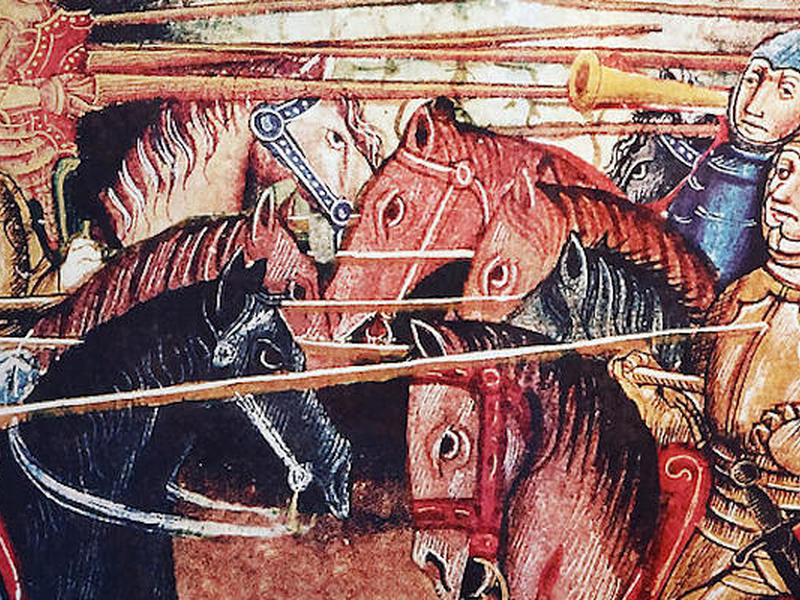
One of the most extensive and penetrating responses to the Yoder-Hauerwas attack on Constantiniansm is found in Oliver O’Donovan’s Desire of Nations , in a chapter entitled “The Obedience of Rulers.” O’Donovan defines the word “Christendom” as “a historical idea,” specifically “the idea of a professedly Christian secular political order,…

by Peter LeithartMay 30, 2017

Showing page 111 of 309

See all
See all
History

Constantine, Feminist

Mathew Kuefler ( The Manly Eunuch: Masculinity, Gender Ambiguity, and Christian Ideology in Late Antiquity (The Chicago Series on Sexuality, History, and Society) ) notes that the traditional Roman patria potestas , and the male sexual privileges associated with it, were already waning in the early empire. But Constantine gave…

June 3, 2009

Words and Word

Radner has these final comments on the hermeneutics of the “holiness code”: “The difference between the sexual laws of Lev. 18 and the laws of clean and unclean flesh in Lev. 11 cannot simply lie in their respective relation to teh category of ceremonial character. The difference lies in the…

June 3, 2009

Way of God’s Arrival

Radner finds part of the fulfillment of the figures of Leviticus 18 in the genealoty of Jesus. On the one hand, Jesus’ own genealogy includes sexually illicit acts (Tamar, Rahab, Bathsheba) and the various sins (not only sexual, but idolatry and oppression) represented in the genealogy eventually lead to Israel’s…

June 3, 2009

Figures of sex

In dealing with the sexual legislation of Leviticus 18, Ephraim Radner ( Leviticus (Brazos Theological Commentary on the Bible) ) employs a figural/prophetic framework rather than a more traditional ceremonial/moral one. The results are intriguing. The prohibition of adultery, for instance, is “fulfilled by means of confession, self-recognition, forgiveness, and…

June 3, 2009
Politics

Democracy fulfilled

Drake notes the unique “democratic” flavor of the churcfh in the fourth century: “Christianity restored to common people an outlet for popular participation which they were denied in imperial politics. Eusebius [of Caesarea’s] awkward letter to his confregation from Nicaea, Constantine’s frequent letters to the Christians of Nicomedia, Alexandria, or…

June 2, 2009
History

Cyrus and Civilizing Process

Xenophon’s Cyrus provides a good illustration of Elias’s theory: “He trained his associates also not to spit or to wipe the nose in public, and not to turn round to look at anything, as being men who wondered at nothing. All this he thought contributed, in some measure, to their…

June 2, 2009

Showing page 1374 of 2212

Browse by Category

In Medias Res

Your weekly digest for all things Theopolis.

Donate

Theopolis is nearly 100% donor-supported. Consider joining us on our mission.