Theopolis Logo

Writing

Explore our collection of theological essays, biblical studies, and reflections on faith and culture.

See all
hard-to-be-a-god
Books

Let us Fix the World: An Admonition from the Strugatsky Brothers

That there is something wrong with the world is obvious. It does not take much time or brilliance to notice it. Once we get the feeling that we could imagine a better world, we are tempted to fix it or, if we cannot, to escape it. For both the world-fixers…

by Bogumil JarmulakApril 6, 2021

patrick-fore-b_shpu5m3nk-unsplash
Prayer

The Lord’s Prayer Exposited

“Our Father in heaven,” what is man that we should be called your sons and daughters, beloved children of God Almighty, Maker of heaven and earth, Yahweh of Hosts, the Ancient of Days. You are not a father preoccupied with work or engrossed in your smartphone; you are a present…

by Drew KnowlesMarch 30, 2021
lisanto-4irss8spks4-unsplash
Pastoral Ministry

Pastoral Reflections on Purity Laws

The Son of God took on human flesh and entered into the sin and suffering of our world. His life and teaching and suffering from His conception to His suffering on the cross teaches us a lot about how the good news enters into the world. Recently, I was teaching…

by Nathan ZekveldMarch 23, 2021
foster_balaam
Hermeneutics

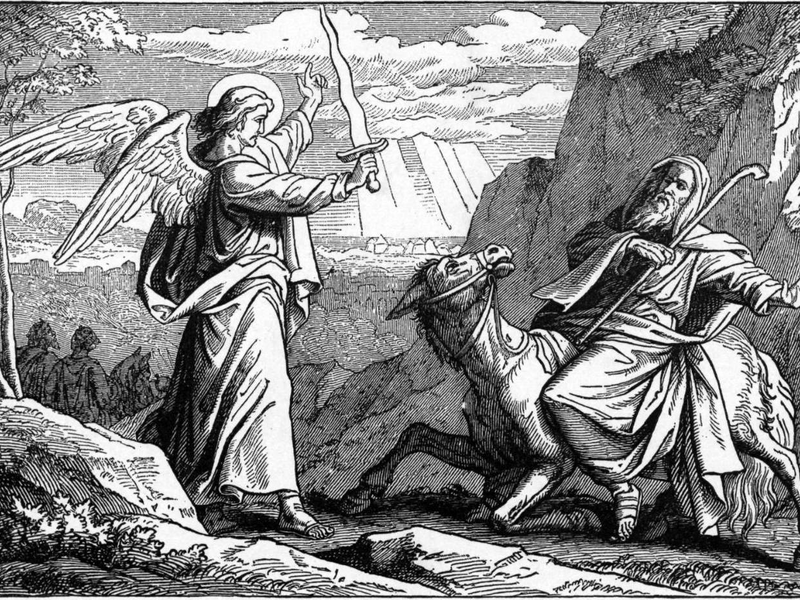
The Ass and the Messiah

There is an unspoken rule about typology that permeates Evangelical thinking. It goes something like this: “If the New Testament authors don’t use an Old Testament character as a type, we don’t either.” There is a soundness in this reasoning, at least in a preliminary sense. There is no better…

by Garrett SoucyMarch 16, 2021
screen-shot-2021-03-08-at-8-57-36-am
Church Calendar

The Sound of Silence

In The world of Silence, Max Picard writes, “There does not seem to be any space left where there could possibly have been anything but noise. We take it for granted much as we take the air itself for granted. Everything begins and ends with noise.” Is it fair to…

by Jacob SkogenMarch 9, 2021
esther
Hermeneutics

The Absent Presence of God: The Storied Theology of Esther for the Modern Age

God is Not There God is not in the book of Esther. Do a word search and you will get 0 results. Also try Lord, Yahweh, Prayer, Temple, or Sacrifice. Even names with God’s name in them, like Elijah, Jeremiah, or Daniel are missing. The fool says in his heart,…

by Ryan HandermannMarch 4, 2021

Showing page 57 of 309

See all
See all
History

Constantine, Feminist

Mathew Kuefler ( The Manly Eunuch: Masculinity, Gender Ambiguity, and Christian Ideology in Late Antiquity (The Chicago Series on Sexuality, History, and Society) ) notes that the traditional Roman patria potestas , and the male sexual privileges associated with it, were already waning in the early empire. But Constantine gave…

June 3, 2009

Words and Word

Radner has these final comments on the hermeneutics of the “holiness code”: “The difference between the sexual laws of Lev. 18 and the laws of clean and unclean flesh in Lev. 11 cannot simply lie in their respective relation to teh category of ceremonial character. The difference lies in the…

June 3, 2009

Way of God’s Arrival

Radner finds part of the fulfillment of the figures of Leviticus 18 in the genealoty of Jesus. On the one hand, Jesus’ own genealogy includes sexually illicit acts (Tamar, Rahab, Bathsheba) and the various sins (not only sexual, but idolatry and oppression) represented in the genealogy eventually lead to Israel’s…

June 3, 2009

Figures of sex

In dealing with the sexual legislation of Leviticus 18, Ephraim Radner ( Leviticus (Brazos Theological Commentary on the Bible) ) employs a figural/prophetic framework rather than a more traditional ceremonial/moral one. The results are intriguing. The prohibition of adultery, for instance, is “fulfilled by means of confession, self-recognition, forgiveness, and…

June 3, 2009
Politics

Democracy fulfilled

Drake notes the unique “democratic” flavor of the churcfh in the fourth century: “Christianity restored to common people an outlet for popular participation which they were denied in imperial politics. Eusebius [of Caesarea’s] awkward letter to his confregation from Nicaea, Constantine’s frequent letters to the Christians of Nicomedia, Alexandria, or…

June 2, 2009
History

Cyrus and Civilizing Process

Xenophon’s Cyrus provides a good illustration of Elias’s theory: “He trained his associates also not to spit or to wipe the nose in public, and not to turn round to look at anything, as being men who wondered at nothing. All this he thought contributed, in some measure, to their…

June 2, 2009

Showing page 1374 of 2212

Browse by Category

In Medias Res

Your weekly digest for all things Theopolis.

Donate

Theopolis is nearly 100% donor-supported. Consider joining us on our mission.