Theopolis Logo

Writing

Explore our collection of theological essays, biblical studies, and reflections on faith and culture.

See all
sinitta-leunen-dvibhmzsy8e-unsplash
Epistemology

A Cheer for the Mystics

Mystical theologians are often unguarded, extreme, un-nuanced, pressing to the edges of heresy, sometimes beyond. Still, the mystics are worthy of study. Why? Many reasons. Unlike some late medieval and post-Reformation dogmaticians, mystical theologians are often instinctively and richly Trinitarian. Historical-critical approaches to Scripture left mystical theologians virtually untouched; mystics…

by Peter LeithartSeptember 2, 2013
portrait-of-william-shakespeare-1564-1616-ca-1865
Literature

Shadow and Substance in Shakespeare's Venice

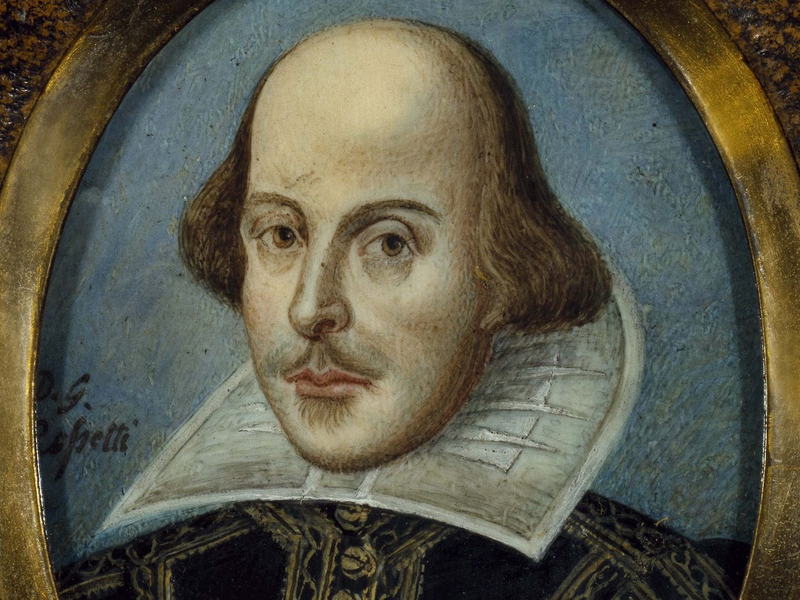
Portia of Belmont is a “lady richly left,” as Bassanio says of her in the first Act of The Merchant of Venice . Plus, she’s beautiful and wise. Suitors clamber to Belmont in hope. Her father knew it would be so, and in his will set up a fairy-tale test…

by Peter LeithartAugust 28, 2013
carlo-alberto-burato-smdx3gleu_m-unsplash
Liturgy

Liturgy Traps

[fve]http://vimeo.com/72195198[/fve]

by James B. JordanAugust 26, 2013
screen-shot-2022-05-12-at-12-07-23-pm
Deuteronomy

Victory Food

In the nature of the case, “the” Christian meditation on Deuteronomy 14:1-21 cannot be written. Meditation offers too many possibilities, opens too many doors. There is not one and only one correct set of associations for a Christian to consider when thinking of Deuteronomy 14:1-21. We could, for example, consider…

by Ralph Allan SmithAugust 21, 2013
aaron-burden-1ebsmyrau-s-unsplash
Romans

David's Sin and Israel's Salvation, Part I

Having retold the story of the cumulative sin of Israel leading to the great atonement on the cross, Paul then reemphasizes that, just as both Jew and Gentiles were locked into sin and judgment, now they are both justified by faith: Then what becomes of our boasting? It is excluded.…

by Mark HorneAugust 20, 2013
ben-white-w8qqn1pmqh0-unsplash
Deuteronomy

You are what you eat

Deuteronomy 14 is full of allusions to events of Israel’s history and other portions of Scripture. What would an Israelite learn by mediation on these allusions? The answer, I believe, is at least fourfold. Faith, Worship, War For the ancient Israelite first hearing Moses’ sermon, or perhaps hearing it read…

by Ralph Allan SmithAugust 15, 2013

Showing page 189 of 309

See all
See all

Dante's Journey

In the course of a review of Vittorio Montemaggi's Reading Dante's Commedia as Theology , Rowan Williams offers these observations on Inferno and Purgatorio : "There is still a tendency among not very attentive readers – not to mention people who have read almost nothing of the work but have…

September 29, 2017
kelly-sikkema-ggs0_g6wi-i-unsplash
Liturgy

The World Needs the Liturgy

"God's work in history," writes Mark Searle ( Liturgy Made Simple ), "is to gather into one the scattered children of God, to overcome divisions, to provide a place for the homeless and the lonely, to give support to those whose burdens are heavy, and to create an oasis of…

September 29, 2017

Christian Historicism

John Milbank argues in his Beyond Secular Order that " historicism cannot straightforwardly be considered as something specifically modern" (8). In fact, it originates from a Christian insight: "the sense of estranged distance from the past is initially the fruit of the Christian contrast between old and new covenants and…

September 29, 2017

No Thucydides Trap

Last week, I wrote a Firstthings.com column summarizing the argument of Graham Allison's Destined for War , a study of Sino-American relations organized around the concept of the "Thucydides Trap." Allison says that the ancient Greek historian claimed that Athens and Sparta went to war because Sparta was fearful of…

September 29, 2017
Eucharist

Bodies Renewed by Christ's Body

Christine Chaillot has a fascinating summary of the liturgical traditions of the "Ancient Oriental Churches" (Egyptian, Ethiopian, Syrian, Assyrian, Indian) in The Oxford History of Christian Worship . She quotes this Eucharistic hymn from the fifth-century Saint Yazdin (p. 164): "Strengthen, O our Lord, the hands which reach out and…

September 29, 2017

Do Human Beings Create?

In ST I, 45, 5, Thomas Aquinas asks whether God alone creates. His sed contra cites Augustine’s de Trinitate (3.8), where Augustine says that angels cannot create anything. If angels cannot, Thomas reasons, neither can any other creature. He presents several arguments in favor of this conclusion. Creation is, Thomas…

September 28, 2017

Showing page 139 of 2212

Browse by Category

In Medias Res

Your weekly digest for all things Theopolis.

Donate

Theopolis is nearly 100% donor-supported. Consider joining us on our mission.