Theopolis Logo

Writing

Explore our collection of theological essays, biblical studies, and reflections on faith and culture.

See all
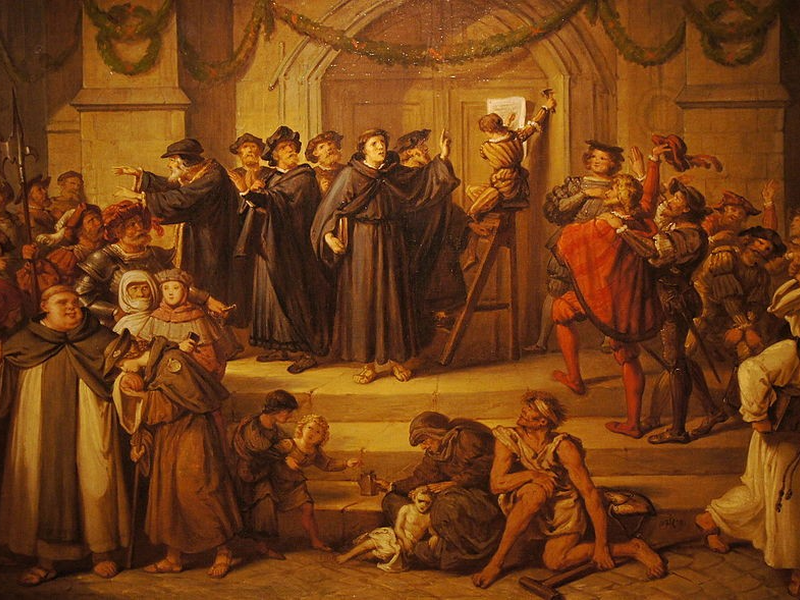
der_anschlag_von_luthers_95_thesen-1024x589
Church Calendar

Five Misconceptions of Reformation Day

For many people the date October 31 is significant not only for being the Eve of All Saints (All Hallows Eve, Halloween) but as the day in 1517 when Martin Luther nailed his 95 theses to the door of the Castle Church in Wittenburg. These theses were a list of…

by Timothy LeCroyOctober 31, 2017

sacre-bleu-r__kixb0i5m-unsplash
Church Calendar

Concerning Halloween

It has become routine in October for some Christian schools to send out letters warning parents about the evils of Halloween, and it has become equally routine for me to be asked questions about this matter. "Halloween" is simply a contraction for All Hallows’ Eve. The word "hallow" means "saint,"…

by James B. JordanOctober 26, 2017
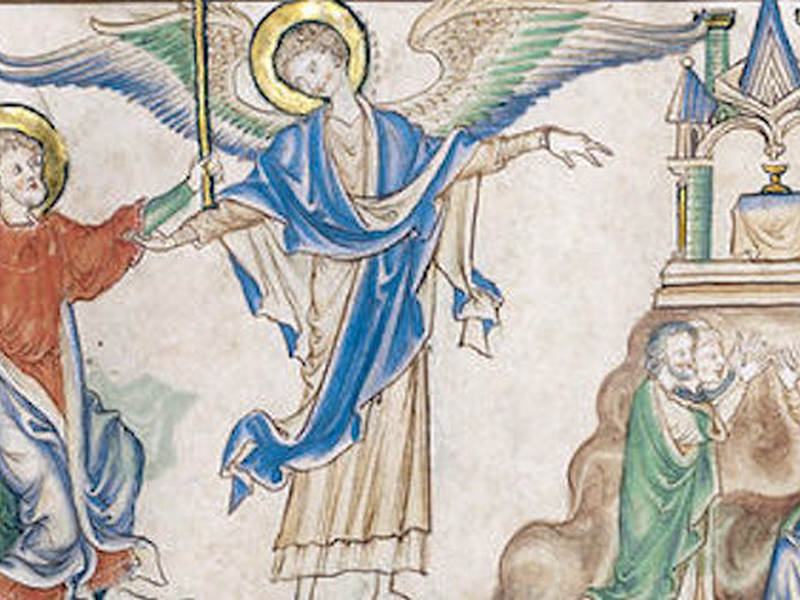
revelation-john-with-rod
Revelation

Preaching, An Art of Division

The following is an excerpt from Peter Leithart's forthcoming two-volume commentary on Revelation (T&T Clark). Y ou must prophesy again concerning many peoples and nations and tongues and kings,” a voice tells John (Rev. 10:11). Then someone gives him a “reed like a rod” and instructs him to measure (11:1).…

by Peter LeithartOctober 24, 2017
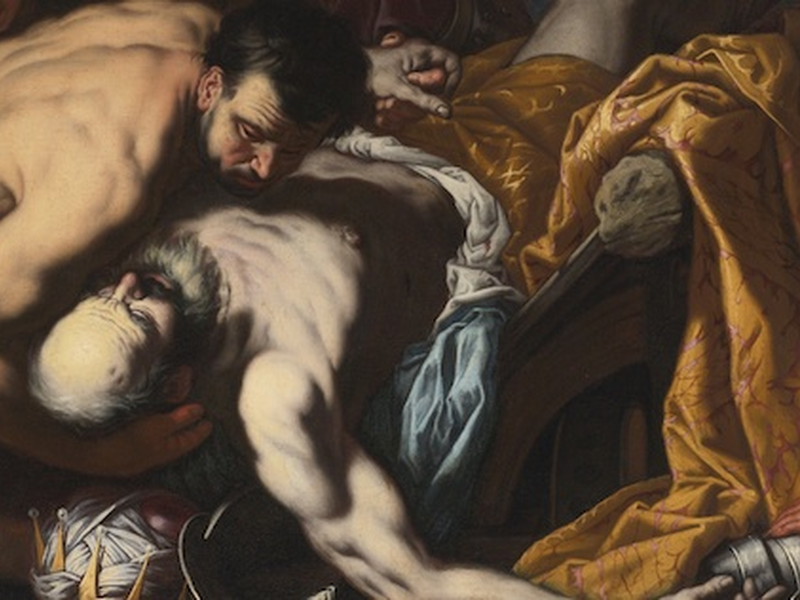
josiah-death

Back To Egypt

Josiah is an ideal Davidic king in many ways. He not only “did right,” but he “walked in the ways of his father David” and “did not turn aside to the right or to the left” (2 Chronicles 34:2). At the age of 16, he began to seek Yahweh, and…

by Peter LeithartOctober 19, 2017
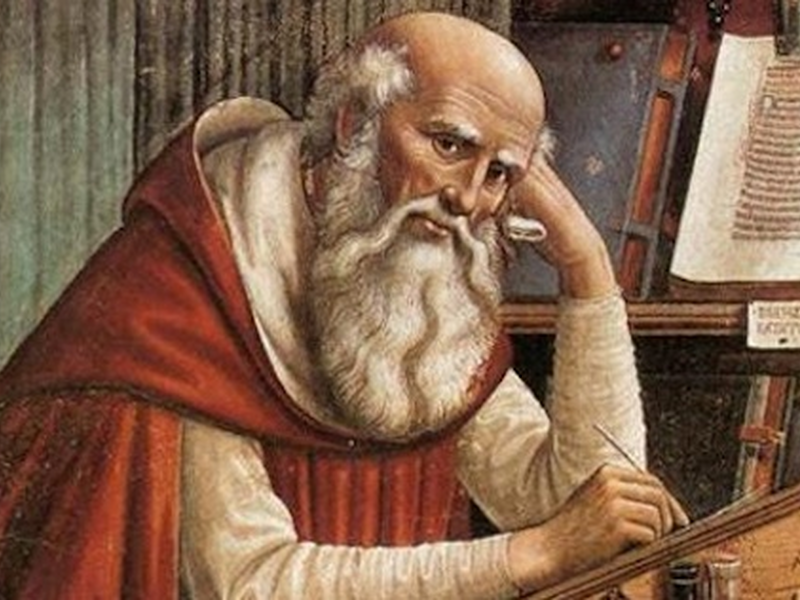
augustine
Augustine

Augustine and the Music of Time

One of the best discussions of Augustine’s views on time comes from Jeremy Begbie’s Theology, Music, and Time (ch. 3). Following Paul Ricoeur, Begbie claims that Augustine’s distentio “is conceived as the three-fold present, and the threefold present as distentio . The distentio consists in the non-coincidence of the mind’s…

by Peter LeithartOctober 17, 2017
img_1043
How to Worship

The Psalter Should be Woven into the Fabric of Worship

This has always been the position of the Christian Church, and from an historical perspective the present situation in evangelicalism is appalling. The early liturgies of the Church, which are still used in Episcopal and Lutheran worship, are laced with psalm phrases. The early hymns, such as the Te Deum…

by James B. JordanOctober 12, 2017

Showing page 104 of 309

See all
See all
History

Male Muse

In a NYT review of Arthur Phillips’s latest, Kate Christensen comments, “The male muse is an unaccountably rare thing in art, with the exception of the men who inspired the likes of Auden and O’Hara — that is, men who were as sexualized and fetishized as their female counter parts,…

April 10, 2009
History

We Were Never Modern

Carl Becker ( The Heavenly City of the Eighteenth-Century Philosophers ) writes that though the Philosophes were devoted to reason, “a skeptical lot, atheists in effect if not by profession, addicted to science and the scientific method, always ready to crush the infamous, valiant defenders of liberty, equality, fraternity, freedom…

April 10, 2009
History

House of gods

In an article on Constantine’s church-building, Gregory Alexander repeats a commonplace about the difference between pagan and Christian places of worship: “The temple is a house for the god; the church is a gathering place for communal worship.” Yes, but: Jesus says He’ll be there in our gathering, so the…

April 9, 2009
History

Freeman on Persecution

Freeman’s colossal misconceptions come out on every page. Under that patient persecution by the Romans, some Christians saw the light and offered sacrifice, but others “resisted to the point of martyrdom.” Not that it mattered much; they were eager to die, since they preferred “their reward in heaven . .…

April 8, 2009
History

Freeman’s distortions

Two instances of Freeman’s distortions (these from The Closing of the Western Mind ). First, he has a couple of pictures of the Riace warrior statue from Delphi, which “represents man at his most heroic, almost a god in his own right.” On the facing page he says “By the…

April 8, 2009
History

Christ and Caesar

Charles Freeman notes that the sarcophagus of the Roman aristocrat Junius Bassus depicts Jesus “entering Jerusalem as if he was an emperor entering a city, and above this image he is shown sitting in glory on an imperial throne set above a representation of heaven.” He cites Sabine MacCormack’s comment…

April 8, 2009

Showing page 1395 of 2212

Browse by Category

In Medias Res

Your weekly digest for all things Theopolis.

Donate

Theopolis is nearly 100% donor-supported. Consider joining us on our mission.