Theopolis Logo

Writing

Explore our collection of theological essays, biblical studies, and reflections on faith and culture.

See all
max-kukurudziak-qbc3zmxw0g8-unsplash
History

Report from Ukraine

We lost Crimea. That is very clear. Putin proved he was not lying when he said he would place women and children ahead of his soldiers to storm Ukrainian military bases. Russian soldiers did exactly that with women (some who volunteered and some who were forced). Russia now occupies all…

by San SanychMarch 28, 2014

screenshot-2023-09-21-at-3-59-23-pm
Church Calendar

God Gone Silent

Sound is an indicator of life and energy. “Sound signals the present use of power, since sound must be in active production to exist at all.” Things don’t have to be alive to make themselves visible, and “a primitive hunter can see, feel, smell, and taste an elephant when the…

by Peter LeithartMarch 26, 2014
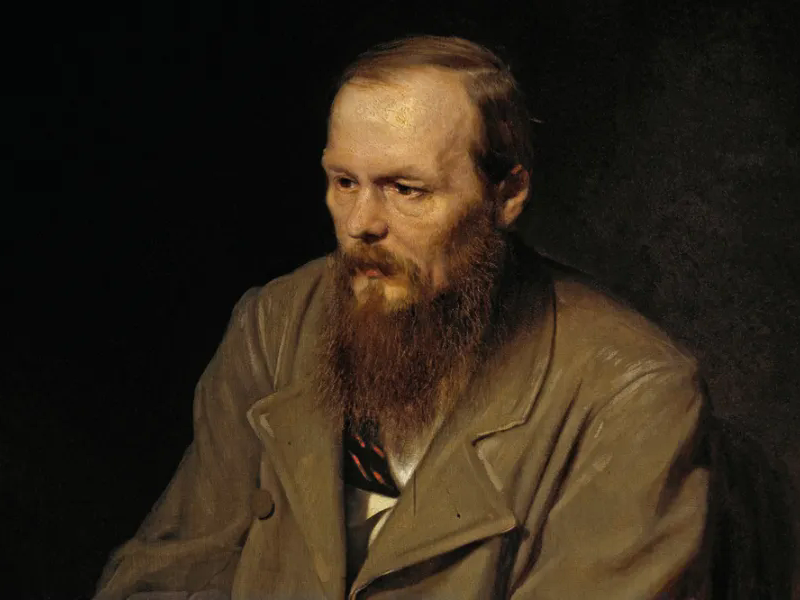
web-lead-image_final_dostoevsky
Books

Dostoevsky the Liberal

In the most famous section of his best-known novel, Dostoevsky’s Ivan Karamazov brings forward his case against God. He opens with a horrific litany of outrages against children. Turkish soldiers make a baby laugh and then shoot a pistol into his face. A little girl is beaten, thrashed, kicked by…

by Peter LeithartMarch 24, 2014
kelly-sikkema-ggs0_g6wi-i-unsplash
Epistemology

Subsidiary-Focal Integration and Liturgy

​At the heart of Esther Lightcap Meek's splendid ​Little Manual for Knowing is a concept she picked up from Michael Polanyi, "subsidiary-focal integration." The concept begins from the insight that all our knowing, all our experience, is double. We focus on something, but we are capable of "indwelling" that focal…

by Peter LeithartMarch 19, 2014
engin-akyurt-uz9qpvbol0e-unsplash
Revelation

White Stone

Jesus promises the overcomers of Pergamum "hidden manna" and a "white stone." The hidden manna is often linked with the manna stashed away in the ark of the covenant. The white stone has proved more elusive. Exodus tells us that manna was white (Exodus 16:31) and like bdellium (Numbers 11:7),…

by Peter LeithartMarch 17, 2014
226961fgsdl
Leviticus

A Theology of Festivity

Leviticus 23 begins with a reference to “Yahweh’s appointed times” ( mo’ade-YHWH ). Mo’ed is the common term for the feasts of Israel. A few dimensions to this term. First, it means “appointed time” or “designated time.” It is a time set by Yahweh. Yahweh has claimed certain times as…

by Peter LeithartMarch 12, 2014

Showing page 177 of 309

See all
See all
History

Male Muse

In a NYT review of Arthur Phillips’s latest, Kate Christensen comments, “The male muse is an unaccountably rare thing in art, with the exception of the men who inspired the likes of Auden and O’Hara — that is, men who were as sexualized and fetishized as their female counter parts,…

April 10, 2009
History

We Were Never Modern

Carl Becker ( The Heavenly City of the Eighteenth-Century Philosophers ) writes that though the Philosophes were devoted to reason, “a skeptical lot, atheists in effect if not by profession, addicted to science and the scientific method, always ready to crush the infamous, valiant defenders of liberty, equality, fraternity, freedom…

April 10, 2009
History

House of gods

In an article on Constantine’s church-building, Gregory Alexander repeats a commonplace about the difference between pagan and Christian places of worship: “The temple is a house for the god; the church is a gathering place for communal worship.” Yes, but: Jesus says He’ll be there in our gathering, so the…

April 9, 2009
History

Freeman on Persecution

Freeman’s colossal misconceptions come out on every page. Under that patient persecution by the Romans, some Christians saw the light and offered sacrifice, but others “resisted to the point of martyrdom.” Not that it mattered much; they were eager to die, since they preferred “their reward in heaven . .…

April 8, 2009
History

Freeman’s distortions

Two instances of Freeman’s distortions (these from The Closing of the Western Mind ). First, he has a couple of pictures of the Riace warrior statue from Delphi, which “represents man at his most heroic, almost a god in his own right.” On the facing page he says “By the…

April 8, 2009
History

Christ and Caesar

Charles Freeman notes that the sarcophagus of the Roman aristocrat Junius Bassus depicts Jesus “entering Jerusalem as if he was an emperor entering a city, and above this image he is shown sitting in glory on an imperial throne set above a representation of heaven.” He cites Sabine MacCormack’s comment…

April 8, 2009

Showing page 1395 of 2212

Browse by Category

In Medias Res

Your weekly digest for all things Theopolis.

Donate

Theopolis is nearly 100% donor-supported. Consider joining us on our mission.