Theopolis Logo

Writing

Explore our collection of theological essays, biblical studies, and reflections on faith and culture.

See all
aaron-burden-h8s0pf2rcqs-unsplash
Galatians

The Restoration of the Galatians

While controversies over the writings of Paul continue in various corners of the intellectual globe, the word of God given through Paul and his scribe and all of the church’s interpreters and translators over the last two millennia is still readily available to the lofty and the lowly. Paul, as…

by Grace LangnessMarch 25, 2013

kiwihug-l4gw27xzn1i-unsplash
Deuteronomy

Law and History: How to Read the Law of Moses (Part 2)

The second in a series of studies in Deuteronomy. Deuteronomy 22:30: A man shall not take his father’s wife, and shall not uncover his father’s wing (Hebrew: kanaf ). There are a number of unusual features in this law that mark it out from the previous context, indicating that it…

by Ralph Allan SmithMarch 20, 2013
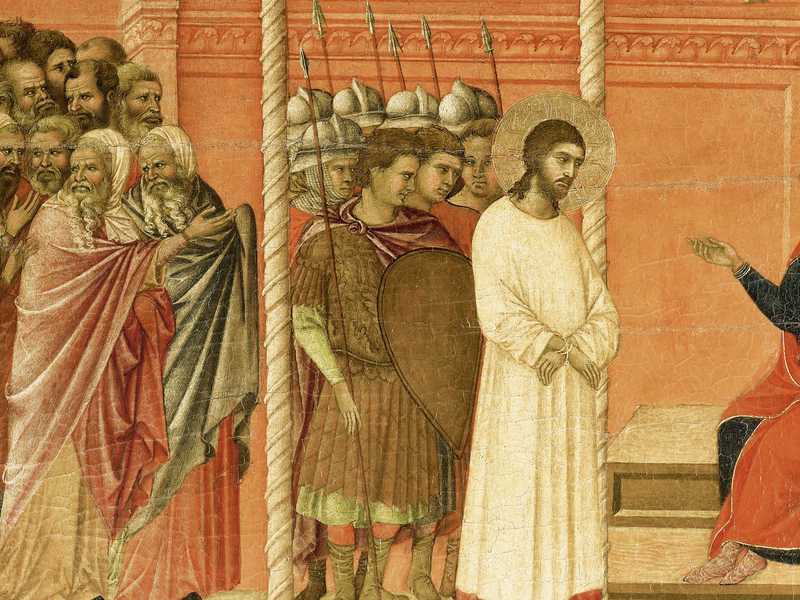
200403-moss-pilate-tease_pncfq5
History

Victimhood and the Gospel

The texts of Christianity have been slowly at work, under the power of the Holy Spirit for 2000 years now. If we could be magically transported back into the world of two millennia ago, modern Americans would be shocked at the cruelty of that world. There was no concern for…

by Richard BledsoeMarch 18, 2013
aaron-burden-1ebsmyrau-s-unsplash
Luke

The Dysfunctional Family of the Gadarene Madman

The Story of the Gadarene Madman is told in all three synoptic Gospels (Matthew 8:28-34, Mark 5:1-20, Luke 8:26-37). Jesus ventures into a Gentile area when He passes over the Sea of Galilee. Upon disembarking from his boat, he is immediately met by a demon-possessed madman. Upon meeting Jesus, he…

by Richard BledsoeMarch 13, 2013
aaron-burden-1ebsmyrau-s-unsplash
Deuteronomy

Law and History: How to Read the Law of Moses

Part 1 of a multi-part series of studies on Deuteronomy 22:30-23:8. Eric Auerbach, in his classic work on Western literature, devotes his first chapter to contrasting Homer with the Bible. Of Homer, he writes of the “need of Homeric style to leave nothing which it mentions half in darkness and…

by Ralph Allan SmithMarch 12, 2013
markus-winkler-aid-xyrtlec-unsplash
Theopolis News

James Jordan in Korea, Japan

Trinity House Fellow James B. Jordan will be a speaker at an International Conference on Biblical Symbolism that will be held in Seoul on Monday, May 27 in 2013. He will address "The Importance of Biblical Symbolism and Symbolic Interpretation of the Bible." The conference will have three other speakers…

by Peter LeithartMarch 9, 2013

Showing page 197 of 309

See all
See all
History

Missing Sunday School

Robin Lane Fox ( Pagans and Christians ) summarizes Constantine’s telling of the story of Daniel: In the court of Cambyses, Daniel “worked his miracles and prayed intently three times a day. The Magi became jealous of this new superior, and so he cast him to lions in the royal…

March 26, 2009
History

Religion of the Paperback

That’s how Stroumsa describes early Christianity, because of its preference for the small, portable codex over the traditional, sacred but quite cumbersome scroll. The codex had practical advantages, but Stroumsa thinks that something else was at work: “In going against all religious and cultural norms, the Christians manifestly knew that…

March 25, 2009
History

End of Sacrifice

Guy Stroumsa’s book, The End of Sacrifice (just released from the University of Chicago) is small in size but raises huge questions. Based on lectures delivered at the College de France, Stroumsa’s book examines religious, religio-political and religio-anthropological shifts during the first centuries after Christ. He sees several new emphases…

March 25, 2009
History

Human sacrifice

Eusebius ( Gospel Preparation , 4.17) charges that human sacrifice was regularly practiced by ancient peoples: “And whether it is Phylarchus, or any one else, who records that all the Greeks, before going out to their wars, offer a human sacrifice, do not thou hesitate to take him also as…

March 25, 2009

Magnanimity

Aristotle defined magnanimity or “great-mindedness” as a proper estimate of one’s merits: “The Great-minded man is then, as far as greatness is concerned, at the summit, but in respect of propriety he is in the mean, because he estimates himself at his real value (the other characters respectively are in…

March 25, 2009
Uncategorized

Moses and philosophy

In his Oration to the Saints , Constantine repeats the patristic commonplace that Greek philosophy owed a debt to Moses: “Moses excelled his predecessors in wisdom to such a degree that even those who were praised by the nations as wise men and philosophers came to emulate his wisdom. For…

March 25, 2009

Showing page 1401 of 2212

Browse by Category

In Medias Res

Your weekly digest for all things Theopolis.

Donate

Theopolis is nearly 100% donor-supported. Consider joining us on our mission.