Theopolis Logo

Writing

Explore our collection of theological essays, biblical studies, and reflections on faith and culture.

See all
timothy-eberly-djj49s6ud2o-unsplash
Biblical Studies

Whom Shall We Believe? Evangelicals and Scholarship

As we move into the Persian period of ancient history, and try to reconcile it with Daniel’s prophecies, we need to ask some hard questions about the interpretation of the data before us. One question concerns the reliability of the Biblical witness, and beyond that a second question concerns the…

by James B. JordanJanuary 30, 1991
a2-118606403-jpg
Biblical Horizons

Understanding Russia

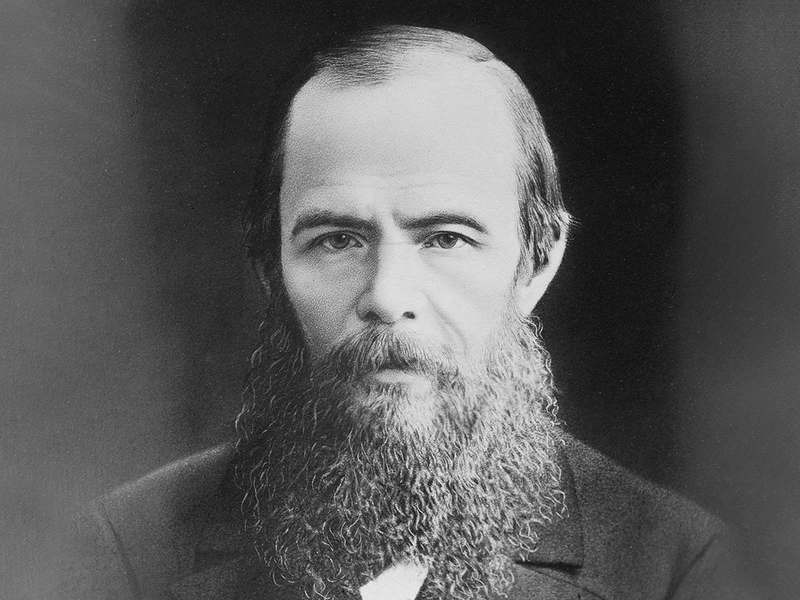
Ewa Majewska Thompson: Understanding Russia: The Holy Fool in Russian Culture Ewa M. Thompson is Professor and Chairman of the Department of German and Slavic Studies at Rice University. In this seminal study, she investigates the concept of the "holy fool" as it exists in Russian culture and civilization. While…

by James B. JordanJanuary 30, 1991
alfons-morales-ylswjsy7stw-unsplash-1
Biblical Studies

The Bible and Western Literature

The most cursory glance at the history of Western literature reveals that it has been deeply influenced by the Bible. Some of the greatest classics of Western literature draw their plots, characters, and ideas largely from Scripture; Dante’s Divine Comedy and Milton’s Paradise Lost are two of the most notable…

by Peter LeithartJanuary 23, 1991
screen-shot-2022-04-28-at-4-57-36-pm
Exodus

The Beautiful Child

Each time the Scriptures recount the story of Moses’ birth and deliverance from Pharaoh, reference is made to two facts about that event. First, each text points out that Moses was "beautiful." Second, each text points out that Amram and Jochebed, his parents, hid him for three months (cf. Ex.…

by Peter LeithartJanuary 23, 1991
501819ld-2
Romans

Who Rules the Land? The Meaning of the Noahic Covenant, Part 2

Click HERE for Part 1. The Message of the Covenant Can we really say that the saints presently rule the world, and always have since Noah? Look around and you can see that the wicked rule in virtually every country on earth. There are wicked civilizations that rise Babelically age…

by James B. JordanDecember 30, 1990
hebrew-manuscript-6
Hermeneutics

Daniel’s 70 Weeks

As we saw last time , we have come to the place in the study of Biblical chronology where it seems that we are forced to abandon the Bible itself as our primary source of information. If we assume that the seventy sevens of Daniel 9:24-27 are in fact weeks…

by James B. JordanDecember 23, 1990

Showing page 300 of 309

See all
See all

Biting again

Philip Esler draws on the anthropological work of Anthony Cohen to suggest that Paul’s reference to “biting” and “devouring” may describe the actual internal life of Paul’s churches: “Anthony Cohen’s argument about the persistence of liminality among persons once they have crossed a boundary to join a new group raises…

February 24, 2009

Biting

Paul contrasts fulfilling the law of loving neighbor with biting, devouring, and consuming. Love for neighbor is human behavior; anything else is feral. The verb “bite” ( dakno ) is used only in Galatians 5:15 in the NT, and only twice in the LXX (Genesis 49:17; Deuteronomy 8:15), both references…

February 24, 2009

Linguistic reversal

Galatians 5-6 turns a number of Pauline terms inside out. After spending most of the letter polemicizing against seeking justification form the “works of the law,” Paul rehabilitates both “work” (5:6) and “law” (5:14; 6:2). After announcing that in Christ we have been freed from the Egypt of Judaic managers…

February 24, 2009

Chiasm upon Chiasm in Galatians 5-6

Galatians 5-6 is organized as a chiasm, with the exhortation to bear one another’s burdens, and fulfill the law of Christ, at the center. The structure suggests that that the freedom that the Spirit grants is precisely freedom to bear the burdens of others as Christ as done for us.…

February 24, 2009
History

Neutral

Freeman again: He claims that Constantine employed the image of the sun, used in both Christianity and paganism, to maintain “his neutral position between opposing faiths.” In part, his interpretation is based on HA Drake. But the neutrality that Drake talks about is a neutrality in “public space” that enabled…

February 24, 2009
History

Not so shrewd

Freeman says that Constantine’s “conversion” was a shrewd political act, basing this conclusion, he claims, on “recent research.” (Burckhardt is recent??) One sign of his shrewdness was his ability to satisfy both Christian and pagan: “Some very careful political manoeuvring was necessary if Constantine was to avoid offending either Christian…

February 23, 2009

Showing page 1412 of 2212

Browse by Category

In Medias Res

Your weekly digest for all things Theopolis.

Donate

Theopolis is nearly 100% donor-supported. Consider joining us on our mission.