Theopolis Logo

Writing

Explore our collection of theological essays, biblical studies, and reflections on faith and culture.

See all
sculptor
Art

The Artist's Litany

If we say that we have no sin, we deceive ourselves, and the truth is not in us. (1 John 1:8) O God the Father, creator of heaven and earth, Alpha and Omega, beginning and end, who inspired Creation with the breath of your nostrils, who placed Adam in the…

by Christian LeithartFebruary 2, 2016
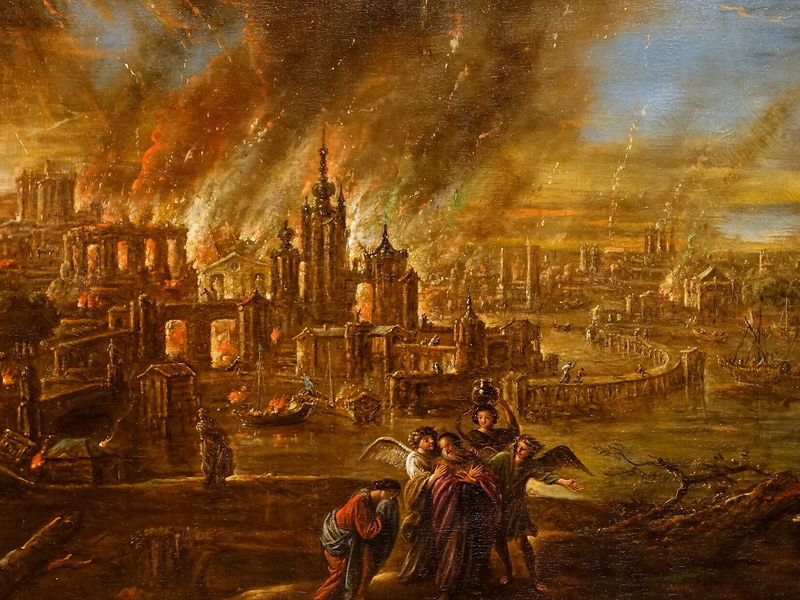
sodom_and_gomorrah_afire_by_jacob_jacobsz-_de_wet_d-_j-_probably_koln_c-_1680_oil_on_canvas_-_hessisches_landesmuseum_darmstadt_-_darmstadt_germany_-_dsc01149-e1632540497247
American Culture

American Sodom

For nearly a half-century, Sodom has been a key symbol in the American culture wars. On the one side, we have an aggressive movement among homosexuals that has first decriminalized homosexual conduct, then to force cultural and legal recognition of homosexuals as a minority and to normalize homosexual behaviors, finally…

by Peter LeithartJanuary 28, 2016
image-20150409-15244-1r08rsu
Biblical Theology

The Meaning of the Mount of Olives

Speaking of the Church, Romans 11:16-17 says, "And if the root be holy, the branches are also. But if some of the branches were broken off, and you, being a wild olive were grafted in among them and became partaker with them of the root of the fatness of the…

by James B. JordanJanuary 26, 2016
img_6134
Isaiah

No Sabbath for God

At the end of Isaiah 61, Yahweh's Servant rejoices because the Lord clothes Him with salvation and righteousness. He decks Him like a bridegroom with a garland on His head. He wears jewels like a bride. He is a new bridegroom in a new garden of Eden, a garden of…

by Peter LeithartJanuary 21, 2016
hebrew-manuscript-2
Biblical Law

Approaching the Torah

Before anything else, a word about “Torah” may be in order. I have been persuaded that “law” is a bad translation of “Torah,” even though it is evident that what is called “Torah” does have commandments, statutes, and ordinances in abundance. Why not “law?” “Law” as a translation for “Torah”…

by Ralph Allan SmithJanuary 19, 2016
jane-austen-2
Biblical Horizons

Jane Austen, Pundit

Few novelists seem as innocent of the temptation to punditry as Jane Austen. Though living through a period that witnessed the birth of an independent United States, the French Revolution and the Terror, the Napoleonic wars and the rise of revolutionary romanticism, and the upheavals of the Industrial Revolution, she…

by Peter LeithartJanuary 14, 2016

Showing page 137 of 309

See all
See all
History

Infallible Constantine?

The epigram to chapter 11 of Charles Freeman’s Closing of the Western Mind is from a letter of Constantine to the churches in Alexandria: “We have received from Divine Providence the supreme favor of being relieved of all error.” The footnote leads to Ramsay Macmullen’s Christianity and Paganism in the…

February 23, 2009

China

Yesterday, Hillary Clinton disappointed human rights activists by degrading the role of human rights issues in her discussions with Chinese. Differences on human rights will not, she said, interfere with the common interests of the US and China. Today, she commends the Chinese for bailing out the US by continuing…

February 22, 2009
History

Barbarians

Momigliano again, pointing out that the church had ways of dealing with the barbarian threat that were not available to pagans: “The educated pagan was by definition afraid of barbarians. There was no bridge between the aristocratic ideals of a pagan and the primitive violence of the German invader.” At…

February 21, 2009
History

Follow the money

Not not did the church draw the best men, men who otherwise would have been, Momigliano says, “generals, governors or provinces, advisers to the emperors,” but it drew popular enthusiasm and loyalty, and money: “Money which would have gone to the building of a theatre or of an aqueduct now…

February 21, 2009
History

Ecclesial aristocracy

Arnaldo Momigliano suggests that one of the key ways that Christianity contributed to the decline of Rome was by siphoning off the best and brightest to the church. The “central feature of the fourth century” was “the emergence of the Church as an organization competing with the State itself and…

February 21, 2009
History

Idolatry in the light

Constantine’s legislation in the Theodosian Code includes several odd decrees that prohibit soothsayers and other magicians from “crossing the threshold” of a house under the pretext of friendship. Private soothsaying is prohibited. At the same time, Constantine says that soothsayers will be consulted if lightning strikes the palace, and also…

February 21, 2009

Showing page 1413 of 2212

Browse by Category

In Medias Res

Your weekly digest for all things Theopolis.

Donate

Theopolis is nearly 100% donor-supported. Consider joining us on our mission.