Theopolis Logo

Writing

Explore our collection of theological essays, biblical studies, and reflections on faith and culture.

See all
aaron-burden-h8s0pf2rcqs-unsplash
Galatians

The Restoration of the Galatians

While controversies over the writings of Paul continue in various corners of the intellectual globe, the word of God given through Paul and his scribe and all of the church’s interpreters and translators over the last two millennia is still readily available to the lofty and the lowly. Paul, as…

by Grace LangnessMarch 25, 2013

kiwihug-l4gw27xzn1i-unsplash
Deuteronomy

Law and History: How to Read the Law of Moses (Part 2)

The second in a series of studies in Deuteronomy. Deuteronomy 22:30: A man shall not take his father’s wife, and shall not uncover his father’s wing (Hebrew: kanaf ). There are a number of unusual features in this law that mark it out from the previous context, indicating that it…

by Ralph Allan SmithMarch 20, 2013
200403-moss-pilate-tease_pncfq5
History

Victimhood and the Gospel

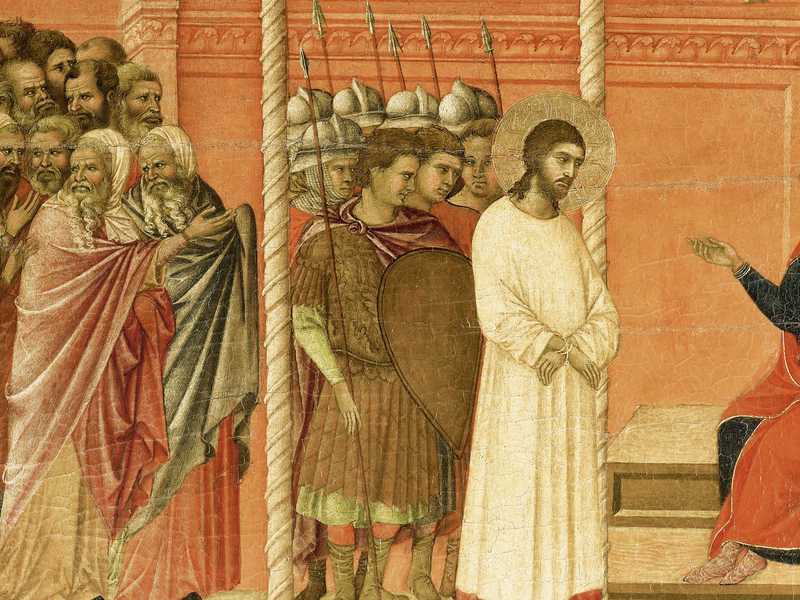
The texts of Christianity have been slowly at work, under the power of the Holy Spirit for 2000 years now. If we could be magically transported back into the world of two millennia ago, modern Americans would be shocked at the cruelty of that world. There was no concern for…

by Richard BledsoeMarch 18, 2013
aaron-burden-1ebsmyrau-s-unsplash
Luke

The Dysfunctional Family of the Gadarene Madman

The Story of the Gadarene Madman is told in all three synoptic Gospels (Matthew 8:28-34, Mark 5:1-20, Luke 8:26-37). Jesus ventures into a Gentile area when He passes over the Sea of Galilee. Upon disembarking from his boat, he is immediately met by a demon-possessed madman. Upon meeting Jesus, he…

by Richard BledsoeMarch 13, 2013
aaron-burden-1ebsmyrau-s-unsplash
Deuteronomy

Law and History: How to Read the Law of Moses

Part 1 of a multi-part series of studies on Deuteronomy 22:30-23:8. Eric Auerbach, in his classic work on Western literature, devotes his first chapter to contrasting Homer with the Bible. Of Homer, he writes of the “need of Homeric style to leave nothing which it mentions half in darkness and…

by Ralph Allan SmithMarch 12, 2013
markus-winkler-aid-xyrtlec-unsplash
Theopolis News

James Jordan in Korea, Japan

Trinity House Fellow James B. Jordan will be a speaker at an International Conference on Biblical Symbolism that will be held in Seoul on Monday, May 27 in 2013. He will address "The Importance of Biblical Symbolism and Symbolic Interpretation of the Bible." The conference will have three other speakers…

by Peter LeithartMarch 9, 2013

Showing page 197 of 309

See all
See all

Proverbs 25:27-28

PROVERBS 25:27 Like Genesis 1-2, this section of Proverbs 25 establishes a rhythm of “good” and then declares something “not good.” “Good” it is to live in the corner of the roof, and “good” news refreshes the soul; but it is “not good” to eat too much honey. Chapters 24-25…

February 7, 2009
History

Christianity and Fall of Rome

Geza Alfoldy concludes his Social History of Rome with suggestive comments about the relation of Christianity and the fall of the empire. The problem was not that Christianity undermined patriotism; it didn’t. Rather, “The role of Christianity in the collapse of the Roman system of power resulted from the fact…

February 7, 2009

Woe to the vineyard

Isaiah tells a tale of a vineyard (5:1-7), and then issues a series of woes (5:8-23) that culminates in a warning that a nation is going to be summoned to Judah (5:24-30). Jesus follows the same sequence: Parables of the vineyard in chapters 20-21 are followed by woes (ch. 23)…

February 6, 2009

Proverbs 25:23-26

PROVERBS 25:23 This verse gives us a translation issue in the first line. The NASB translates the line “The north wind brings forth rain,” but the KJV says that the north wind “drives away rain.” The verb in question has a range of applications and uses, but the basic idea…

February 6, 2009
Uncategorized

Gladiatorial sacrifice

Barton again: “The Romans’ expectations of the brave gladiator were identical to their expections of the sacrificial victim: the victim in a Roman sacrifice was led to the altar by a slack rope, in order that it might not seem to be dragged by force. Any show of resistance on…

February 5, 2009

Sacramentum

From a 1989 article by CA Barton on gladiatorial games in Rome: When a gladiator entered the arena, “he took a frightful oath, the sacramentum gladiatorim ; he swore to endure being burned, bound, beaten, and slain by the sword . . . . He foreswore all that might ameliorate…

February 5, 2009

Showing page 1420 of 2212

Browse by Category

In Medias Res

Your weekly digest for all things Theopolis.

Donate

Theopolis is nearly 100% donor-supported. Consider joining us on our mission.