Theopolis Logo

Writing

Explore our collection of theological essays, biblical studies, and reflections on faith and culture.

See all
kiwihug-l4gw27xzn1i-unsplash
Hermeneutics

Hermeneutical Polytheism

A couple of decades ago, when I was a young Reconstructionist (instead of a middle-aged post-Reconstructionist), I coined the phrase "political polytheism" to describe how modern evangelical Christians approach matters of social law and politics. Christians want the Bible for Church and family life, but turn to other gods for…

by James B. JordanJanuary 28, 1996

jan-kahanek-g3o5ztrk2e4-unsplash
Biblical Horizons

Concerning Contracts and Covenants

Gary North has from time to time taken note of some of the differences between contracts and covenants. For him, one of the most important is the oath-character of a covenant. Naturally, the English terms "contract" and "covenant" can be used with varying nuances by different writers, and their zone…

by James B. JordanJanuary 5, 1996
hebrew-manuscript-6
Biblical Studies

Rethinking the Order of the Old Testament

The Book of Chronicles is the last book in the Hebrew Canon of the Old Testament. The word "canon" means "authoritative list" when used in connection with the Bible. What we call the Hebrew Canon consists of 24 books arranged in three major divisions: the Law, the Prophets, and the…

by James B. JordanDecember 28, 1995
skyler-gerald-akljfvj5ym4-unsplash
Biblical Studies

At The Center of the Book of Kings

by: Peter Leithart and James Jordan The Book of Kings is structured chiastically, or concentrically. To see this clearly, we start in the middle and work our way outward. 2 Kings 3–7 record the central events of the ministry of Elisha. Elisha makes his first appearance in 1 Kings 19:19-21,…

by Peter LeithartNovember 5, 1995
lili-popper-lu15z1m_kfm-unsplash
Judges

Dynastic Aspirations in the Book of Judges

(The following is a supplement to my book, God’s War Against Humanism , a study of the book of Judges, available from Biblical Horizons for $20.00 – a photocopy of the original book, which is now out of print). The turning point in the book of Judges is 8:22-28. Here…

by James B. JordanNovember 5, 1995
james-coleman-orks2dpueo0-unsplash
Biblical Horizons

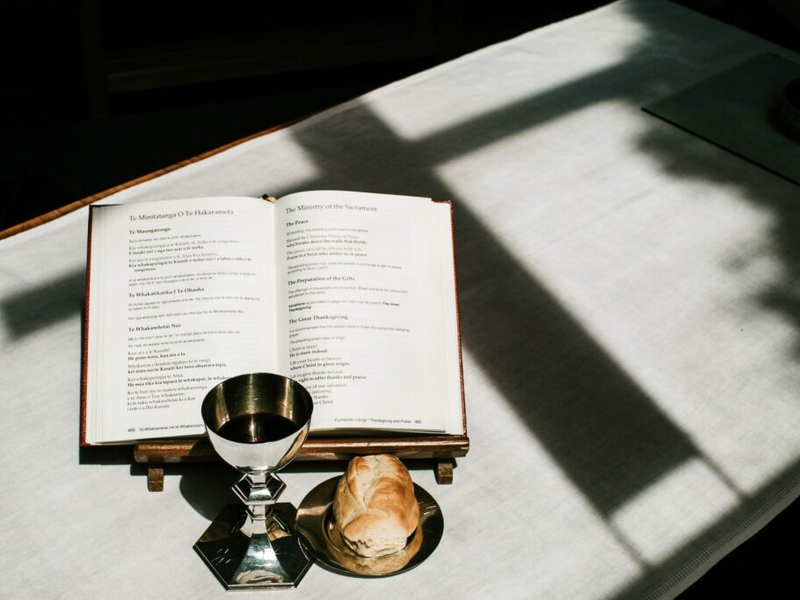
Doing the Lord’s Supper

From time to time I am asked how I think the Lord’s Supper should be done. This essay is my response to that question. To start with, we should agree that the Lord’s Supper is the only ritual we are obligated to do in the New Covenant on a routine…

by James B. JordanNovember 5, 1995

Showing page 268 of 309

See all
See all

Proverbs 25:27-28

PROVERBS 25:27 Like Genesis 1-2, this section of Proverbs 25 establishes a rhythm of “good” and then declares something “not good.” “Good” it is to live in the corner of the roof, and “good” news refreshes the soul; but it is “not good” to eat too much honey. Chapters 24-25…

February 7, 2009
History

Christianity and Fall of Rome

Geza Alfoldy concludes his Social History of Rome with suggestive comments about the relation of Christianity and the fall of the empire. The problem was not that Christianity undermined patriotism; it didn’t. Rather, “The role of Christianity in the collapse of the Roman system of power resulted from the fact…

February 7, 2009

Woe to the vineyard

Isaiah tells a tale of a vineyard (5:1-7), and then issues a series of woes (5:8-23) that culminates in a warning that a nation is going to be summoned to Judah (5:24-30). Jesus follows the same sequence: Parables of the vineyard in chapters 20-21 are followed by woes (ch. 23)…

February 6, 2009

Proverbs 25:23-26

PROVERBS 25:23 This verse gives us a translation issue in the first line. The NASB translates the line “The north wind brings forth rain,” but the KJV says that the north wind “drives away rain.” The verb in question has a range of applications and uses, but the basic idea…

February 6, 2009
Uncategorized

Gladiatorial sacrifice

Barton again: “The Romans’ expectations of the brave gladiator were identical to their expections of the sacrificial victim: the victim in a Roman sacrifice was led to the altar by a slack rope, in order that it might not seem to be dragged by force. Any show of resistance on…

February 5, 2009

Sacramentum

From a 1989 article by CA Barton on gladiatorial games in Rome: When a gladiator entered the arena, “he took a frightful oath, the sacramentum gladiatorim ; he swore to endure being burned, bound, beaten, and slain by the sword . . . . He foreswore all that might ameliorate…

February 5, 2009

Showing page 1420 of 2212

Browse by Category

In Medias Res

Your weekly digest for all things Theopolis.

Donate

Theopolis is nearly 100% donor-supported. Consider joining us on our mission.