Theopolis Logo

Writing

Explore our collection of theological essays, biblical studies, and reflections on faith and culture.

See all
aaron-burden-h8s0pf2rcqs-unsplash
Luke

The Second Isaiah and His Message

Higher critics have, for a long time, posited a Second Isaiah to account for the structural and tone differences in the book from chapter 40 on. Now, we do believe in a Second Isaiah, but believe that the form critics have generally suffered from a lack of imagination both in…

by Richard BledsoeOctober 5, 1995

whichbooksbelongintheot
Leviticus

Getting the Translation Right

A couple of the most serious mistranslations in our Bibles are found in the book of Leviticus. The main reason these errors have gone unreformed, I believe, is because Leviticus is simply not studied often enough, so the problem has never been fully addressed. The first mistranslation is found right…

by James B. JordanOctober 4, 1995
Biblical Horizons

Prophecy and the Coming Christian Revolution

Thomas Kuhn’s book, The Structure of Scientific Revolutions , is really a parenthesis inside of the larger reality of Christian history. Progress and forward movement inside of science is a footnote to the larger and more general reality of covenant renewals in both Biblical and Christian history. The fundamental mark…

by Richard BledsoeSeptember 5, 1995
luca-tosoni-wneuvexggjg-unsplash
Biblical Horizons

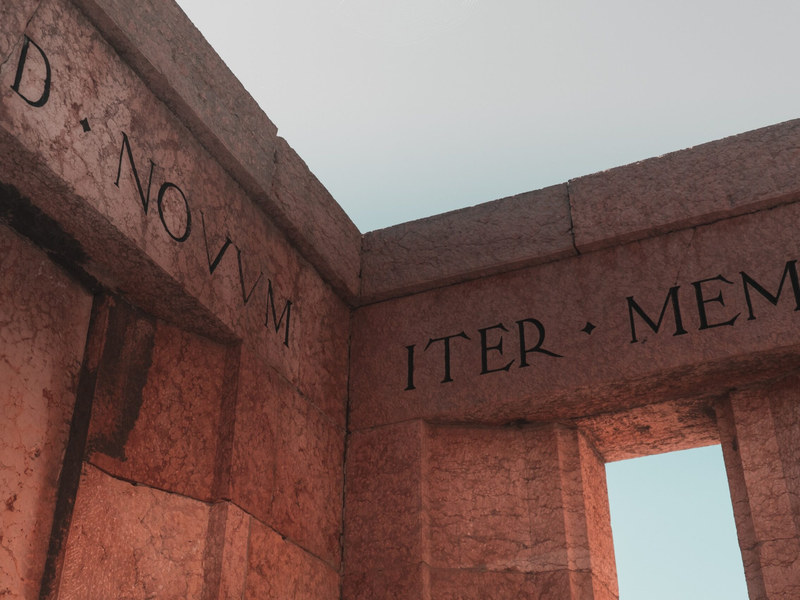
In Defense of Latin

James Jordan, in the June/July 1995 Biblical Horizons, wrote a very helpful essay, "The Great Hangover," the gist of which I entirely agree with. The theme of the essay was that the Church to move forward must shuck off the old husks of Hellenism, Rabbinism, and undo admiration for all…

by Richard BledsoeSeptember 5, 1995
pawan-sharma-vt2efwhbs-e-unsplash
Biblical Horizons

The Triune Office Reconsidered

Traditionally, the three offices in the Presbyterian churches have been teaching elder, ruling elder, and deacon. These have been associated with priest, elder, and Levite respectively. We have seen that the deacon is in fact an apprentice and assistance elder. We have also seen that Levites as well as priests…

by James B. JordanSeptember 4, 1995
jordan-wozniak-xp_agmeea6s-unsplash-2
Biblical Studies

When the Son Is Glorified

John 7:39 interprets Jesus’ offer of living water as an offer of the Spirit to those who believe, "for," John continues, "the Spirit was not yet, because Jesus was not yet glorified." John was not making an ontological statement about the Spirit, as if the Spirit did not exist until…

by Peter LeithartJuly 27, 1995

Showing page 269 of 309

See all
See all

Proverbs 25:27-28

PROVERBS 25:27 Like Genesis 1-2, this section of Proverbs 25 establishes a rhythm of “good” and then declares something “not good.” “Good” it is to live in the corner of the roof, and “good” news refreshes the soul; but it is “not good” to eat too much honey. Chapters 24-25…

February 7, 2009
History

Christianity and Fall of Rome

Geza Alfoldy concludes his Social History of Rome with suggestive comments about the relation of Christianity and the fall of the empire. The problem was not that Christianity undermined patriotism; it didn’t. Rather, “The role of Christianity in the collapse of the Roman system of power resulted from the fact…

February 7, 2009

Woe to the vineyard

Isaiah tells a tale of a vineyard (5:1-7), and then issues a series of woes (5:8-23) that culminates in a warning that a nation is going to be summoned to Judah (5:24-30). Jesus follows the same sequence: Parables of the vineyard in chapters 20-21 are followed by woes (ch. 23)…

February 6, 2009

Proverbs 25:23-26

PROVERBS 25:23 This verse gives us a translation issue in the first line. The NASB translates the line “The north wind brings forth rain,” but the KJV says that the north wind “drives away rain.” The verb in question has a range of applications and uses, but the basic idea…

February 6, 2009
Uncategorized

Gladiatorial sacrifice

Barton again: “The Romans’ expectations of the brave gladiator were identical to their expections of the sacrificial victim: the victim in a Roman sacrifice was led to the altar by a slack rope, in order that it might not seem to be dragged by force. Any show of resistance on…

February 5, 2009

Sacramentum

From a 1989 article by CA Barton on gladiatorial games in Rome: When a gladiator entered the arena, “he took a frightful oath, the sacramentum gladiatorim ; he swore to endure being burned, bound, beaten, and slain by the sword . . . . He foreswore all that might ameliorate…

February 5, 2009

Showing page 1420 of 2212

Browse by Category

In Medias Res

Your weekly digest for all things Theopolis.

Donate

Theopolis is nearly 100% donor-supported. Consider joining us on our mission.