Theopolis Logo

Writing

Explore our collection of theological essays, biblical studies, and reflections on faith and culture.

See all
trnava-university-beeyeib-am8-unsplash
Biblical Horizons

Book Review: The Keys of This Blood: The Struggle for World Dominion Between Pope John Paul II, Mikhail Gorbachev & the Capitalist West

Malachi Martin, The Keys of This Blood: The Struggle for World Dominion Between Pope John Paul II, Mikhail Gorbachev & the Capitalist West (New York: Simon and Schuster, 1990). Reviewed by Peter J. Leithart. The subtitle of this massive volume gives a good idea of its major theme. Martin, the…

by Peter LeithartJuly 6, 1991

venice-la-distruzione-del-tempio-di-gerusalemme-francesco-hayez-gallerie-accademia-venice
Biblical Horizons

The Abomination of Desolation, Part 3: An Overview of the Pattern

The Abomination of Desolation: PART 1 The Abomination of Desolation: PART 2 What I intend to do in this series of studies is this: First, in the present essay we shall survey the occurrences of the Abomination of Desolation in the Bible in a cursory way, in order to get…

by James B. JordanJune 22, 1991
venice-la-distruzione-del-tempio-di-gerusalemme-francesco-hayez-gallerie-accademia-venice
2 Thessalonians

The Abomination of Desolation, Part 2: The Man of Sin

We previously surveyed what is meant by the abomination of desolation . We suggested that it refers to sacrilegious acts performed by the religious leaders of Israel, captained by their High Priest, right in front of God’s face in the Temple. Later studies in this series will provide evidence for…

by James B. JordanJune 22, 1991
greg-rakozy-ompaz-dn-9i-unsplash-2
Biblical Chronology

The Framework Hypothesis

Throughout history, the Christian Church has had to guard against the heresy of gnosticism. Gnosticism is not an ordinary heresy, because it does not manifest itself as a set of defined beliefs. Rather, gnosticism is a tendency, a tendency to replace the historic facts of Christianity with philosophical ideas. Gnosticism…

by James B. JordanJune 22, 1991
synod-holy-fathers-large
Biblical Horizons

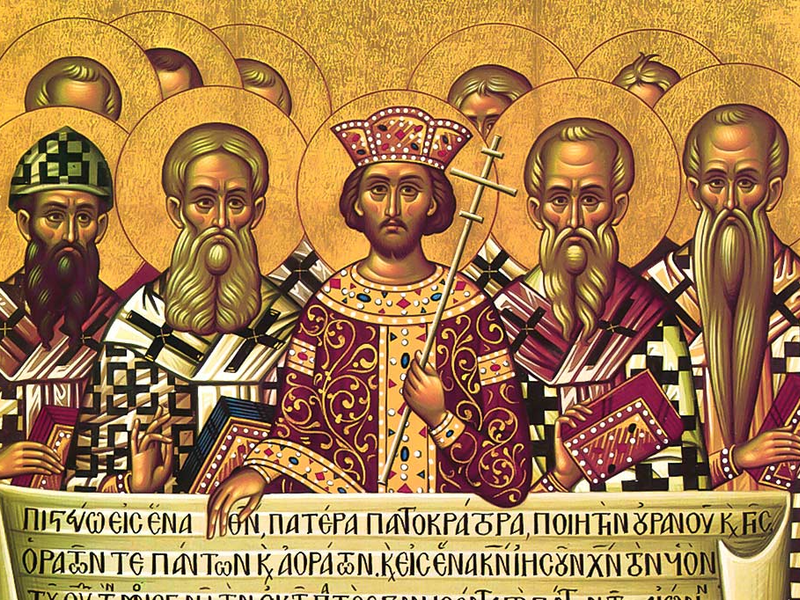
What About the “Seventh Ecumenical Council”?

In Rite Reasons Nos. 9-12, I discussed the errors of Roman Catholicism, Anglo-Catholicism, and Eastern Orthodoxy. I have had several requests to comment further on the so-called Seventh Ecumenical Council, held at Nicaea in A.D. 787. That Council ordered the excommunication of anyone who rejects the veneration of icons. 1…

by James B. JordanJune 22, 1991
debby-hudson-qa74yh6-xlc-unsplash
Philippians

The Theology of the Drink Offering

The drink offering or libation ( nesek ) is mentioned in only three places in the book of Leviticus. When the sheaf of the firstfruits was waved before the Lord, a grain offering was to be burned, along with "its libation, a fourth of a hin of wine [approx. one…

by Peter LeithartMay 30, 1991

Showing page 296 of 309

See all
See all

Transgression and law

Transgression in Paul’s terminology refers to violation of specific commandments. Mostly. But Galatians 2:17 has a radical redefinition of transgression. J. Louis Martyn says, when Paul says that re-erecting the wall of separation between Jew and Gentile makes him a transgressor, he implies that “the Law can play a role…

February 3, 2009

Justification and nature, again

There does appear to be a positive connection between justification and nature in Galatians 2. It’s elusive, but it seems to be there. In verse 17, Paul argues that those who seek justification in Christ cannot be found sinners without implying that Christ Himself is a minister of sin. Me…

February 3, 2009

Nature, Justification, Law

What is the logic of Paul’s argument in Galatians 2:15-16? This breaks down into several questions: Where does “justification” come from? How does Paul move from Jews-by-nature as opposed to Gentile-sinners to justification by the faith of Christ rather than the works of the law? And, of course, verse 16…

February 3, 2009

Nature in Paul

We instinctively distinguish nature and nurture, genes and training, and the Greeks did too with their distinction of physis and nomos . Paul’s use, though, doesn’t fit easily into this binary. Paul at times uses physis in a sense close to our own, describing what is given to a thing…

February 3, 2009

Sermon notes

INTRODUCTION Jesus enters the temple twice. The first time, He symbolically destroys the temple, pronounces it a robbers’ den, and sets up a ministry of healing ( 21:12 -14). When He comes back the following day, the priests and elders go on the attack ( 21:23 ). Jesus gave them…

February 2, 2009

The ark’s return

Jesus’ triumphal entry fulfills the typology of 2 Samuel 6 and 1 Kings 8, the ark’s entry into Jerusalem. Jesus is in the center of a procession, as the ark was in Israel’s wanderings, preceded and followed by cheering crowds (Matthew 21:9). Jesus sits, strangely, on the back of two…

February 1, 2009

Showing page 1421 of 2212

Browse by Category

In Medias Res

Your weekly digest for all things Theopolis.

Donate

Theopolis is nearly 100% donor-supported. Consider joining us on our mission.