Theopolis Logo

Writing

Explore our collection of theological essays, biblical studies, and reflections on faith and culture.

See all
temp_bg
Biblical Studies

Biblical Allusion and the Meaning of Othello

Understanding Shakespeare’s Biblical references is vital for the interpretation of many, if not all, of Shakespeare’s plays. For Othello , it is especially important, not only because the interpretation of the play is contested among various approaches — feminist, homosexual, post-colonial, Marxist, Freudian, new historical, and others — but also…

by Ralph Allan SmithJune 16, 2017

e99a9492-2
Ecclesiology

Attaining Unity: A Reply to Mike Allen

Mike Allen of Reformed Theological Seminary, Orlando, scores some points in his review of The End of Protestantism . He lodges the fair complaint that my rhetoric sometimes outruns my evidence. He argues that more stress on the present reality of the church’s unity deepens the tragedy of division; divisions…

by Peter LeithartJune 13, 2017
trinity-1-2
Eschatology

Comic Trinity

I begin with two observations. First, on any millennial view, the Christian account of history is progressive, moving from the garden to the city. It is eschatological not only in that there is an end, but that the end is a glorified beginning, not merely a return to origins. To…

by Peter LeithartJune 8, 2017
e99a2225
Ecclesiology

Political Church

The church is a new form of polity that erupts into the world as much as the Son of God comes into the world. It’s a real-world political alternative to the polities of the ancient world. It resolves many of the political dilemmas of the ancient world, though not simply…

by Peter LeithartJune 6, 2017
img_1456
Baptism

Baptism Impasse: Baptists vs. Presbyterians, (Part 2)

In my last post , I explained how Baptists really have a “one-ordinance-one sacrament” ecclesiology. I said this: “what Baptists really believe, in modern parlance, is that there is one ordinance (baptism which is a sign or symbol only) and one sacrament (the Lord’s Supper in which feeding upon Jesus…

by Mani MarprelateMay 30, 2017
medieval-knights
Political Theology

Obedience of Rulers

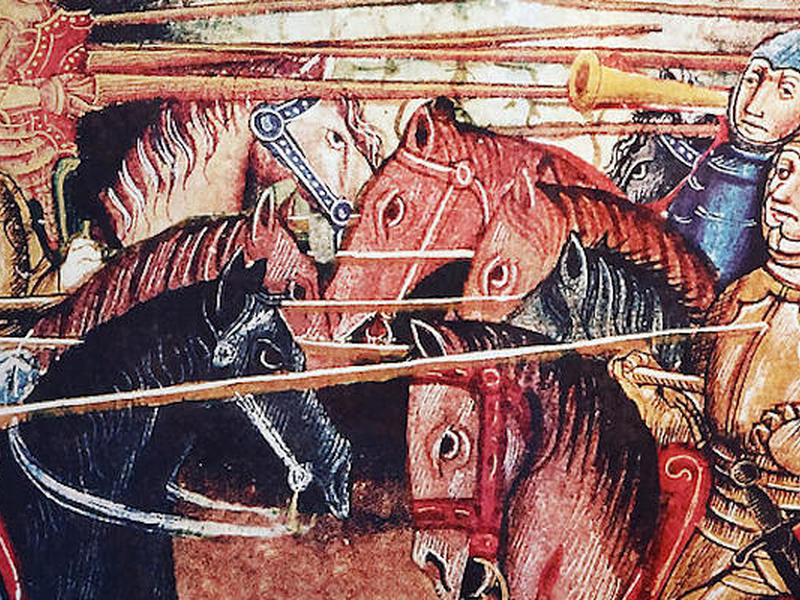
One of the most extensive and penetrating responses to the Yoder-Hauerwas attack on Constantiniansm is found in Oliver O’Donovan’s Desire of Nations , in a chapter entitled “The Obedience of Rulers.” O’Donovan defines the word “Christendom” as “a historical idea,” specifically “the idea of a professedly Christian secular political order,…

by Peter LeithartMay 30, 2017

Showing page 111 of 309

See all
See all
History

Constantine, ecumenist

In 325, Constantine wrote a letter announcing the deposition of Eusebius of Nicomedia. As Timothy Barnes points out, it exemplifies the “pattern of respect tempered with frustration” that characterized Constantine’s relations with the bishops. One passage is reminiscent of Paul’s rebuke of the Galatians: “it was truly worthy of wonder…

November 19, 2008

Eucharistic meditation

2 Chronicles 3:1: Solomon began to build the house of Yahweh in Jerusalem on Mount Moriah, where the Lord had appeared to his father David, at the place that David had prepared, on the threshing floor of Ornan the Jebusite. Naomi gives Ruth specific instructions for her approach to Boaz:…

November 16, 2008

Exhortation

Ruth 3 begins and ends with “rest.” Naomi seeks “rest” for Ruth (v. 1), and after Ruth meets Boaz on the threshing floor, Naomi assures her daughter-in-law and Boaz will not “rest” until he has finished the task. That’s his job as a redeemer: To bring rest. Redeemers buy brothers…

November 16, 2008

Public liturgy

Fenn quotes Daniel Bell’s complaints that liturgies “drain” energies that should belong to useful institutions like political parties and comments “On this view, the genuine public sphere is outside the church, which becomes the sphere of private self-absorption and self-celebration.” By contrast, “to the believer, it is the liturgy that…

November 15, 2008

Liturgical politics

Fenn again: Liturgy is the public work of the people and thus “to be a person . . . meant [for the Greeks] precisely to have a role in the public work of the community.” Thus, “to take part in the Christian liturgy is to take on one’s role in…

November 15, 2008
History

Witness, Liturgy, Modernity

Richard Fenn writes, “In secularized Western societies . . . many individuals are caught in a double-bind. On the one hand, they take seriously the role of the credible witness, and seek, on grounds of their own testimony, to be taken seriously, whether they are reporting what they saw on…

November 15, 2008

Showing page 1447 of 2212

Browse by Category

In Medias Res

Your weekly digest for all things Theopolis.

Donate

Theopolis is nearly 100% donor-supported. Consider joining us on our mission.