Theopolis Logo

Writing

Explore our collection of theological essays, biblical studies, and reflections on faith and culture.

See all
cain-killing-abel-unknown-19th-century
Biblical Theology

The Gospel of Genealogy

Genesis 3 ends on a decisive, and decisively negative, note. Yahweh “drove the man out” of the garden, and, in addition, “at the east of the garden of Eden He stationed the cherubim, and the flaming sword which turned every direction, to guard the way to the tree of life.”…

by Peter LeithartJuly 15, 2014
screen-shot-2017-08-16-at-11-40-48
Books

Catholic Novelist

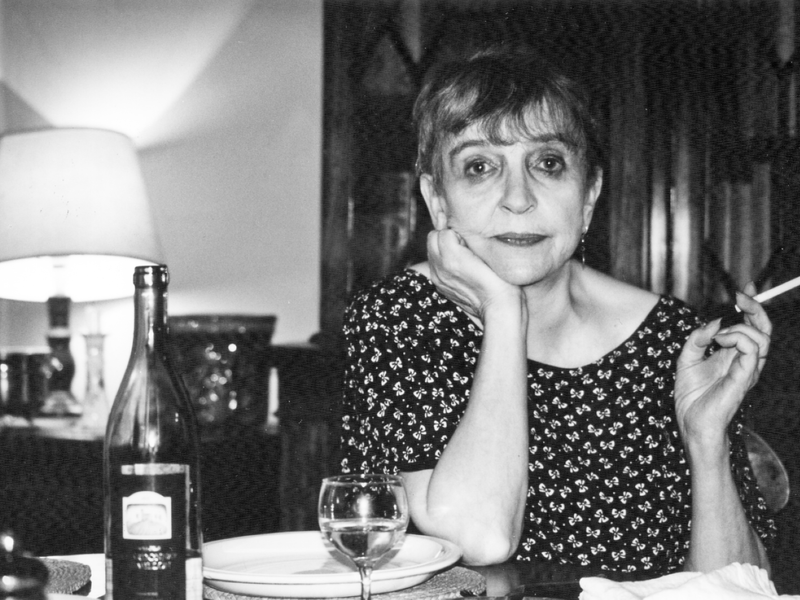
When she died in 2005 at the age of 72, Anna Haycraft, the author who published under the name Alice Thomas Ellis, was a celebrated writer in Great Britain. While working at Duckworth Publishers(which her husband owned), she produced a dozen novels, a collection of short stories, a cookbook, volumes…

by Peter LeithartJuly 9, 2014
523501ldsdl
History

Postmodernism and Me

Some have suggested recently that my "project" is postmodern. To clarify my views on postmodernism, I'm re-posting something I wrote in 2005, with a few modifications. For a fuller discussion, you can check out my Solomon among the Postmoderns (Canon, 2008). First, it is helpful to distinguish, as many writers…

by Peter LeithartJuly 8, 2014
306571rgsdl
Ezekiel

Holy City

Calling Jerusalem the "holy city" comes so naturally to Christians that it comes as something of a surprise to realize how infrequently the phrase is used in Scripture. Not only is Jerusalem rarely called holy, but in the Old Testament this classification is found only in texts that refer to…

by Peter LeithartJuly 3, 2014
the-choir-lesson-auguste-joseph-trupheme-oil-painting
How to Worship

The Lame Can't Dance

Asking why the church doesn’t sing hymns or even why men don’t sing in church is a bit like lamenting over the lame man who can’t waltz on the dance floor. While it is a valid question, the more immediate question would seem to be, “why doesn’t the lame man…

by Jarrod RicheyJune 30, 2014
ben-white-w8qqn1pmqh0-unsplash
Heresy

Heretics in the Latter Days: The Theme of 1 Timothy

The theme of 1 Timothy is the distinction between the true children in the Household of God and false children who really belong to the household of Satan. This is seen in the fact that in the chiastic structure of the Epistle, heresy is the subject in the center (…

by Joseph NorrisJune 18, 2014

Showing page 172 of 309

See all
See all
History

Fourth Century Tour

Anyone wanting to spend some time in the fourth century should check out Fourth Century Christianity at www.fourthcentury.com, which is sponsored by the History Department of Wisconsin Lutheran College and directed by Glen Thompson. The site has chronological charts, original documents or links to other web sites with original documents…

November 13, 2008
History

Plus choses changent…

Timothy Barnes, summarizing Lactantius’s objections to Diocletian, writes that “Diocletian possessed great political sagacity, for he had the enviable ability to garner for himself the credit for actions which proved popular while saddling others with responsibility for failures or mistakes.”

November 13, 2008
Politics

Culture Wars

I’ve expanded my consideration of the “culture wars” in the age of Obama on the First Things web site: http://www.firstthings.com.

November 12, 2008

Wandering

Emphasizing the necessity of starting with the fact of revelation rather than the abstract possibility, Barth charges that “consciously or unconsciously, the Neo-Protestant tradition, in which Lessing, Kant, and Schleiermacher sought access to Christ along a road that could not lead to Him.”

November 11, 2008
Biblical Studies

Synoptic problem

Scripture gives us two “synoptic problems” - the problem of harmonizing the gospels and the problem of harmonizing Kings and Chronicles. That is, the history of the kingdom and the history of Jesus are each told more than once. The parallel is intriguing. It suggests that the two histories are…

November 11, 2008
Theology

Total Depravity

Bavinck makes the interesting, Augustinian, and important point that sin can never become our essence because it is not a substance: “it does indeed inhabit and infect all of us, but it is not and cannot be the essence of our humanity. Also, after the fall, we human beings remain…

November 11, 2008

Showing page 1449 of 2212

Browse by Category

In Medias Res

Your weekly digest for all things Theopolis.

Donate

Theopolis is nearly 100% donor-supported. Consider joining us on our mission.