Theopolis Logo

Writing

Explore our collection of theological essays, biblical studies, and reflections on faith and culture.

See all
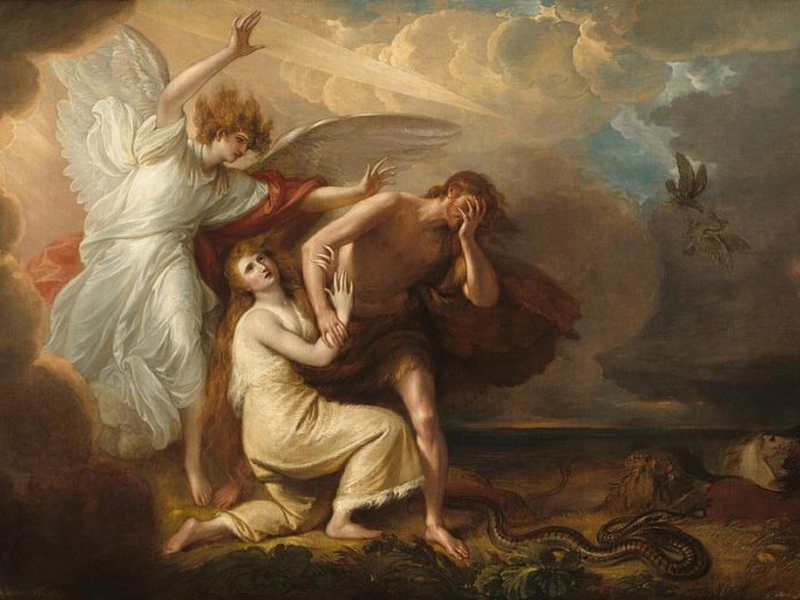
adam-and-eve-garden-768x512
Biblical Horizons

The Dominion Trap

In Genesis One, God told Adam and Eve to "be fruitful and multiply, and fill the earth, and subdue it; and rule over the fish of the sea and over the birds of the heavens, and over every living thing that moves on the earth" (Gen. 1:28). In Christian worldview…

by James B. JordanJuly 2, 1990

ivan-aleksic-16yxcjsoaek-unsplash
Biblical Studies

Building the Church

"And I also way to you that you are Peter, and upon this rock I will build My church; and the gates of Hades shall not overpower it" (Matthew 16:18). Matthew 16:13ff. has historically been one of the most oft-cited passages of Scripture. Throughout the Middle Ages, it was used…

by Peter LeithartJune 19, 1990
timothy-eberly-djj49s6ud2o-unsplash
Matthew

Ephraim in Redemptive History

One of the important themes of the synoptic gospels is Jesus’ rejection of Israel and the transfer of God’s favor to the New Israel, the Church. A clear statement of this theme is found in the parable of the vineyard owner in Matthew 21:33-46. Jesus explained the meaning of the…

by Peter LeithartJune 19, 1990
original
Biblical Horizons

Advice From a Sojourner, Part 7

11. There is a type of person [a generation] who curses his father, And does not bless his mother. 12. There is a type who is pure in his own eyes, Yet not washed from his filthiness [manure]. 13. There is a type — oh how lofty are his eyes!…

by James B. JordanJune 2, 1990
mick-haupt-eq2z9ay9wws-unsplash
Leviticus

A Male Without Defect

Under the Levitical law, whole-burnt offerings from the herd and flock had to be male. No such specification is made with respect to birds (cf. Lev. 5:7-10). Why did the Lord demand that only males be offered as whole-burnt offerings? The easy answer is that the whole-burnt offering typified Christ,…

by Peter LeithartMay 19, 1990
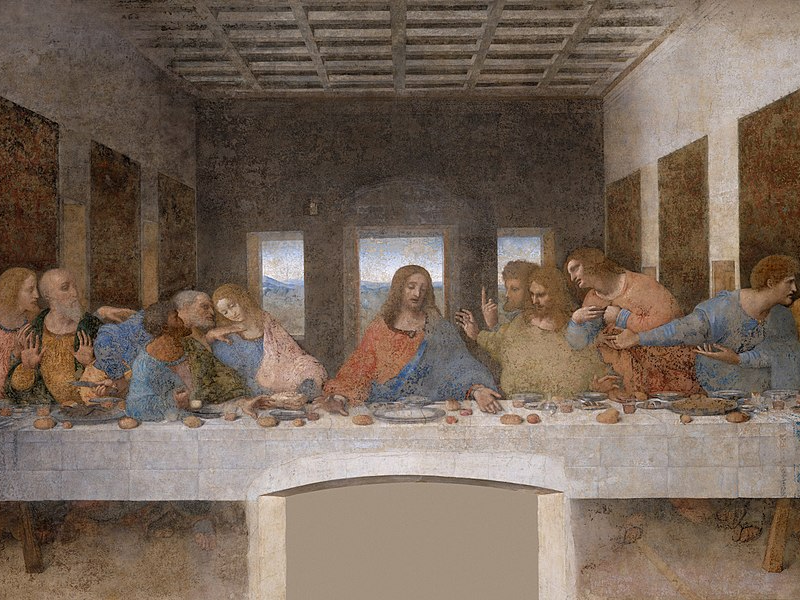
the_last_supper_-_leonardo_da_vinci_-_high_resolution_32x16
Matthew

He Shall Be Called A Nazarene

Matthew 2:13-23 has a tripartite structure, reporting briefly three events of the early years of Jesus’ life. Matthew ends his narrative of each event with a "fulfillment formula." Jesus’ flight to Egypt and His Exodus back into Israel was a fulfillment of Hosea’s words, "Out of Egypt I call my…

by Peter LeithartMay 19, 1990

Showing page 303 of 309

See all
See all
History

Purity and objectivity

Proctor again, summarizing a 1938 article on “Science and the Social Order” from Robert Merton: “the ideal of ‘pure science’ serves a dual function in modern society. On the one hand, the exaltation of pure science represents ‘a defense against the invasion of norms that limit directions of potential advance…

October 28, 2008
History

Revival of purity

Proctor yet again, describing the division of political economy into separate disciplines of sociology and economics in the nineteenth century: “Social theory in the eyes of the young sociologists might strive to become scientific, but to do so it must abandon its craft or practical-political origins and restrict itself to…

October 28, 2008
Philosophy

Artifice and nature

Proctor again, speaking of Renaissance science: “In the science of the moderns, there arises a curious reversal of the order of art and nature. Art becomes the standard against which nature is judged. Francis Bacon’s ‘nature in distress’ - nature distraught by experiment - is as genuine as nature left…

October 28, 2008
Philosophy

Pure knowledge

The drive for purity in knowledge is an ancient one. Robert Proctor ( Value-Free Science? ) sees this impulse in Plato and Aristotle. For the former, knowledge is pure “in the degree to which it makes no appeal to practical arts. Thus Plato criticized Eudoxus, Archytas, and Menaechmus for trying…

October 28, 2008

Anarthrous God

CK Barrett argues in his John commentary that the anarthrous theos of John 1:1 (emphasized by Arians everywhere and at all times) shows that “the Word is God, but is not the only being of whom this is true; if ho theos had been written it would have been implied…

October 28, 2008
Uncategorized

Word came, saying

After Genesis 15, the next time the “word of God came . . . saying” is in Samuel. The word of God comes to Samuel, saying that Saul is rejected (1 Samuel 15:10), and again comes to Nathan to deliver the promise to David (2 Samuel 7:4). The connection of…

October 27, 2008

Showing page 1456 of 2212

Browse by Category

In Medias Res

Your weekly digest for all things Theopolis.

Donate

Theopolis is nearly 100% donor-supported. Consider joining us on our mission.