Theopolis Logo

Writing

Explore our collection of theological essays, biblical studies, and reflections on faith and culture.

See all
img_1456
Epistemology

Seeking Integration in a Fragmented World: Covenant Epistemology: The Integrative Regard of the Other

Fragmentation characterizes our era. Bits, bytes, chips, data points. Ourselves as reducible to the meaningless. We can feel dehumanized and lost. We seek wholeness, integration. We rightly believe that integration brings meaningfulness, somehow doing better credit to ourselves as humans and to the world. More than that, integration somehow aligns…

by Esther Lightcap MeekJune 5, 2018

hebrew-manuscript-2
Proverbs

The Dramatic Structure of Proverbs

The book of Proverbs appears as a largely random collection of aphorisms drawn from experience saturated in law. Despite its random arrangement, however, the book does have an over-arching structure that reinforces its main themes. One way to gather clues regarding the structure of a biblical book (or any book)…

by Peter LeithartMay 31, 2018
infant-baptism
Baptism

Infant Baptism in the History of the Church

Ancient practice in the Church sets an important precedent for present day practice. This certainly doesn’t mean that Christians are bound to only do things as they have always been done, but the principles of catholicity and unity move us not to break from historic church practice on a particular…

by Timothy LeCroyMay 29, 2018
tower-of-babel
Biblical Studies

Babel Academy, Part 2

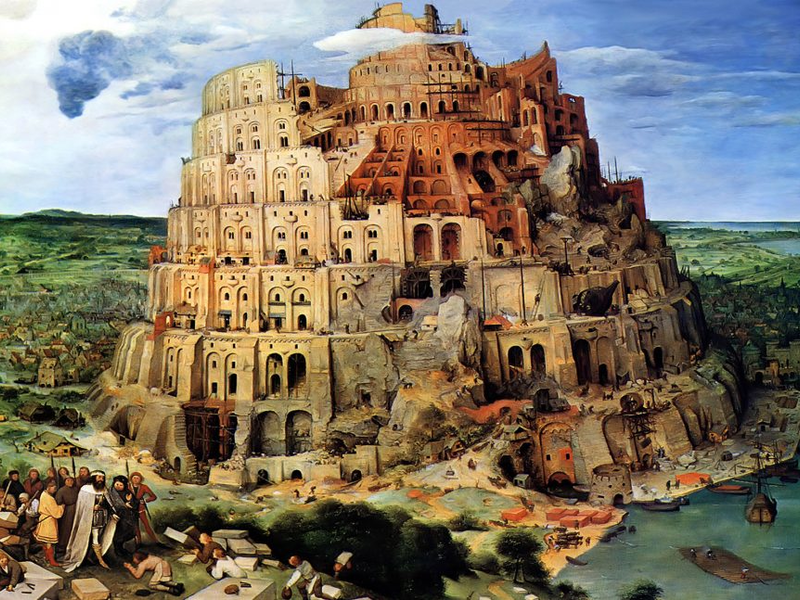
For Part 1, click HERE . Genesis 1 describes the creation of the physical order. Genesis 2 recapitulates the pattern of Genesis 1 as it describes the creation of the social order. Genesis 3 describes the intended founding of an ethical order. It was here that sin entered into the…

by Mike BullMay 24, 2018
babelhead
Biblical Studies

Babel Academy, Part 1

The Business of Keeping the Saints in the Dark Let there be light! The first recorded “spoken” words of God. Curiously, even this creative decree was a deed whose fruit required an appraisal. God judged the light and separated it from the darkness. As the cardinal act within a newborn…

by Mike BullMay 22, 2018
markus-winkler-aid-xyrtlec-unsplash
Course Announcement

A Week with Esther Meek - An Introduction to Covenant Epistemology

We are very pleased to announce that Esther Lightcap Meek will be the instructor for our 2018 Trinity Course in August. The course is titled "Loving to Know: Introducing Covenant Epistemology" and will be held August 13-17 at Beeson Divinity School. Esther Meek, Ph.D., is Professor of Philosophy at Geneva…

by TheopolisMay 21, 2018

Showing page 93 of 309

See all
See all

Word of the Lord

“The Word was God,” says John. Where’d he get that? Genesis 15:1 is the first place where Scripture uses the phrase “word of Yahweh” ( dabar-YHWH ), and already here the use of the phrase hints that the dabar is a person. The word of Yahweh “came” to Abram (15:1,…

October 27, 2008
Uncategorized

Olivi’s timetable

Peter Olivi set out a scheme of prophecy chronology from Adam to Abraham to the destruction of Jerusalem. The accuracy of this is not the point, but rather the claim that the end of the temple was a decisive redemptive-historical event. “Ab Adam usque ad primam primissionem factam Abrahe, Genesis…

October 25, 2008
Uncategorized

Athanasius on nothing

A number of readers have suggested that I was wrongly critical of Athanasius’s claim that without God’s sustenance creation tends toward nothing; I said that this implied that creation has some tendency “independent” of God. The readers point out that Athanasius’s claim is exactly that creation has no independence and…

October 24, 2008
Philosophy

Mystical Encyclopedia

Diderot’s D’Alembert’s Dream develops a mythological monistic materialist ontology in which multiplicity develops from an original “polyp” but where nothing ever becomes really distinct from the whole or from anything else. There is no freedom, no real otherness, no real possibility of love. D’Alembert describes this ontology while masturbating in…

October 24, 2008

Movement toward nothing

Athanasius repeatedly says that created things, having come from nothing, have an inherent tedency to move toward nothing again. They have to be sustained by God to remain in existence. No problem with the conclusion that God keeps things in existence. But the notion that things tend toward nothing seems…

October 23, 2008
History

Medieval Preterism

Peter Olivi is one of a number of medieval exegetes who placed enormous significance on the fall of Jerusalem. In part, this was driven by anti-Jewish polemics; they argued that prophecies foretold that the Messiah would come and the temple sacrifice would be ended - since the temple sacrifice has…

October 23, 2008

Showing page 1457 of 2212

Browse by Category

In Medias Res

Your weekly digest for all things Theopolis.

Donate

Theopolis is nearly 100% donor-supported. Consider joining us on our mission.