Theopolis Logo

Writing

Explore our collection of theological essays, biblical studies, and reflections on faith and culture.

See all
medievalilluminatedmanuscript
Biblical Studies

The Art of Why

“We have a God who hides things because He loves to be sought out, chewed out and found out.” As Christians, we are rightly taught that we must not question God’s Word. The problem is that the Scriptures record many things which appear to have been given to us for…

by Mike BullMay 12, 2015

last-supper
Revelation

Eucharistic Harvest

The book of Revelation is a liturgy. John begins “in the Spirit” on the “Lord’s day” (1:10). Jesus appears, and Jesus tells him to record messages to seven churches, words of encouragement and rebuke, like the call to worship and confession at the beginning of a Christian liturgy. In chapter…

by Peter LeithartMay 7, 2015
sunrise-2
Creation

Maker of Heaven and Earth, (Part 5)

In my previous posts, I looked at the theme of creation as it is found in a sequence of psalms devoted to Yahweh’s Kingship (Psalms 93-100). Among other matters, these psalms declare that when the Kingdom of Israel’s God comes, it is the Kingdom of the world’s own Creator .…

by Stephen LongMay 7, 2015
13071-probablyvalentindeboulogne-saintpaulwritinghi-1
Deuteronomy

Paul the Levir

The church in Corinth was a pastoral nightmare. Factionalism, sexual immorality, incipient syncretism, using the church as a stage for self-promotion, and denial of the final resurrection were just some of the problems. In Paul’s first letter to the Corinthian church, he confronts each of these problems directly and in…

by Bill SmithMay 5, 2015
creation-eve
Covenant

Covenant Structure in Genesis 2

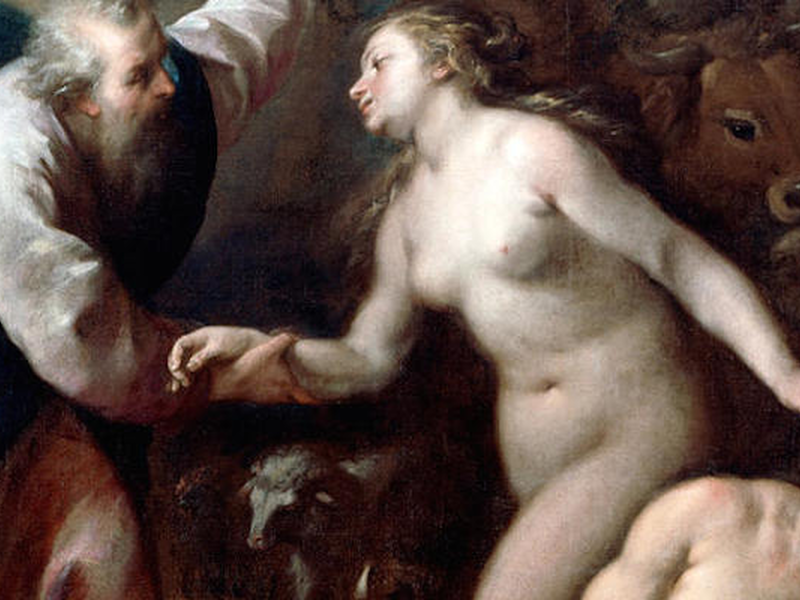
The first chapters of the Word of God have a poetic rhythm. This is used to discredit their accuracy as historical narrative, but the truth is that these same rhythms continue far beyond the book of Genesis. In fact, the later texts shed light on the frustratingly succinct account of…

by Mike BullApril 30, 2015
light-bulb
Creation

Must A Light Bulb Be "Oriented Toward Illumination"?

Mr. Martian: What’s that there? Mr. Edison: (Edison holds up a standard, 60 watt lightbulb). It’s a lightbulb. Mr. Martian: A “lightbulb” you say? What exactly is a “lightbulb”? Mr. Edison: A lightbulb is an object used to illuminate a dark area, say a room. It’s made primarily of filament…

by Gerald HiestandApril 28, 2015

Showing page 154 of 309

See all
See all
Philosophy

Transcendent Aristotle

Anatolios makes the striking observation that Aristotle’s “Unmoved Mover” is even more transcendent than Plato’s form of the good. For Plato, being is self-communicative, and his most exalted realities (the form of the good, the forms) are participatable. Not Aristotle’s UM, which just thinks thinking in total self-absorption, while everything…

October 23, 2008
History

Islam and Christology

Henry Chadwick notes that the “alienation of Egypt and much of Syria from the Chalcedonian government was a serious political matter, and gravely weakened those key provinces before the Moslem invasions.”

October 20, 2008
History

Ecumenical councils

Were the ecumenical councils infallible? Many in the early church clearly didn’t consider them so. The most vigorous, and vicious, arguments over Arius took place between Nicea and First Constantinople, and the Monophysite controversy continued for a century and more after Chalcedon had condemned Eutyches (as well as Nestorius). Nestorianism…

October 20, 2008
History

Julian the Zionist

Henry Chadwick notes that Julian the Apostate tried to gain Jewish support by proposing to rebuild the temple in Jerusalem: “although Julian had little but contempt for Judaism, he was well aware that a proposal to restore sacrificies in a rebuilt temple at Jerusalem would touch the Christians at a…

October 19, 2008
History

Bible or Lombard?

Much of the theology instruction in the high middle ages took the form of commentary on established texts, most importantly the Four Books of the Sentences by Peter the Lombard. Lombard’s triumph, though, was contested. As Deeana Klepper points out in her book on Nicolas of Lyra, one of the…

October 19, 2008
Philosophy

Pietist philosopher

Jean Blum characterized Hamann’s thought as follows: “Hamann’s thought is what those who do not normally think would think if they did think.” That gets it pretty well, as does Berlin’s comment that Hamann “was a major force in transforming the ideas which hitherto had lived in small, self-isolated religious…

October 19, 2008

Showing page 1458 of 2212

Browse by Category

In Medias Res

Your weekly digest for all things Theopolis.

Donate

Theopolis is nearly 100% donor-supported. Consider joining us on our mission.