Theopolis Logo

Writing

Explore our collection of theological essays, biblical studies, and reflections on faith and culture.

See all
little-girl
Children

Honor God With Your Body

I am making a new rule in our house! We are actually kind of skimpy on the house rules. I try very hard to keep things simple: love God, love others, be joyful. It’s not complicated to avoid discipline here. But I have found myself repeating this new rule over…

by Lindsey TollefsonApril 9, 2015

giotto-noli-me-3
John

The Gardener and the Beloved, (Part 3)

Click HERE for Part 2 The voice of Jesus transforms and changes Mary when she hears him speak her name. This is her last “turning.” So also the woman in the Song of Songs longs to hear the voice of her beloved. Let me see your face, let me hear…

by Jeff MeyersApril 6, 2015
giotto-noli-me-2
John

The Gardener and the Beloved, (Part 2)

Click HERE for Part 1. The details of this story call the attentive reader back to the drama of Solomon’s Song of Songs. And the Song of Song’s alludes to, ties us into the story of Adam and Eve in the Garden and the promise of a coming Messiah that…

by Jeff MeyersApril 4, 2015
easter-term-2015-2
Theopolis News

Easter Term, 2015

“The course was a paradigm shift for me,” said Jonathan Sedlak, a Milwaukee electrical contractor who attended Theopolis’s course on Revelation. “I am left with a book that is far more practical than it has ever seemed before.” Jonathan Anderson of Louisville, Kentucky found the course “refreshing.” “I finished with…

by TheopolisApril 2, 2015
psalm-singing
Genesis

Worship as Response: Liturgical Logic, (Part 1)

“It is only by participation in a rational, practice-based community that one becomes rational.” – Alasdair MacIntyre It may be perfectly clear to a chef why adding unsifted powdered sugar to a hot frosting is a bad idea. But for an amateur cook, this may be the kind of rule…

by Jonathan BarlowApril 2, 2015
giotto-noli-me
John

The Gardener and the Beloved, (Part 1)

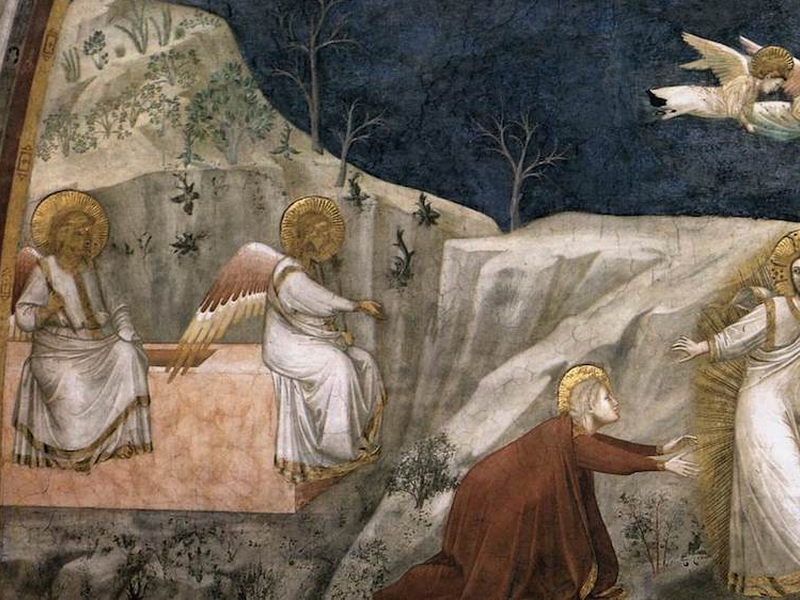
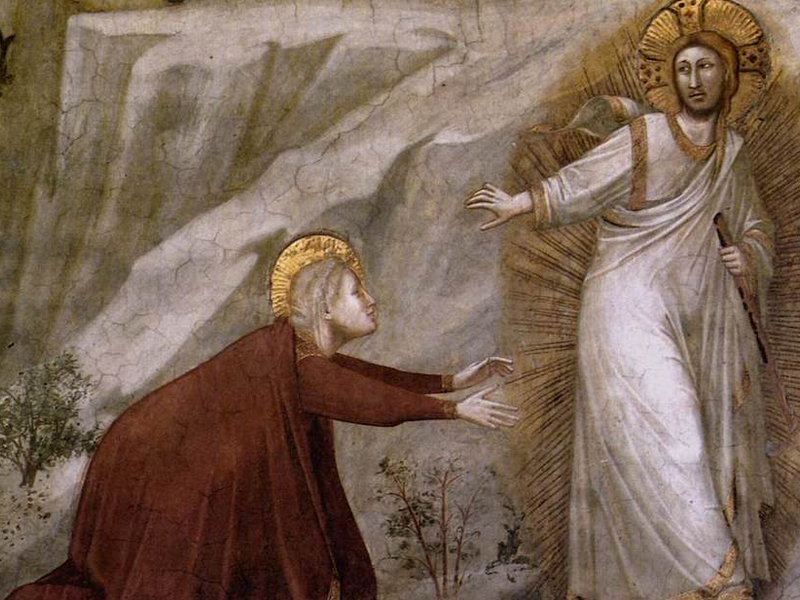
On a fresco in a chapel in Padua, Italy, there is a famous painting depicting the dramatic post-resurrection scene in John 20 with Mary and Jesus outside of the garden tomb. Giotto di Bondone painted it in the early 14th century. Jesus is striding from the tomb with a victor’s…

by Jeff MeyersApril 1, 2015

Showing page 156 of 309

See all
See all
Philosophy

Transcendent Aristotle

Anatolios makes the striking observation that Aristotle’s “Unmoved Mover” is even more transcendent than Plato’s form of the good. For Plato, being is self-communicative, and his most exalted realities (the form of the good, the forms) are participatable. Not Aristotle’s UM, which just thinks thinking in total self-absorption, while everything…

October 23, 2008
History

Islam and Christology

Henry Chadwick notes that the “alienation of Egypt and much of Syria from the Chalcedonian government was a serious political matter, and gravely weakened those key provinces before the Moslem invasions.”

October 20, 2008
History

Ecumenical councils

Were the ecumenical councils infallible? Many in the early church clearly didn’t consider them so. The most vigorous, and vicious, arguments over Arius took place between Nicea and First Constantinople, and the Monophysite controversy continued for a century and more after Chalcedon had condemned Eutyches (as well as Nestorius). Nestorianism…

October 20, 2008
History

Julian the Zionist

Henry Chadwick notes that Julian the Apostate tried to gain Jewish support by proposing to rebuild the temple in Jerusalem: “although Julian had little but contempt for Judaism, he was well aware that a proposal to restore sacrificies in a rebuilt temple at Jerusalem would touch the Christians at a…

October 19, 2008
History

Bible or Lombard?

Much of the theology instruction in the high middle ages took the form of commentary on established texts, most importantly the Four Books of the Sentences by Peter the Lombard. Lombard’s triumph, though, was contested. As Deeana Klepper points out in her book on Nicolas of Lyra, one of the…

October 19, 2008
Philosophy

Pietist philosopher

Jean Blum characterized Hamann’s thought as follows: “Hamann’s thought is what those who do not normally think would think if they did think.” That gets it pretty well, as does Berlin’s comment that Hamann “was a major force in transforming the ideas which hitherto had lived in small, self-isolated religious…

October 19, 2008

Showing page 1458 of 2212

Browse by Category

In Medias Res

Your weekly digest for all things Theopolis.

Donate

Theopolis is nearly 100% donor-supported. Consider joining us on our mission.