Theopolis Logo

Writing

Explore our collection of theological essays, biblical studies, and reflections on faith and culture.

See all
screenshot-2024-04-04-at-4-49-39-pm
Apologetics

Christianity: Who Needs It?

Evangelistic Message to the Uninformed: 1 Timothy 3.14-16 Even though this is written as a sermon for delivery, and even though it was preached in a homiletics class, I decided I can’t post it as a sermon because it was not truly preached at a place where nonchristians wanted to…

by Mark HorneMay 7, 2024

carlo-alberto-burato-smdx3gleu_m-unsplash
Acts

Jesus’ Post-Resurrection Appearances

If we only read the Gospels of Mark and Luke, we might get the impression that Jesus’ ascension was on resurrection Sunday. Matthew speaks of going to Galilee but he does not put things into a clear time frame. John shows us that Jesus appeared to the disciples eight days…

by Ralph Allan SmithMay 1, 2024
alfons-morales-ylswjsy7stw-unsplash-1
Biblical Studies

The Bible and Western Literature

The most cursory glance at the history of Western literature reveals that it has been deeply influenced by the Bible. Some of the greatest classics of Western literature draw their plots, characters, and ideas largely from Scripture; Dante’s Divine Comedy and Milton’s Paradise Lost are two of the most notable…

by Peter LeithartApril 24, 2024
cederic-vandenberghe-21dp3hytvhw-unsplash
Biblical Theology

Inglorious Bastards

Few themes emerge as profoundly and persistently in the streams of biblical narrative as the conflict between light and darkness, and the juxtaposition of humanity with monstrosity. These themes not only weave through the fabric of Scripture, emerging in stories from Genesis to Revelation, but also stitch together the human…

by Kyle LammottApril 17, 2024
screenshot-2024-04-09-at-11-22-50-am
Luke

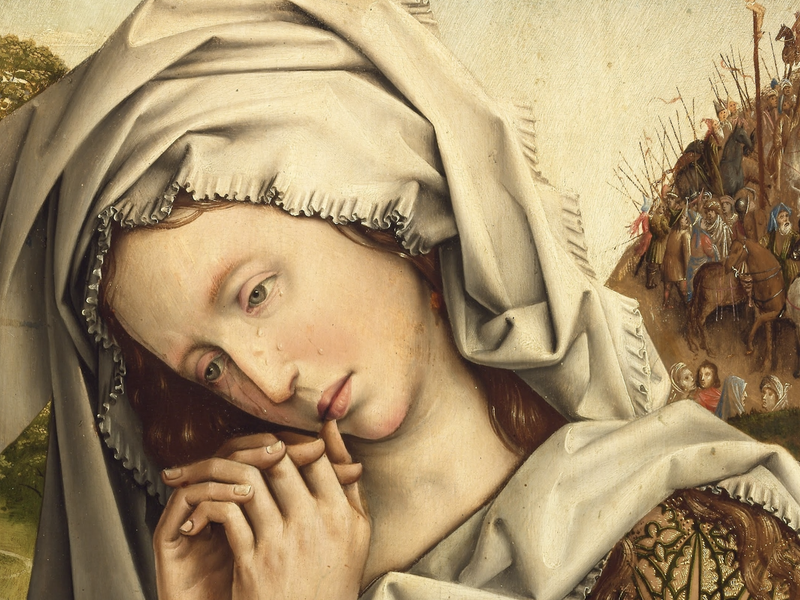
Mary Magdalene: Sister, Sinner, Saint

In John Wenham’s work, Easter Enigma , he devotes an entire chapter to Mary Magdalene, which is rephrased and summarized here. 1 One of the interesting things that Wenham said was that Mary Magdalene was the second “most favored woman in the Bible.” 2 He adds, “Yet apart from a…

by Ralph Allan SmithApril 9, 2024
screenshot-2024-04-04-at-4-50-53-pm

Daily Mutual Encouragement

God made man to live in a larger relational context, and even in high rebellion, man cannot escape his created nature. Instead, that nature takes revenge on rebellious man. Autonomous and alone, the self craves absolution but recognizes no authority that might give it; it thirsts for glory but rejects…

by Tim NicholsApril 4, 2024

Showing page 21 of 309

See all
See all
Philosophy

Transcendent Aristotle

Anatolios makes the striking observation that Aristotle’s “Unmoved Mover” is even more transcendent than Plato’s form of the good. For Plato, being is self-communicative, and his most exalted realities (the form of the good, the forms) are participatable. Not Aristotle’s UM, which just thinks thinking in total self-absorption, while everything…

October 23, 2008
History

Islam and Christology

Henry Chadwick notes that the “alienation of Egypt and much of Syria from the Chalcedonian government was a serious political matter, and gravely weakened those key provinces before the Moslem invasions.”

October 20, 2008
History

Ecumenical councils

Were the ecumenical councils infallible? Many in the early church clearly didn’t consider them so. The most vigorous, and vicious, arguments over Arius took place between Nicea and First Constantinople, and the Monophysite controversy continued for a century and more after Chalcedon had condemned Eutyches (as well as Nestorius). Nestorianism…

October 20, 2008
History

Julian the Zionist

Henry Chadwick notes that Julian the Apostate tried to gain Jewish support by proposing to rebuild the temple in Jerusalem: “although Julian had little but contempt for Judaism, he was well aware that a proposal to restore sacrificies in a rebuilt temple at Jerusalem would touch the Christians at a…

October 19, 2008
History

Bible or Lombard?

Much of the theology instruction in the high middle ages took the form of commentary on established texts, most importantly the Four Books of the Sentences by Peter the Lombard. Lombard’s triumph, though, was contested. As Deeana Klepper points out in her book on Nicolas of Lyra, one of the…

October 19, 2008
Philosophy

Pietist philosopher

Jean Blum characterized Hamann’s thought as follows: “Hamann’s thought is what those who do not normally think would think if they did think.” That gets it pretty well, as does Berlin’s comment that Hamann “was a major force in transforming the ideas which hitherto had lived in small, self-isolated religious…

October 19, 2008

Showing page 1458 of 2212

Browse by Category

In Medias Res

Your weekly digest for all things Theopolis.

Donate

Theopolis is nearly 100% donor-supported. Consider joining us on our mission.