Theopolis Logo

Writing

Explore our collection of theological essays, biblical studies, and reflections on faith and culture.

See all
aaron-burden-h8s0pf2rcqs-unsplash
Luke

The Second Isaiah and His Message

Higher critics have, for a long time, posited a Second Isaiah to account for the structural and tone differences in the book from chapter 40 on. Now, we do believe in a Second Isaiah, but believe that the form critics have generally suffered from a lack of imagination both in…

by Richard BledsoeOctober 5, 1995

whichbooksbelongintheot
Leviticus

Getting the Translation Right

A couple of the most serious mistranslations in our Bibles are found in the book of Leviticus. The main reason these errors have gone unreformed, I believe, is because Leviticus is simply not studied often enough, so the problem has never been fully addressed. The first mistranslation is found right…

by James B. JordanOctober 4, 1995
Biblical Horizons

Prophecy and the Coming Christian Revolution

Thomas Kuhn’s book, The Structure of Scientific Revolutions , is really a parenthesis inside of the larger reality of Christian history. Progress and forward movement inside of science is a footnote to the larger and more general reality of covenant renewals in both Biblical and Christian history. The fundamental mark…

by Richard BledsoeSeptember 5, 1995
luca-tosoni-wneuvexggjg-unsplash
Biblical Horizons

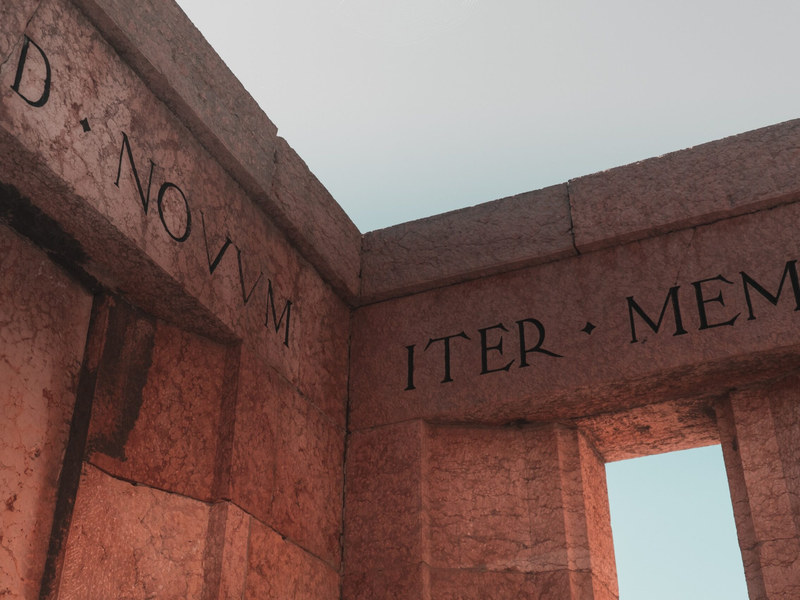
In Defense of Latin

James Jordan, in the June/July 1995 Biblical Horizons, wrote a very helpful essay, "The Great Hangover," the gist of which I entirely agree with. The theme of the essay was that the Church to move forward must shuck off the old husks of Hellenism, Rabbinism, and undo admiration for all…

by Richard BledsoeSeptember 5, 1995
pawan-sharma-vt2efwhbs-e-unsplash
Biblical Horizons

The Triune Office Reconsidered

Traditionally, the three offices in the Presbyterian churches have been teaching elder, ruling elder, and deacon. These have been associated with priest, elder, and Levite respectively. We have seen that the deacon is in fact an apprentice and assistance elder. We have also seen that Levites as well as priests…

by James B. JordanSeptember 4, 1995
jordan-wozniak-xp_agmeea6s-unsplash-2
Biblical Studies

When the Son Is Glorified

John 7:39 interprets Jesus’ offer of living water as an offer of the Spirit to those who believe, "for," John continues, "the Spirit was not yet, because Jesus was not yet glorified." John was not making an ontological statement about the Spirit, as if the Spirit did not exist until…

by Peter LeithartJuly 27, 1995

Showing page 269 of 309

See all
See all
Philosophy

Transcendent Aristotle

Anatolios makes the striking observation that Aristotle’s “Unmoved Mover” is even more transcendent than Plato’s form of the good. For Plato, being is self-communicative, and his most exalted realities (the form of the good, the forms) are participatable. Not Aristotle’s UM, which just thinks thinking in total self-absorption, while everything…

October 23, 2008
History

Islam and Christology

Henry Chadwick notes that the “alienation of Egypt and much of Syria from the Chalcedonian government was a serious political matter, and gravely weakened those key provinces before the Moslem invasions.”

October 20, 2008
History

Ecumenical councils

Were the ecumenical councils infallible? Many in the early church clearly didn’t consider them so. The most vigorous, and vicious, arguments over Arius took place between Nicea and First Constantinople, and the Monophysite controversy continued for a century and more after Chalcedon had condemned Eutyches (as well as Nestorius). Nestorianism…

October 20, 2008
History

Julian the Zionist

Henry Chadwick notes that Julian the Apostate tried to gain Jewish support by proposing to rebuild the temple in Jerusalem: “although Julian had little but contempt for Judaism, he was well aware that a proposal to restore sacrificies in a rebuilt temple at Jerusalem would touch the Christians at a…

October 19, 2008
History

Bible or Lombard?

Much of the theology instruction in the high middle ages took the form of commentary on established texts, most importantly the Four Books of the Sentences by Peter the Lombard. Lombard’s triumph, though, was contested. As Deeana Klepper points out in her book on Nicolas of Lyra, one of the…

October 19, 2008
Philosophy

Pietist philosopher

Jean Blum characterized Hamann’s thought as follows: “Hamann’s thought is what those who do not normally think would think if they did think.” That gets it pretty well, as does Berlin’s comment that Hamann “was a major force in transforming the ideas which hitherto had lived in small, self-isolated religious…

October 19, 2008

Showing page 1458 of 2212

Browse by Category

In Medias Res

Your weekly digest for all things Theopolis.

Donate

Theopolis is nearly 100% donor-supported. Consider joining us on our mission.