Theopolis Logo

Writing

Explore our collection of theological essays, biblical studies, and reflections on faith and culture.

See all
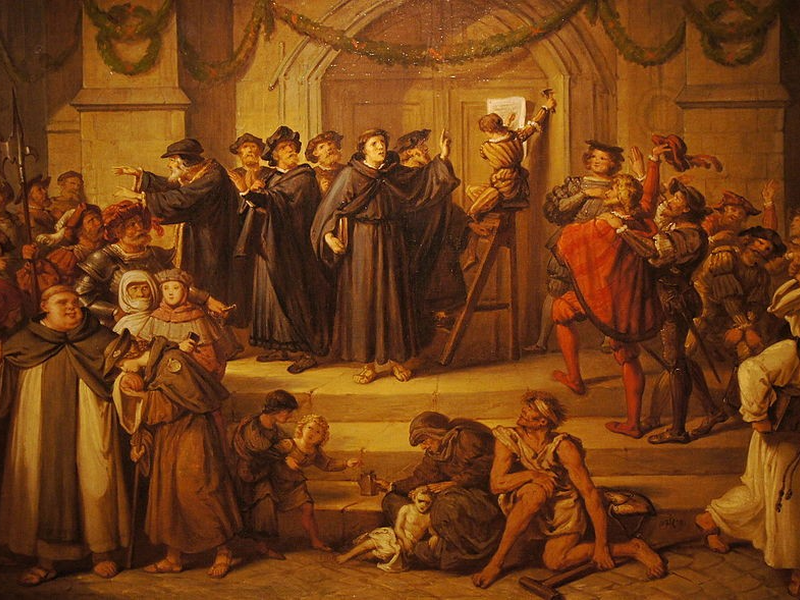
der_anschlag_von_luthers_95_thesen-1024x589
Church Calendar

Five Misconceptions of Reformation Day

For many people the date October 31 is significant not only for being the Eve of All Saints (All Hallows Eve, Halloween) but as the day in 1517 when Martin Luther nailed his 95 theses to the door of the Castle Church in Wittenburg. These theses were a list of…

by Timothy LeCroyOctober 31, 2017

sacre-bleu-r__kixb0i5m-unsplash
Church Calendar

Concerning Halloween

It has become routine in October for some Christian schools to send out letters warning parents about the evils of Halloween, and it has become equally routine for me to be asked questions about this matter. "Halloween" is simply a contraction for All Hallows’ Eve. The word "hallow" means "saint,"…

by James B. JordanOctober 26, 2017
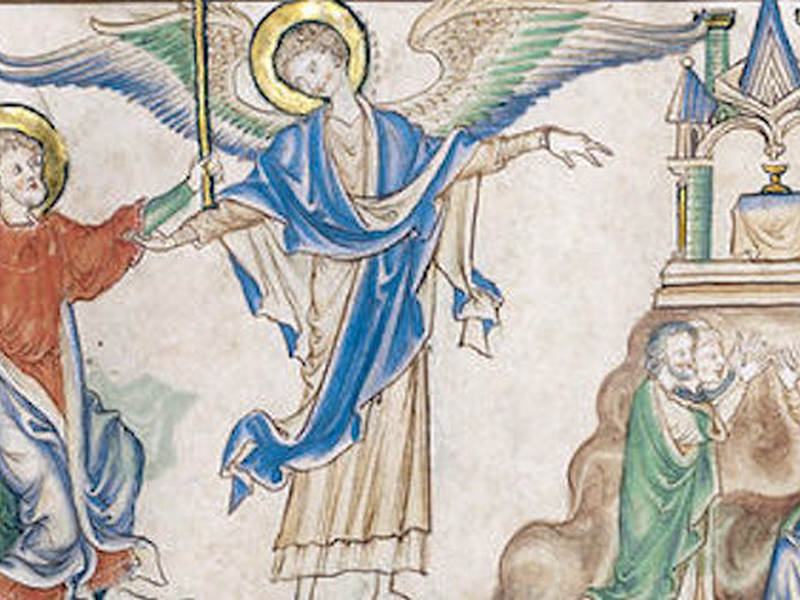
revelation-john-with-rod
Revelation

Preaching, An Art of Division

The following is an excerpt from Peter Leithart's forthcoming two-volume commentary on Revelation (T&T Clark). Y ou must prophesy again concerning many peoples and nations and tongues and kings,” a voice tells John (Rev. 10:11). Then someone gives him a “reed like a rod” and instructs him to measure (11:1).…

by Peter LeithartOctober 24, 2017
josiah-death

Back To Egypt

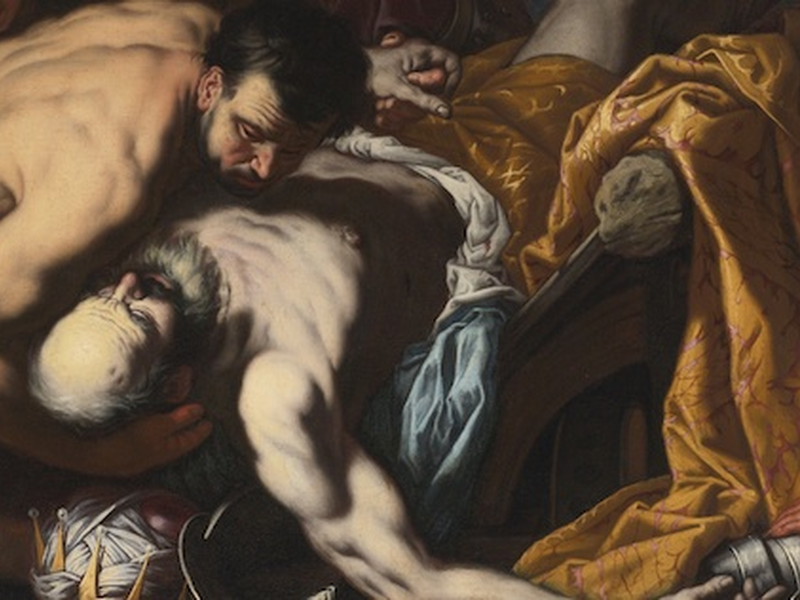
Josiah is an ideal Davidic king in many ways. He not only “did right,” but he “walked in the ways of his father David” and “did not turn aside to the right or to the left” (2 Chronicles 34:2). At the age of 16, he began to seek Yahweh, and…

by Peter LeithartOctober 19, 2017
augustine
Augustine

Augustine and the Music of Time

One of the best discussions of Augustine’s views on time comes from Jeremy Begbie’s Theology, Music, and Time (ch. 3). Following Paul Ricoeur, Begbie claims that Augustine’s distentio “is conceived as the three-fold present, and the threefold present as distentio . The distentio consists in the non-coincidence of the mind’s…

by Peter LeithartOctober 17, 2017
img_1043
How to Worship

The Psalter Should be Woven into the Fabric of Worship

This has always been the position of the Christian Church, and from an historical perspective the present situation in evangelicalism is appalling. The early liturgies of the Church, which are still used in Episcopal and Lutheran worship, are laced with psalm phrases. The early hymns, such as the Te Deum…

by James B. JordanOctober 12, 2017

Showing page 104 of 309

See all
See all

Epicurean indifference revisited

Wes Callihan writes, in response to my brief quotation from Lucretius: “Possibly, however, Lucretius wouldn’t consider the indifferent watcher from the porch outside Pompeii a true Epicurean. Doesn’t the very next line go on to say something about how the pleasure is *not* in the other person’s suffering but in…

October 15, 2008
Philosophy

Direction revelation

Isaiah Berlin’s book on Hamann is lively engaging, but Berlin doesn’t get Hamann. For instance: “Hamann’s constantly repeated point is that revelation is direct contact between one spirit and another, God and ourselves.” Not. The opposite is the case: His constantly repeated point is that God speaks to the creature…

October 15, 2008

Lucretian wisdom

Book 2 of De rerum natura begins with “It is sweet on the great sea to watch from the shore other people drowning.” The words were found on a wall on a house in Pompeii. Perhaps someone sweetly watched from a perch opposite Vesuvius as the lava flow swallowed up…

October 14, 2008

Arian incoherence

Athanasius ties the Arians up in knots with an order-of-decrees argument. If the Son is created for the sake of creating us, then the Son exists for our need rather than we for His sake. That suggests a particular ordering of God’s will: “It is not that God, having the…

October 14, 2008

Speech-act Christology?

Athanasius says that “the words of human beings do not act.” Instead, “it is not by words but by hands that a human being works, for human hands have subsistence while words do not.” Hence, he is willing to adopt Irenaeus’s notion that the Son and Spirit are the two…

October 14, 2008

Creator-creature

Athanasius ( Orations Against the Arians ) writes that “God is not like us.” This is in the context of explaining how the eternal Word differs from the ephemeral words of human beings, and how the divine Word actually does what it says: “the Word of God is not, as…

October 14, 2008

Showing page 1460 of 2212

Browse by Category

In Medias Res

Your weekly digest for all things Theopolis.

Donate

Theopolis is nearly 100% donor-supported. Consider joining us on our mission.