Theopolis Logo

Writing

Explore our collection of theological essays, biblical studies, and reflections on faith and culture.

See all
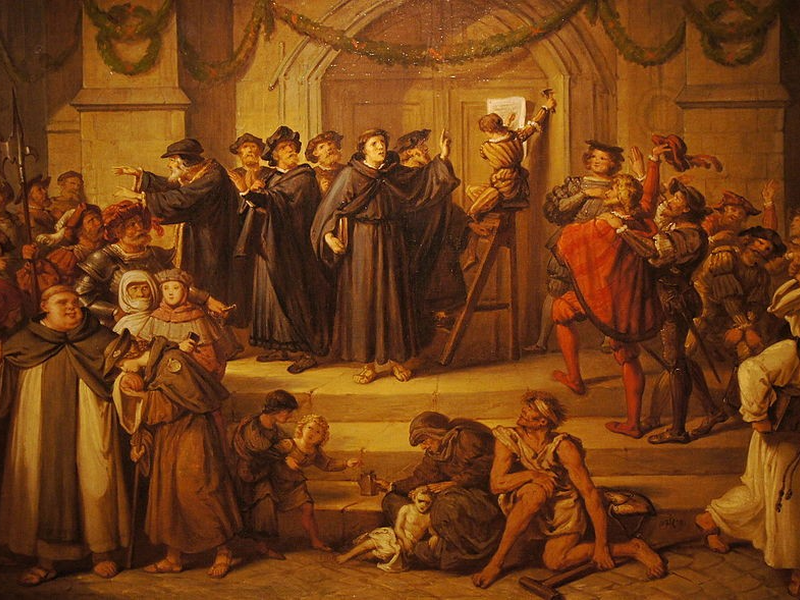
der_anschlag_von_luthers_95_thesen-1024x589
Church Calendar

Five Misconceptions of Reformation Day

For many people the date October 31 is significant not only for being the Eve of All Saints (All Hallows Eve, Halloween) but as the day in 1517 when Martin Luther nailed his 95 theses to the door of the Castle Church in Wittenburg. These theses were a list of…

by Timothy LeCroyOctober 31, 2017

sacre-bleu-r__kixb0i5m-unsplash
Church Calendar

Concerning Halloween

It has become routine in October for some Christian schools to send out letters warning parents about the evils of Halloween, and it has become equally routine for me to be asked questions about this matter. "Halloween" is simply a contraction for All Hallows’ Eve. The word "hallow" means "saint,"…

by James B. JordanOctober 26, 2017
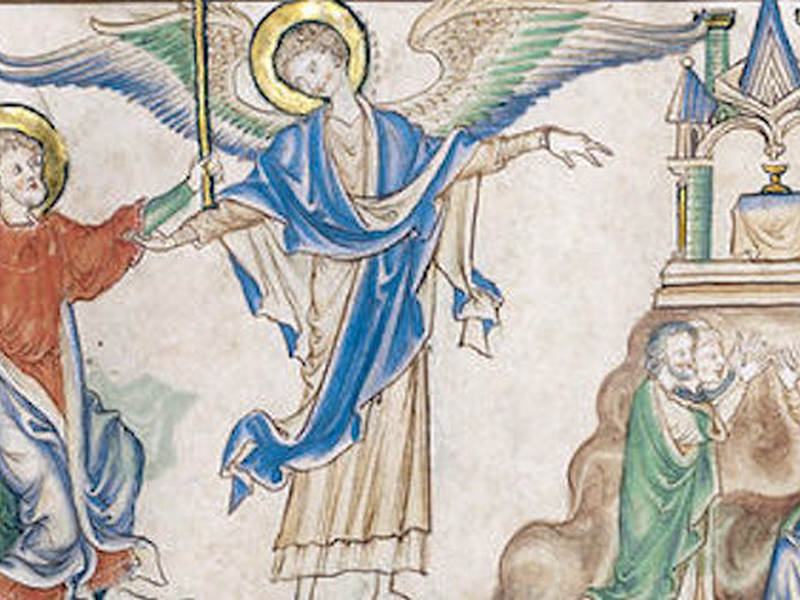
revelation-john-with-rod
Revelation

Preaching, An Art of Division

The following is an excerpt from Peter Leithart's forthcoming two-volume commentary on Revelation (T&T Clark). Y ou must prophesy again concerning many peoples and nations and tongues and kings,” a voice tells John (Rev. 10:11). Then someone gives him a “reed like a rod” and instructs him to measure (11:1).…

by Peter LeithartOctober 24, 2017
josiah-death

Back To Egypt

Josiah is an ideal Davidic king in many ways. He not only “did right,” but he “walked in the ways of his father David” and “did not turn aside to the right or to the left” (2 Chronicles 34:2). At the age of 16, he began to seek Yahweh, and…

by Peter LeithartOctober 19, 2017
augustine
Augustine

Augustine and the Music of Time

One of the best discussions of Augustine’s views on time comes from Jeremy Begbie’s Theology, Music, and Time (ch. 3). Following Paul Ricoeur, Begbie claims that Augustine’s distentio “is conceived as the three-fold present, and the threefold present as distentio . The distentio consists in the non-coincidence of the mind’s…

by Peter LeithartOctober 17, 2017
img_1043
How to Worship

The Psalter Should be Woven into the Fabric of Worship

This has always been the position of the Christian Church, and from an historical perspective the present situation in evangelicalism is appalling. The early liturgies of the Church, which are still used in Episcopal and Lutheran worship, are laced with psalm phrases. The early hymns, such as the Te Deum…

by James B. JordanOctober 12, 2017

Showing page 104 of 309

See all
See all

Clever Drudge

Drudge couldn’t care a whit for Hillary Clinton, but his increasingly provocative headlines (most recently, “Diss-Off”) for a story on how Obama never considered Hillary as a veep candidate can have only one result: To get Hillary’s supporters, already cool toward Obama, hopping mad.

August 22, 2008

Enlightenment and elementary principles

Kant regards positive religions or ecclesiastical faiths (including Christianity) as temporary moral crutches that we can shed as we approach the pure natural religion of reason. Christianity’s institutions, sacraments, dogmas, are the stoicheia leading us to enlightenment. Here we see the problematics of Christian sacramental theology, going back at least…

August 22, 2008
Philosophy

Changing past and realism

Weberman returns to Danto to advance his argument. He notes that Danto shies away from saying that past events change, and suggests that he did this in order to remain a realist about past events; Danto held that “past events are what they are in a mind-independent way.” He insists…

August 19, 2008
Philosophy

Nonfixity of past

In an article in the Review of Metaphysics (1997), David Weberman argues for the “nonfixity of the historical past.” He starts from Arthur Danto’s argument that historical inquiry and writing cannot be a reconstruction available to an “ideal chronicler” who knows everything that happens the moment it happens and sets…

August 19, 2008

Union card

E. Miner wrote, that “the ability to declare typology absent is a kind of proof of sound modern critical method.” Which translated means, Skepticism about typology is the union card of serious biblical scholarship.

August 19, 2008

Brick Hermeneutics

A. K. A. Adam offers a useful critique of what he calls “brick hermeneutics.” Taking a cue from George Herriman’s early 20th-century comic strip Krazy Kat, he describes brick hermeneutics as follows: “Most of our discourses take for granted the premise that we communicate by infusing ‘meaning’ into some expression,…

August 19, 2008

Showing page 1480 of 2212

Browse by Category

In Medias Res

Your weekly digest for all things Theopolis.

Donate

Theopolis is nearly 100% donor-supported. Consider joining us on our mission.