Theopolis Logo

Writing

Explore our collection of theological essays, biblical studies, and reflections on faith and culture.

See all
aaron-burden-h8s0pf2rcqs-unsplash
Galatians

The Restoration of the Galatians

While controversies over the writings of Paul continue in various corners of the intellectual globe, the word of God given through Paul and his scribe and all of the church’s interpreters and translators over the last two millennia is still readily available to the lofty and the lowly. Paul, as…

by Grace LangnessMarch 25, 2013

kiwihug-l4gw27xzn1i-unsplash
Deuteronomy

Law and History: How to Read the Law of Moses (Part 2)

The second in a series of studies in Deuteronomy. Deuteronomy 22:30: A man shall not take his father’s wife, and shall not uncover his father’s wing (Hebrew: kanaf ). There are a number of unusual features in this law that mark it out from the previous context, indicating that it…

by Ralph Allan SmithMarch 20, 2013
200403-moss-pilate-tease_pncfq5
History

Victimhood and the Gospel

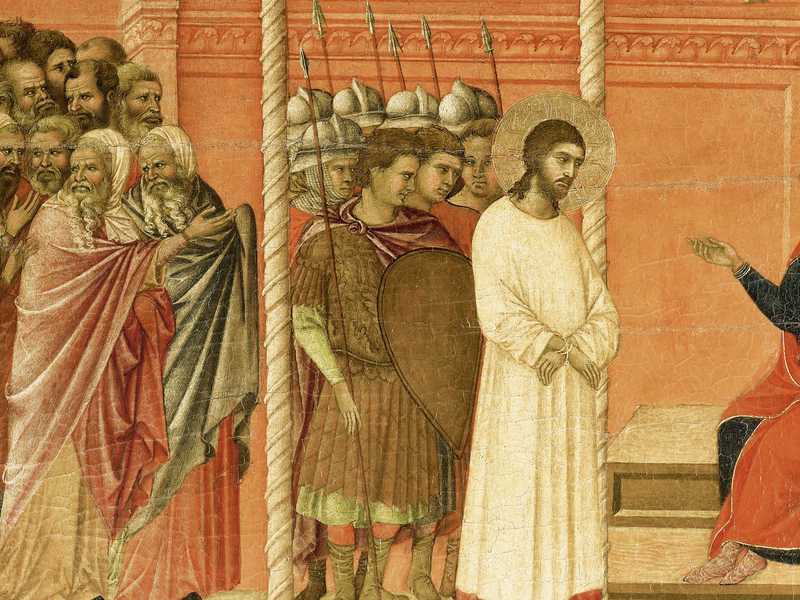
The texts of Christianity have been slowly at work, under the power of the Holy Spirit for 2000 years now. If we could be magically transported back into the world of two millennia ago, modern Americans would be shocked at the cruelty of that world. There was no concern for…

by Richard BledsoeMarch 18, 2013
aaron-burden-1ebsmyrau-s-unsplash
Luke

The Dysfunctional Family of the Gadarene Madman

The Story of the Gadarene Madman is told in all three synoptic Gospels (Matthew 8:28-34, Mark 5:1-20, Luke 8:26-37). Jesus ventures into a Gentile area when He passes over the Sea of Galilee. Upon disembarking from his boat, he is immediately met by a demon-possessed madman. Upon meeting Jesus, he…

by Richard BledsoeMarch 13, 2013
aaron-burden-1ebsmyrau-s-unsplash
Deuteronomy

Law and History: How to Read the Law of Moses

Part 1 of a multi-part series of studies on Deuteronomy 22:30-23:8. Eric Auerbach, in his classic work on Western literature, devotes his first chapter to contrasting Homer with the Bible. Of Homer, he writes of the “need of Homeric style to leave nothing which it mentions half in darkness and…

by Ralph Allan SmithMarch 12, 2013
markus-winkler-aid-xyrtlec-unsplash
Theopolis News

James Jordan in Korea, Japan

Trinity House Fellow James B. Jordan will be a speaker at an International Conference on Biblical Symbolism that will be held in Seoul on Monday, May 27 in 2013. He will address "The Importance of Biblical Symbolism and Symbolic Interpretation of the Bible." The conference will have three other speakers…

by Peter LeithartMarch 9, 2013

Showing page 197 of 309

See all
See all

Clever Drudge

Drudge couldn’t care a whit for Hillary Clinton, but his increasingly provocative headlines (most recently, “Diss-Off”) for a story on how Obama never considered Hillary as a veep candidate can have only one result: To get Hillary’s supporters, already cool toward Obama, hopping mad.

August 22, 2008

Enlightenment and elementary principles

Kant regards positive religions or ecclesiastical faiths (including Christianity) as temporary moral crutches that we can shed as we approach the pure natural religion of reason. Christianity’s institutions, sacraments, dogmas, are the stoicheia leading us to enlightenment. Here we see the problematics of Christian sacramental theology, going back at least…

August 22, 2008
Philosophy

Changing past and realism

Weberman returns to Danto to advance his argument. He notes that Danto shies away from saying that past events change, and suggests that he did this in order to remain a realist about past events; Danto held that “past events are what they are in a mind-independent way.” He insists…

August 19, 2008
Philosophy

Nonfixity of past

In an article in the Review of Metaphysics (1997), David Weberman argues for the “nonfixity of the historical past.” He starts from Arthur Danto’s argument that historical inquiry and writing cannot be a reconstruction available to an “ideal chronicler” who knows everything that happens the moment it happens and sets…

August 19, 2008

Union card

E. Miner wrote, that “the ability to declare typology absent is a kind of proof of sound modern critical method.” Which translated means, Skepticism about typology is the union card of serious biblical scholarship.

August 19, 2008

Brick Hermeneutics

A. K. A. Adam offers a useful critique of what he calls “brick hermeneutics.” Taking a cue from George Herriman’s early 20th-century comic strip Krazy Kat, he describes brick hermeneutics as follows: “Most of our discourses take for granted the premise that we communicate by infusing ‘meaning’ into some expression,…

August 19, 2008

Showing page 1480 of 2212

Browse by Category

In Medias Res

Your weekly digest for all things Theopolis.

Donate

Theopolis is nearly 100% donor-supported. Consider joining us on our mission.