Theopolis Logo

Writing

Explore our collection of theological essays, biblical studies, and reflections on faith and culture.

See all
img_7543
Nevin Lectures

Fourth Annual Nevin Lectures: Robert Kolb

Why Do Siblings Feud? Presuppositions, Principles, and Practice in Reformed-Lutheran Relationships Robert Kolb, International Research Emeritus Professor for Institute for Mission Studies, Concordia Seminary, St Louis, Missouri. Lecture Topics 1) Law and Gospel: Answering the Question Posed 2) The Lord's Supper: Christ's Presence and Promise 3) Worship and Created Things:…

by Brian MoatsDecember 30, 2016

e99a2994
Advent

Exodus to Eden

From Genesis 3, West-to-East movement is always movement away from God’s presence and His house (cf. Genesis 3:24). Adam and Eve were cast out of the Garden to the east, and when Cain was later cast out he was sent to the land east of Eden. The men of Babel,…

by Peter LeithartDecember 30, 2016
holy-family
Advent

Immanuel's Table

In his account of Jesus' birth, Matthew cites a prophecy assuring Judah of her victory over Israel and Aram. Immanuel is also a sign of the Lord’s judgment. When God comes near, He comes to bless and to curse, to save and to condemn, for deliverance and for judgment. The…

by Peter LeithartDecember 29, 2016
massacre2
Abortion

Holy Innocents

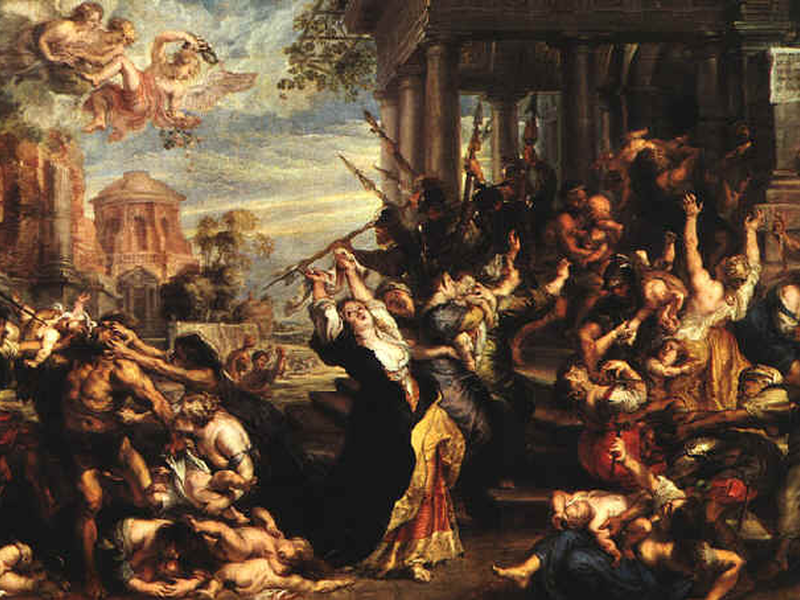
For many in the modern era, Christianity has been seen as an apolitical religion. Christianity is a private, spiritual religion. It's a convenient myth for modern people. After the Reformation, Europe entered a period of protracted and often vicious conflict that left large portions of Western Europe devastated. Many concluded…

by Peter LeithartDecember 28, 2016
sixteen-miles-out-d40gdcd_-he-unsplash
Advent

Christmas Light, Christmas Love

The Christmas gospel announces the coming of day. Those in darkness see a great light, as the Sun rises with healing in His wings. The light has come into the world that lightens every man, to give light to those who sit in darkness and in the shadow of death.…

by Peter LeithartDecember 27, 2016
screen-shot-2022-05-12-at-12-07-23-pm
Advent

Word Made Food

How do we know God loved the world? John tells us that He demonstrates His love in sending His Son. To paraphrase Paul, God has demonstrated His love for us in that while we were still sinners Christ was born for us. He sent His Son to take on human…

by Peter LeithartDecember 26, 2016

Showing page 119 of 309

See all
See all

Expression and content

Umberto Eco ( Limits of Interpretation ) criticizes Barthes’s notion that connotation occurs when “a sign function (Expression plus Content) becomes in turn the expression of a further content.” He argues that “in order to have a connotation, that is, a second meaning of a sign, the whole underlying first…

August 14, 2008

Fat Heart

Isaiah 6:10 says that Isaiah’s ministry will make the hearts of Israel “fat” and their ears “heavy” ( kabad ). The phrasing is unique to Isaiah 6, but the combination of heavy and fat conjures up Eli, who also was going blind. Isaiah 6 is a new Samuel, and like…

August 13, 2008
History

From Creator-creature to Subject-object

MH Abrams notes that at the heart of Romanticism was a transfer of Christian concepts into a new, subjectivist, context: “Much of what distinguishes writers I call ‘Romantic’ derives from the fact that they undertook, whatever their religious creed or lack of creed, to save traditional concepts, schemes, and values…

August 13, 2008

God-like Hirsch

Frank Lentricchia argues that there is “no unmediated historical knowledge,” and adds: “That is reserved for God, or for theorists like Hirsch who believe that objective knowledge can be acquired in a massive act of dispossessing ourselves of the only route to knowledge that we have: the historicized self. What…

August 13, 2008

Sacraments and texts

Roger Lundin notes that modern interpretation often seeks an unmediated encounter with the text, and then adds: “Both Keith Thomas and Charles Taylor trace it, in part, to the Reformation’s anti-sacramental impulses, which fed into the desacralizing of nature that seventeenth-century science and commerce eagerly promoted. The process accelerated through…

August 13, 2008

Another hermeneutical parable

For centuries, piano virtuosos had thrilled audiences with audacious performances of Liszt’s seventh Etude (in G minor, “Eroica”). Liszt scholars had written analyses of the music, and critics had compared various performances to one another and to what they believed was Liszt’s original intention for the music. An industrious Liszt…

August 13, 2008

Showing page 1482 of 2212

Browse by Category

In Medias Res

Your weekly digest for all things Theopolis.

Donate

Theopolis is nearly 100% donor-supported. Consider joining us on our mission.