Theopolis Logo

Writing

Explore our collection of theological essays, biblical studies, and reflections on faith and culture.

See all
adam-and-eve-garden-768x512
Biblical Horizons

The Dominion Trap

In Genesis One, God told Adam and Eve to "be fruitful and multiply, and fill the earth, and subdue it; and rule over the fish of the sea and over the birds of the heavens, and over every living thing that moves on the earth" (Gen. 1:28). In Christian worldview…

by James B. JordanJuly 2, 1990

ivan-aleksic-16yxcjsoaek-unsplash
Biblical Studies

Building the Church

"And I also way to you that you are Peter, and upon this rock I will build My church; and the gates of Hades shall not overpower it" (Matthew 16:18). Matthew 16:13ff. has historically been one of the most oft-cited passages of Scripture. Throughout the Middle Ages, it was used…

by Peter LeithartJune 19, 1990
timothy-eberly-djj49s6ud2o-unsplash
Matthew

Ephraim in Redemptive History

One of the important themes of the synoptic gospels is Jesus’ rejection of Israel and the transfer of God’s favor to the New Israel, the Church. A clear statement of this theme is found in the parable of the vineyard owner in Matthew 21:33-46. Jesus explained the meaning of the…

by Peter LeithartJune 19, 1990
original
Biblical Horizons

Advice From a Sojourner, Part 7

11. There is a type of person [a generation] who curses his father, And does not bless his mother. 12. There is a type who is pure in his own eyes, Yet not washed from his filthiness [manure]. 13. There is a type — oh how lofty are his eyes!…

by James B. JordanJune 2, 1990
mick-haupt-eq2z9ay9wws-unsplash
Leviticus

A Male Without Defect

Under the Levitical law, whole-burnt offerings from the herd and flock had to be male. No such specification is made with respect to birds (cf. Lev. 5:7-10). Why did the Lord demand that only males be offered as whole-burnt offerings? The easy answer is that the whole-burnt offering typified Christ,…

by Peter LeithartMay 19, 1990
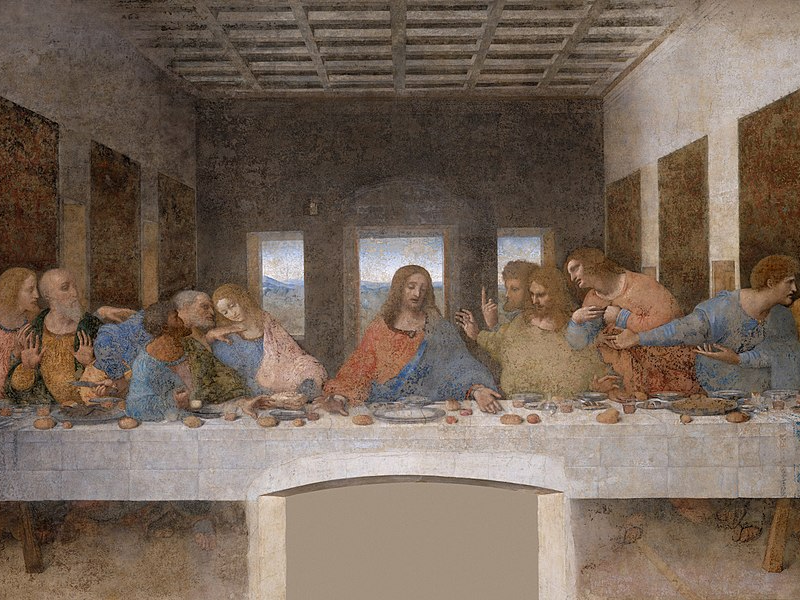
the_last_supper_-_leonardo_da_vinci_-_high_resolution_32x16
Matthew

He Shall Be Called A Nazarene

Matthew 2:13-23 has a tripartite structure, reporting briefly three events of the early years of Jesus’ life. Matthew ends his narrative of each event with a "fulfillment formula." Jesus’ flight to Egypt and His Exodus back into Israel was a fulfillment of Hosea’s words, "Out of Egypt I call my…

by Peter LeithartMay 19, 1990

Showing page 303 of 309

See all
See all

Expression and content

Umberto Eco ( Limits of Interpretation ) criticizes Barthes’s notion that connotation occurs when “a sign function (Expression plus Content) becomes in turn the expression of a further content.” He argues that “in order to have a connotation, that is, a second meaning of a sign, the whole underlying first…

August 14, 2008

Fat Heart

Isaiah 6:10 says that Isaiah’s ministry will make the hearts of Israel “fat” and their ears “heavy” ( kabad ). The phrasing is unique to Isaiah 6, but the combination of heavy and fat conjures up Eli, who also was going blind. Isaiah 6 is a new Samuel, and like…

August 13, 2008
History

From Creator-creature to Subject-object

MH Abrams notes that at the heart of Romanticism was a transfer of Christian concepts into a new, subjectivist, context: “Much of what distinguishes writers I call ‘Romantic’ derives from the fact that they undertook, whatever their religious creed or lack of creed, to save traditional concepts, schemes, and values…

August 13, 2008

God-like Hirsch

Frank Lentricchia argues that there is “no unmediated historical knowledge,” and adds: “That is reserved for God, or for theorists like Hirsch who believe that objective knowledge can be acquired in a massive act of dispossessing ourselves of the only route to knowledge that we have: the historicized self. What…

August 13, 2008

Sacraments and texts

Roger Lundin notes that modern interpretation often seeks an unmediated encounter with the text, and then adds: “Both Keith Thomas and Charles Taylor trace it, in part, to the Reformation’s anti-sacramental impulses, which fed into the desacralizing of nature that seventeenth-century science and commerce eagerly promoted. The process accelerated through…

August 13, 2008

Another hermeneutical parable

For centuries, piano virtuosos had thrilled audiences with audacious performances of Liszt’s seventh Etude (in G minor, “Eroica”). Liszt scholars had written analyses of the music, and critics had compared various performances to one another and to what they believed was Liszt’s original intention for the music. An industrious Liszt…

August 13, 2008

Showing page 1482 of 2212

Browse by Category

In Medias Res

Your weekly digest for all things Theopolis.

Donate

Theopolis is nearly 100% donor-supported. Consider joining us on our mission.