Theopolis Logo

Writing

Explore our collection of theological essays, biblical studies, and reflections on faith and culture.

See all
img_4660-2
Sacramental Theology

The Gospel According to the Sacraments, (Part 1)

My first title for this series of posts was “Evangelical Sacramental Ecumenism” – not exactly a clickbait title. But those three words, evangelical, sacramental, and ecumenical, say a lot: The centrality of the gospel; a focus on baptism, bread, and wine; and the quest for visible unity among diverse churches.…

by Michael SpalioneDecember 12, 2017

e99a2313
Baptism

Baptism and Contextualization, (Part 1)

I can imagine someone reading the title of this essay and saying to himself, "I have two questions. First, what in the world is “contextualization”?" Second, even before hearing the answer to the first question, he may wonder, "what does baptism have to do with such an awkward and vague…

by Ralph Allan SmithDecember 7, 2017
sixteen-miles-out-al48tflf4e8-unsplash
Deuteronomy

Law of the Rebellious Son

Deuteronomy 21:18-21 My colleague Ralph Smith has recently written on this passage, here . I entirely agree with Ralph's thrust, which is typological, that the passage is ultimately aimed at the entire nation of Israel itself as the rebellious son. But what I am thinking is from another perspective, perhaps…

by Richard BledsoeDecember 5, 2017
e99a2313
Baptism

Like A Dove (Part 2)

In the previous article in this series, I drew attention to the threefold meaning of the Spirit of God descending as a dove on Jesus at His baptism. On a related note, I also argued that 1 Corinthians 6:9-11 and Titus 3:3-7 were parallel passages that addressed the same issues…

by Ralph Allan SmithNovember 30, 2017
colin-1
Politics

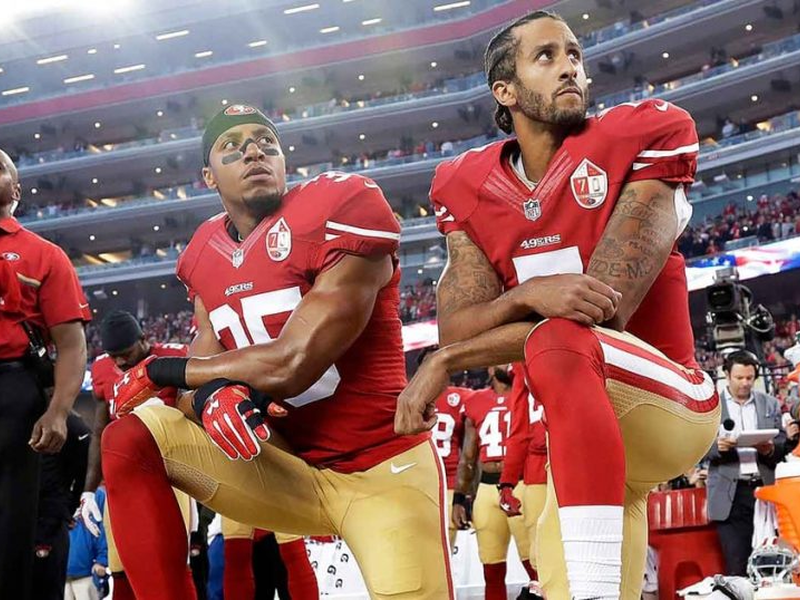
What’s in a Flag?

The National Anthem protest is misguided. So too the conservative backlash. The Church’s response has been disappointing. I address each in turn. The greatest triumph of the American Civil Rights Movement was its seizing of the moral high ground in American politics. It did so by insisting only on those…

by A. K. ShaukuNovember 28, 2017
baptism-of-christ
Baptism

Like a Dove

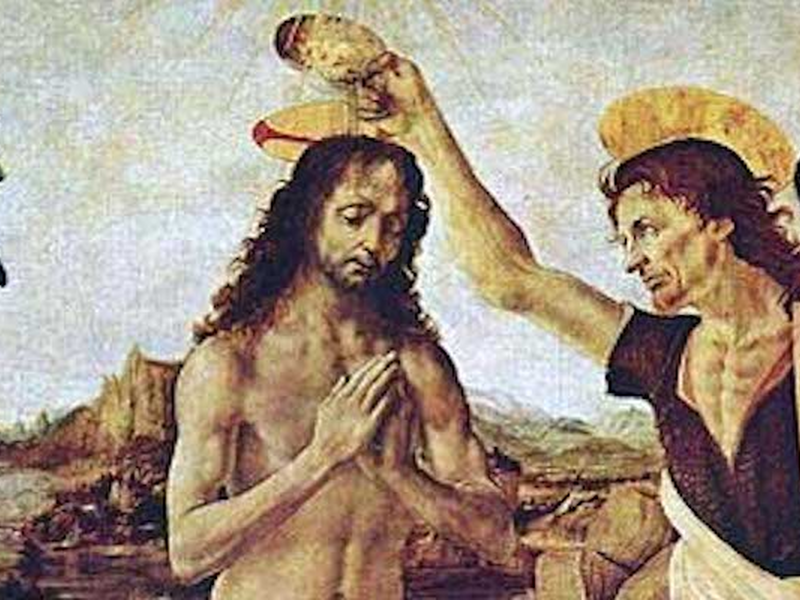
Peter Leithart’s book, The Priesthood of the Plebs: A Theology of Baptism , argues that baptism is parallel to and the fulfillment of the old covenant rite of priestly ordination. But this is not something explicitly stated in the New Testament. Why, then, should we believe it? Leithart shows in…

by Ralph Allan SmithNovember 23, 2017

Showing page 102 of 309

See all
See all
Theology

Barthes’s transcendental argument

That’s Barthes not Barth. As in Roland. Prickett suggests that Barthes’ proclamation of the death of the author, his manumission of interpretation from the obsession with the limited, final, “secret” meaning, and his hope for a liberated “anti-theological” and “revolutionary” reading that refuses “to fix meaning” in fact opens the…

August 5, 2008

Conservatism of Poststructuralism

Poststructuralism likes to think itself radical, but Stephen Prickett (Words and the Word) points out that it excludes the possibility of novelty. Barthes says that a text is “a tissue of quotations drawn from the unnumerable centres of culture.” And Kristeva’s notion of intertextuality, on Prickett’s reading, encloses a text…

August 5, 2008
Literature

Novelistic language

A few highlights from James Wood’s chapter on language in How Fiction Works . Early on, he mentions the “old modernist hope” that prose can be “as well written as poetry.” This will require readers and novelists to develop what Nietzsche called a “third ear”: “We have to read musically,…

August 4, 2008
Literature

Bad Books

Lewis remarks on the high difficulty of adverse criticism, noting that the difficulty lies partly in the fact that the defects of bad literature are found in good literature: “The novel before you is bad - a transparent compensatory fantasy projected by a poor, plain woman, erotically starving. Yes, but…

August 4, 2008

Terms of abuse

Lewis describes the process by which words that once expressed and aroused emotions by appealing to the imagination have been emptied of image-content and become purely emotional. “Damn you” used to be a real curse, because people believed in damnation. Now that fewer do, it’s a more or less purely…

August 4, 2008

Limits of language

In Lewis’s defense, he is trying to explain some of the limits of language, which are worth noting (this in the last chapter of Studies in Words ). One limitation has to do with language’s inability “to inform us about complex physical shapes and movements. Hence descriptions of such things…

August 4, 2008

Showing page 1485 of 2212

Browse by Category

In Medias Res

Your weekly digest for all things Theopolis.

Donate

Theopolis is nearly 100% donor-supported. Consider joining us on our mission.