Theopolis Logo

Writing

Explore our collection of theological essays, biblical studies, and reflections on faith and culture.

See all
jefferson-santos-fcejgbzakru-unsplash
Interview

The Way My Story Goes: Interview with Singer-Songwriter Jamie Soles

Jamie Soles is the reason I know my way around a guitar. When my guitar teacher put the sheet music for Eine Kleine Nachtmusick in my fourteen-year-old hands, I balked. He gave me “Foggy Mountain Breakdown.” I learned half of it. At home, I ignored my teacher’s instructions and tugged…

by Christian LeithartMarch 12, 2019
screenshot-2023-10-27-at-1-23-26-pm
Epistemology

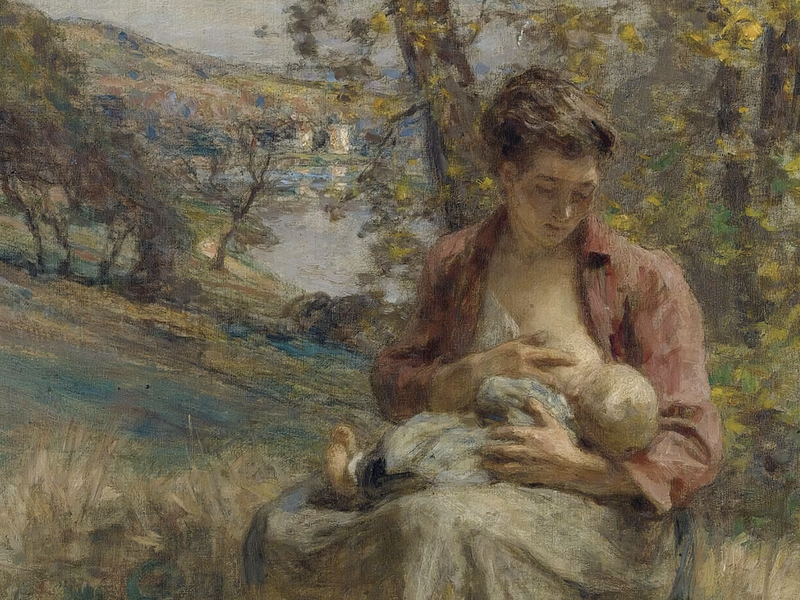
The Mother’s Smile: Integrative Beauty

This is a tough era for mothers. Regard for mothers, while it is always booming in some circles, is decidedly lacking in the prevailing winds of the milieu. In high demand by contrast is contribution to the work force, being a consumer, and basic economic survival, often as a solitary…

by Esther Lightcap MeekMarch 5, 2019
img_1456
Epistemology

Seeking Integration in a Fragmented World: D.C. Schindler: Are You Open to the Heart of Things?

After the dark quiet of the year’s beginning, I return now to pick up the threads of my reflection on integration. This is my own personal inquiry, and for me it is no academic exercise but rather the forefront of my personal quest for the real. My hope is that…

by Esther Lightcap MeekFebruary 26, 2019
tolkien
Chiasm

The Chiastic Structure of Lord of the Rings

The chiastic structure of The Hobbit we considered in the previous essay is highly suggestive of what might lie in store for The Lord of the Rings saga. It is undoubtedly the case that J. R. R. Tolkien was a literary craftsman. It may even be the case he is…

by Kelly KerrFebruary 19, 2019
tolkien
Chiasm

The Chiastic Structure of the Hobbit

Structure plays an important part of any literary work, whether poetry or prose. It adds to the beauty and depth of the work and allows insight to be gained about what the author is trying to communicate. The question that concerns us here is whether or not there exists an…

by Kelly KerrFebruary 5, 2019
a-giant-alien-spaceship-that-has-landed-in-montana-in-arrival-denis-villeneuves-film-adaptation-of-a-story-by-ted-chiang
Movies

Learning the Language of Arrival

Can we learn to communicate from an outside intelligence? Spoiler Alert! If you have not yet seen the movie, this article may provide you with a great deal more information than you wished to know at this point. Since the 1999 film The Matrix received careful scrutiny on many fronts…

by Eric RobinsonJanuary 29, 2019

Showing page 81 of 309

See all
See all
Theology

Barthes’s transcendental argument

That’s Barthes not Barth. As in Roland. Prickett suggests that Barthes’ proclamation of the death of the author, his manumission of interpretation from the obsession with the limited, final, “secret” meaning, and his hope for a liberated “anti-theological” and “revolutionary” reading that refuses “to fix meaning” in fact opens the…

August 5, 2008

Conservatism of Poststructuralism

Poststructuralism likes to think itself radical, but Stephen Prickett (Words and the Word) points out that it excludes the possibility of novelty. Barthes says that a text is “a tissue of quotations drawn from the unnumerable centres of culture.” And Kristeva’s notion of intertextuality, on Prickett’s reading, encloses a text…

August 5, 2008
Literature

Novelistic language

A few highlights from James Wood’s chapter on language in How Fiction Works . Early on, he mentions the “old modernist hope” that prose can be “as well written as poetry.” This will require readers and novelists to develop what Nietzsche called a “third ear”: “We have to read musically,…

August 4, 2008
Literature

Bad Books

Lewis remarks on the high difficulty of adverse criticism, noting that the difficulty lies partly in the fact that the defects of bad literature are found in good literature: “The novel before you is bad - a transparent compensatory fantasy projected by a poor, plain woman, erotically starving. Yes, but…

August 4, 2008

Terms of abuse

Lewis describes the process by which words that once expressed and aroused emotions by appealing to the imagination have been emptied of image-content and become purely emotional. “Damn you” used to be a real curse, because people believed in damnation. Now that fewer do, it’s a more or less purely…

August 4, 2008

Limits of language

In Lewis’s defense, he is trying to explain some of the limits of language, which are worth noting (this in the last chapter of Studies in Words ). One limitation has to do with language’s inability “to inform us about complex physical shapes and movements. Hence descriptions of such things…

August 4, 2008

Showing page 1485 of 2212

Browse by Category

In Medias Res

Your weekly digest for all things Theopolis.

Donate

Theopolis is nearly 100% donor-supported. Consider joining us on our mission.