Theopolis Logo

Writing

Explore our collection of theological essays, biblical studies, and reflections on faith and culture.

See all
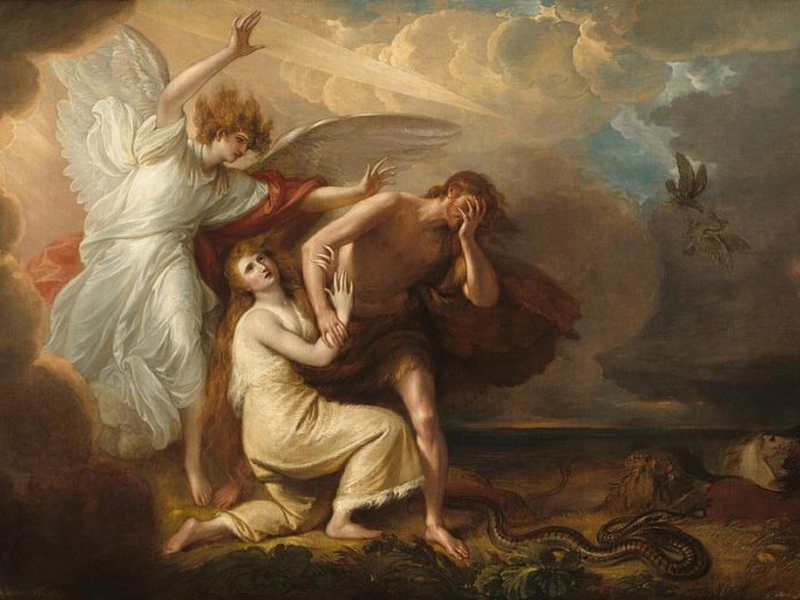
adam-and-eve-garden-768x512
Biblical Horizons

The Dominion Trap

In Genesis One, God told Adam and Eve to "be fruitful and multiply, and fill the earth, and subdue it; and rule over the fish of the sea and over the birds of the heavens, and over every living thing that moves on the earth" (Gen. 1:28). In Christian worldview…

by James B. JordanJuly 2, 1990

ivan-aleksic-16yxcjsoaek-unsplash
Biblical Studies

Building the Church

"And I also way to you that you are Peter, and upon this rock I will build My church; and the gates of Hades shall not overpower it" (Matthew 16:18). Matthew 16:13ff. has historically been one of the most oft-cited passages of Scripture. Throughout the Middle Ages, it was used…

by Peter LeithartJune 19, 1990
timothy-eberly-djj49s6ud2o-unsplash
Matthew

Ephraim in Redemptive History

One of the important themes of the synoptic gospels is Jesus’ rejection of Israel and the transfer of God’s favor to the New Israel, the Church. A clear statement of this theme is found in the parable of the vineyard owner in Matthew 21:33-46. Jesus explained the meaning of the…

by Peter LeithartJune 19, 1990
original
Biblical Horizons

Advice From a Sojourner, Part 7

11. There is a type of person [a generation] who curses his father, And does not bless his mother. 12. There is a type who is pure in his own eyes, Yet not washed from his filthiness [manure]. 13. There is a type — oh how lofty are his eyes!…

by James B. JordanJune 2, 1990
mick-haupt-eq2z9ay9wws-unsplash
Leviticus

A Male Without Defect

Under the Levitical law, whole-burnt offerings from the herd and flock had to be male. No such specification is made with respect to birds (cf. Lev. 5:7-10). Why did the Lord demand that only males be offered as whole-burnt offerings? The easy answer is that the whole-burnt offering typified Christ,…

by Peter LeithartMay 19, 1990
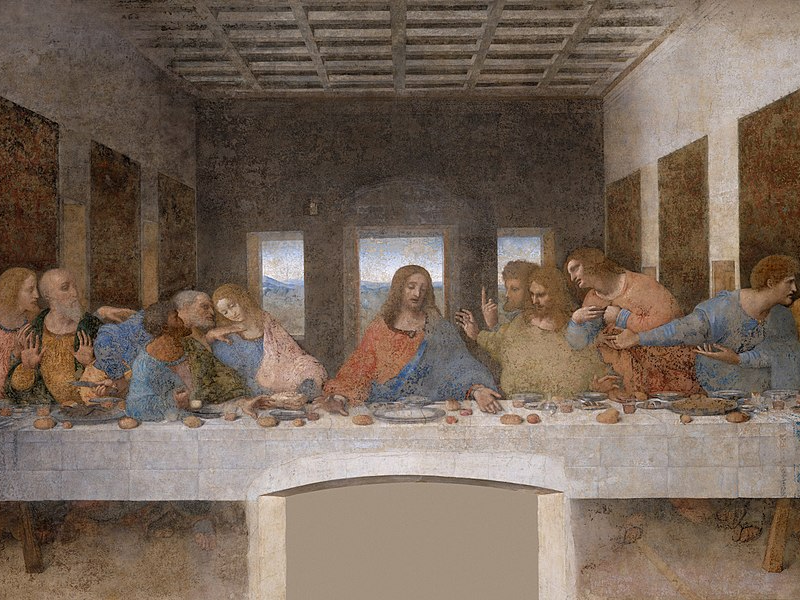
the_last_supper_-_leonardo_da_vinci_-_high_resolution_32x16
Matthew

He Shall Be Called A Nazarene

Matthew 2:13-23 has a tripartite structure, reporting briefly three events of the early years of Jesus’ life. Matthew ends his narrative of each event with a "fulfillment formula." Jesus’ flight to Egypt and His Exodus back into Israel was a fulfillment of Hosea’s words, "Out of Egypt I call my…

by Peter LeithartMay 19, 1990

Showing page 303 of 309

See all
See all

Essential/Accidental Meaning

Gracia’s own suggestion is that we can make sense of the determinateness and indeterminateness of meaning by distinguishing between “essential” and “accidental” meanings: “although texts may have a well-delimited core of meaning (an essential meaning), they may have other meanings that are the result of contingent conditions, such as changes…

June 6, 2008

No Smoking

In the entry on meaning in the Dictionary for Theological Interpretation of the Bible (Baker), Jorge Gracia responds to the view that textual meaning has no limits with this: It is true that “texts are understood by different persons, or even by the same person at different times, to mean…

June 6, 2008

Tallis

Joel Garver writes, in response to several posts from Raymond Tallis’s Not Saussure : “Most post-structuralist authors I’ve read aren’t dealing with things such as cups or trees or rocks, but rather things such as rationality, madness, criminality, virtue, etc. Foucault, for instance, seems to take bodies as ontologically basic,…

June 5, 2008
Literature

Bible and poetry

Fisch yet again: After reviewing the influence of the Old Testament, especially the Psalms, on prose writing in the seventeenth century, he adds: “it is worth bearing in mind that this is not only a matter of the seventeenth century. It is found earlier in the antiphonal plain-song of the…

June 5, 2008
Literature

Hebraic prose

Fisch again: Hebraic prose is different from the grand style of the sixteenth century, and different too from the pared-down plain style shared by many Puritans and all Baconians. It is a rhetoric, not an anti-rhetoric, but it is a rhetoric purified by Puritanism, Senecanism, and scientism. It is biblical…

June 5, 2008
Literature

Jerusalem and Albion

In his 1964 book, Jerusalem and Albion: The Hebraic Factor in Seventeenth-Century Literature , Harold Fisch argues that Blake provides a more insightful and broader account of the seventeenth century’s “dissociation of sensibility” than Eliot, who coined the phrase. For Blake, the great crisis of England was the dissociation of…

June 5, 2008

Showing page 1507 of 2212

Browse by Category

In Medias Res

Your weekly digest for all things Theopolis.

Donate

Theopolis is nearly 100% donor-supported. Consider joining us on our mission.