Theopolis Logo

Writing

Explore our collection of theological essays, biblical studies, and reflections on faith and culture.

See all
screen-shot-2020-03-05-at-9-05-54-am
Family

Childbearing as Liminal Space

Notwithstanding she shall be saved in childbearing, if they continue in faith and charity and holiness with sobriety. (1 Timothy 2:15) Years ago, the wife of a prominent American theologian recognized that even in Christian circles mothers were under a kind of social pressure to justify the worthwhileness of their…

by Garrett SoucyMarch 24, 2020

pablo-merchan-montes-wyopqmtdd0w-unsplash
Motherhood

Parenting through Coronavirus

I caught my five year old washing his hands again. He had already washed them several times that hour, so I asked him if he was okay. He told me he didn’t want to get “the virus”. That was before I had told him anything about coronavirus, but we did…

by Lindsey TollefsonMarch 20, 2020
arturo-castaneyra-tpe60ik97qw-unsplash
Discipleship

Take a Walk

Very early in life, I developed the habit of walking and thinking and meditating. I came from a rather strict home, and the only way I could get out of the house at night was to walk the dog. So, I did. I would walk the dog for miles and…

by Richard BledsoeMarch 17, 2020
litany-1669-1
Coronavirus

Disease, Deprecations, and Deliverance in an Age of Safe Spaces | Reflections from a University President

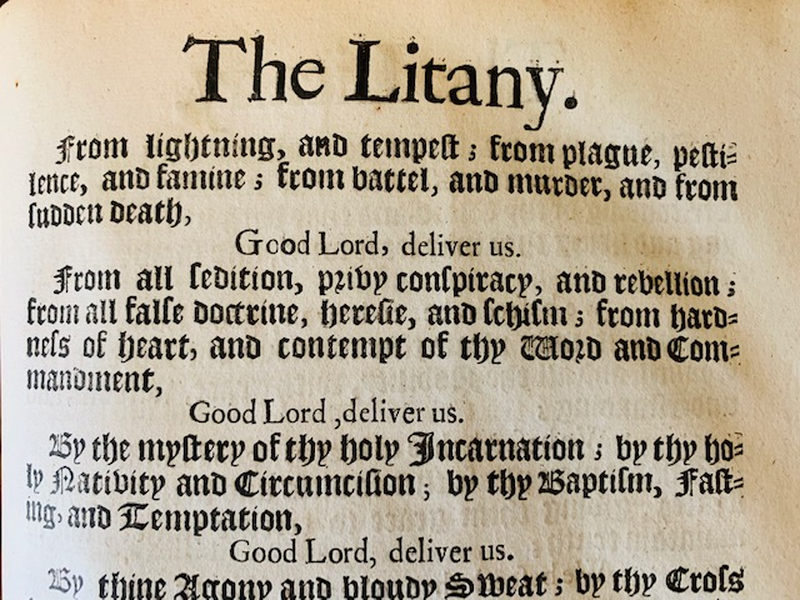
From lightning and tempest; from plague, pestilence, and famine; from battle and murder, and from sudden death, Good Lord, deliver us. The Fourth Deprecation from Thomas Cranmer's 1544 Litany 1 A deprecation, such as that above, is a prayer to be spared from disaster, its Latin root deprecari meaning to…

by Alexander WhitakerMarch 16, 2020
lukasz-lada-q7z-aulhpaw-unsplash
Biblical Studies

The Son of Man in the Clouds | Part 2

In the previous essay in this series, we saw that Jesus’ words about coming on the clouds were spoken on more than one occasion, first to the disciples on the Mount of Olives (Matthew 24:30; Mark 11:36; Luke 21:27), then, a few days later, to the high priest and Jewish…

by Ralph Allan SmithMarch 10, 2020
screen-shot-2020-03-05-at-9-05-54-am
Epistemology

Voice and God’s Relational Biology

The following is excerpted from an essay first published at Church Life Journal . We are grateful to the editors for permission to repost here. The word “science” at its root means “to know” and the word “theology” at its root means “to think about God.” Can we know anything…

by Kristin M. Collier MDMarch 5, 2020

Showing page 69 of 309

See all
See all

Essential/Accidental Meaning

Gracia’s own suggestion is that we can make sense of the determinateness and indeterminateness of meaning by distinguishing between “essential” and “accidental” meanings: “although texts may have a well-delimited core of meaning (an essential meaning), they may have other meanings that are the result of contingent conditions, such as changes…

June 6, 2008

No Smoking

In the entry on meaning in the Dictionary for Theological Interpretation of the Bible (Baker), Jorge Gracia responds to the view that textual meaning has no limits with this: It is true that “texts are understood by different persons, or even by the same person at different times, to mean…

June 6, 2008

Tallis

Joel Garver writes, in response to several posts from Raymond Tallis’s Not Saussure : “Most post-structuralist authors I’ve read aren’t dealing with things such as cups or trees or rocks, but rather things such as rationality, madness, criminality, virtue, etc. Foucault, for instance, seems to take bodies as ontologically basic,…

June 5, 2008
Literature

Bible and poetry

Fisch yet again: After reviewing the influence of the Old Testament, especially the Psalms, on prose writing in the seventeenth century, he adds: “it is worth bearing in mind that this is not only a matter of the seventeenth century. It is found earlier in the antiphonal plain-song of the…

June 5, 2008
Literature

Hebraic prose

Fisch again: Hebraic prose is different from the grand style of the sixteenth century, and different too from the pared-down plain style shared by many Puritans and all Baconians. It is a rhetoric, not an anti-rhetoric, but it is a rhetoric purified by Puritanism, Senecanism, and scientism. It is biblical…

June 5, 2008
Literature

Jerusalem and Albion

In his 1964 book, Jerusalem and Albion: The Hebraic Factor in Seventeenth-Century Literature , Harold Fisch argues that Blake provides a more insightful and broader account of the seventeenth century’s “dissociation of sensibility” than Eliot, who coined the phrase. For Blake, the great crisis of England was the dissociation of…

June 5, 2008

Showing page 1507 of 2212

Browse by Category

In Medias Res

Your weekly digest for all things Theopolis.

Donate

Theopolis is nearly 100% donor-supported. Consider joining us on our mission.