Theopolis Logo

Writing

Explore our collection of theological essays, biblical studies, and reflections on faith and culture.

See all
timothy-eberly-djj49s6ud2o-unsplash
Leviticus

Yahweh's War Against Death

Stories, frankly all human stories are practically always about one thing aren’t they? Death. The inevitability of death. . . . “There is no such thing as a natural death. Nothing that happens to man is ever natural, since his presence calls the whole world into question. All men must…

by Brian MarrApril 14, 2014

screenshot-2023-09-21-at-4-52-42-pm
Matthew

Inescapable Blood

Matthew is organized around 5 discourses, which trace out the history of Jesus as a recapitulation of the history of God and Israel in the Old Testament. Jesus first speaks as a new Moses, instructing His disciples on a mountain about a righteousness that surpasses the righteousness of the scribes…

by Peter LeithartApril 10, 2014
screen-shot-2022-05-12-at-12-07-23-pm
Angels

Did Angels Marry People? The Sin of Cultural Intermarriage

The fall of the Sethites in Genesis 6 is the third fall of mankind, or the third degree of Adam’s original fall. Adam sinned in a Garden against his Father by stealing something he was supposed to wait to obtain. (“Every tree shall be food for you” Genesis 1:29.) Cain…

by James B. JordanApril 7, 2014
sixteen-miles-out-al48tflf4e8-unsplash
Angels

Did Angels Marry People? The Sons of God in Genesis 6

The recent fantasy film Noah and a slightly related blog comment by my friend Douglas Wilson have stirred up again the question of whether the “sons of God” in Genesis 6 who married the “daughters of men” were fallen angels or the priestly line of Seth. Doug argues for angels,…

by James B. JordanApril 4, 2014
kiwihug-l4gw27xzn1i-unsplash
Angels

The Angels of Jude

The prophecy of Jude concerns apostasy. An illustration of apostasy and its consequences is found in verse 6, which the New American Standard Bible translates this way: "And angels who did not keep their own domain, but abandoned their proper abode, He has kept in eternal bonds under darkness for…

by James B. JordanApril 3, 2014
screenshot-2023-09-21-at-4-22-42-pm
Matthew

Women at the Cross

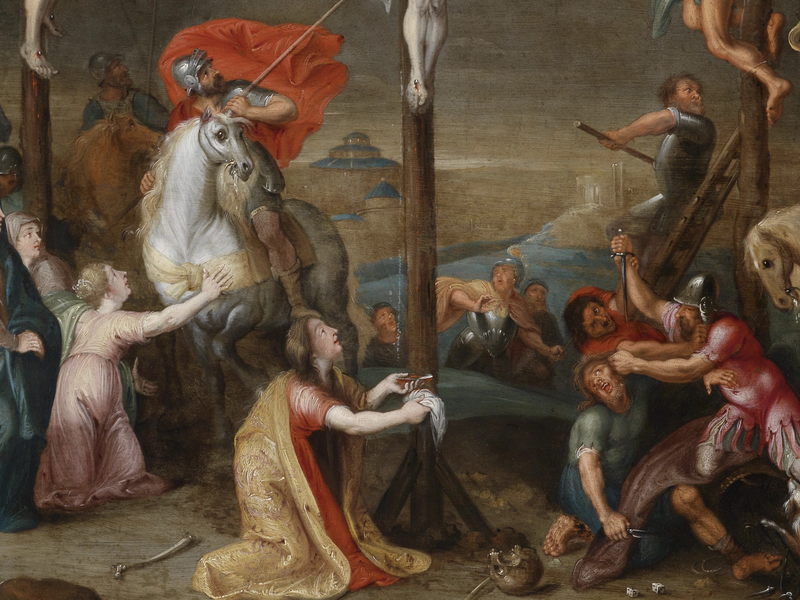
At His death, Jesus is surrounded by a Roman centurion and his cohort of Gentile solders. Matthew doesn't say that any disciples are there. But women are, and so is Joseph of Arimathea, identified as a “disciple” but, as John tells us, a “secret disciple for fear of the Jews,”…

by Peter LeithartMarch 31, 2014

Showing page 176 of 309

See all
See all
Literature

Conrad and empire

William Deresiewicz has an excellent review of a new biography of Joseph Conrad in the June 11 issue of TNR . One thread of the review has to do with Conrad’s phantasmagorical vision of European imperialism and his related concern for the moral dangers of isolation from well-known social habits…

June 5, 2008

Meaning and Significance

In an effort to maintain his distinction of meaning and significance, interpretation and critical assessment, E. D. Hirsch examines Welleck’s treatment of Marvell’s phrase “vegetable love.” He notes that “Welleck could not even make his point unless he could distinguish between what ‘vegetable’ probably means as used in the text…

June 4, 2008

Saussure and semantics

Tallis yet again: He argues that confusion of langue and parole : leads to “conflation of the idea of a world as a value or set of values within the system with the meaning of a word used on a particular occasion, that by virtue of which verbal meaning is…

June 4, 2008

Differance and words

Tallis thinks that one of the basic confusions of post-Saussurean criticism is a confusion of the levels of parole and langue . Signifiers and signifieds are, for Saussure, purely differential; but words are not signifiers or signifieds, but types of signs, which are combinations of the two. Signifier and signified…

June 4, 2008

Language and reality

Does language take cues from reality? Tallis says Yes; at least, that’s one kind of relation language has to reality. His charming evidence: He notes that it’s more common to add “barking” to “dog” than to add other verbs. If language doesn’t take its cues from reality, “we must surely…

June 4, 2008

Spatial and Linguistic “Edges”

Tallis contests the post-structuralist notion that all distinctions are linguistic, imported to reality by what we say about them. This, he thinks, oversimplifies a more complex situation. For some realities, the “edges” are determined by language, because those realities depend on classifications that we have brought to the real world.…

June 4, 2008

Showing page 1508 of 2212

Browse by Category

In Medias Res

Your weekly digest for all things Theopolis.

Donate

Theopolis is nearly 100% donor-supported. Consider joining us on our mission.