Theopolis Logo

Writing

Explore our collection of theological essays, biblical studies, and reflections on faith and culture.

See all
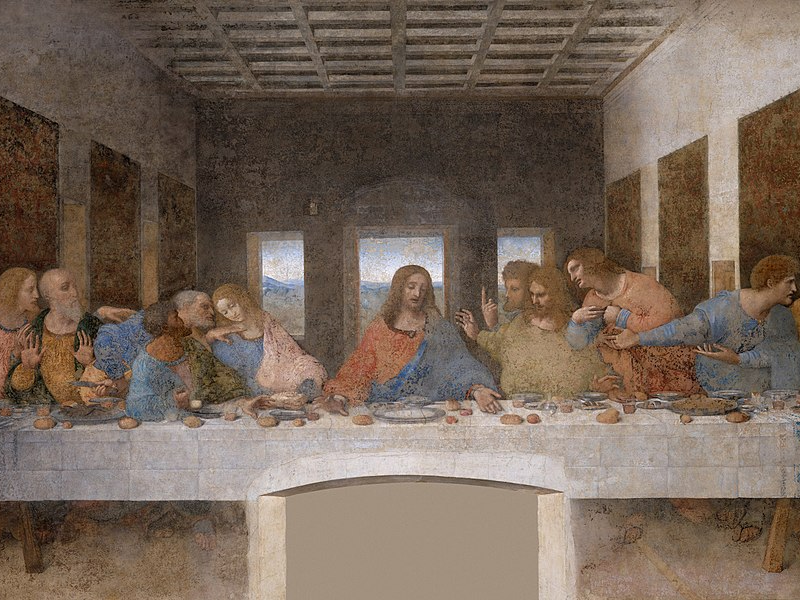
the_last_supper_-_leonardo_da_vinci_-_high_resolution_32x16-2
Biblical Horizons

Was the Last Supper a Passover?

Some readers of my essay, “ Strange and Glorious New Rites ,” have written to object that I have strained a gnat and swallowed a camel. I have strained out the gnat of a possible link to the memorial bread of the minchah (Lev. 2), while overlooking the camel that…

by James B. JordanMarch 22, 2011

screenshot-2023-09-19-at-10-48-12-am
Biblical Horizons

Planetary Judgments

In his lectures on Comparative Religion, Eugen Rosenstock-Huessy points to five fundamental gods that were over ancient man and still can dominate us today, and which must be respected. When we sin, we respect these gods more than we respect the Creator, disobeying the First Word: “You will have no…

by James B. JordanMarch 22, 2011

timothy-eberly-djj49s6ud2o-unsplash
Biblical Studies

Notes on the Book of Judges

A. Israel’s failure to hold land against the Canaanites. Progressive compromise, leading to judgment. 1:1–2:5. B. Israel’s idolatry, the cycle of judges, and war as God’s chastisement. 2:6–3:6. C. Northern Gentiles (Mesopotamia), and Othniel. 3:7-11. D. Lot: Moab, and Ehud. 3:12-13. E. Minor judge: Shamgar. 3:31. F. Canaanites opposed. Women…

by James B. JordanMarch 21, 2011
briana-tozour-mrfapsuyy8a-unsplash
Biblical Horizons

Principalities and Powers, (Part 2)

The great question for the emerging East, for Asia and other awakening third world areas, for an emerging nation like China is, “what fate awaits them?” They are now emerging from an analogous paganism that the West emerged from centuries ago. Here an amazing quotation from David Aikman, the Time…

by Richard BledsoeMarch 15, 2011
sinitta-leunen-dvibhmzsy8e-unsplash
Colossians

The Principalities and Powers, Part I

Paul contends that with the death of Christ on the Cross, there was an overcoming of the Principalities and the Powers (Col. 2:15). A great deal has been written on this subject over the last 60 years. What was for a long time either ignored, or regarded by liberal scholars…

by Richard BledsoeMarch 10, 2011
jimpreaching
Biblical Horizons

Eating and Drinking Together

One of the odd customs that has arisen in the 20th century is that many evangelical churches warp the rites of the Lord’s Supper by insisting that everyone wait so that they eat and drink together. Supposedly this is to emphasize the unity of the Church. This practice has no…

by James B. JordanMarch 3, 2011

Showing page 205 of 309

See all
See all

Jesus in the Fatherland

According to Davies and Allison, Matthew organizes the incident at Nazareth as a chiasm: A. Jesus comes to his patris and teaches in the synagogue B. People are amazed C. Where did he get these powers? Don’t we know his family? B’. People are scandalized A’. Jesus speaks about His…

May 31, 2008

Discipled scribe

Matthew quotes Jesus in 13:52 saying that a scribe “discipled by the kingdom” brings out old and new treasures. Davies and Allison note that this has sometimes been taken as a play on the author’s name: “Matthew” puns with the Greek of “disciple” ( matheteutheis ). Davies and Allison dismiss…

May 31, 2008
History

Marketing Time

Levine again: “Samuel P. Langley, who was eventually to become Secretary of the Smithsonian Institution, was the first to cash in on the growing demand for time coordination. In 1867, Langley took over the directorship of a struggling observatory in Allegheny, Pennsylvania, and quickly developed its timekeeping capabilities. He then…

May 30, 2008
History

Aromatic time

Levine writes, “The Chinese developed an incense clock. This wooden device consisted of a series of connect small same-sized boxes. Each box held a different fragrance of incense. By knowing the time it took for a box to burn its supply, and the order in which the scents burned, observers…

May 30, 2008
History

Labor saving

Robert Levine ( Geography of Time ) notes that “recent research indicates that farm wives in the 1920’s, who were without electricity, spend significantly less time at housework than did suburban women, with all their modern machinery, in the latter half of the century. One reason for this is that…

May 30, 2008
History

What Hath the Clock Wrought?

Why don’t longshoremen or sailors or assembly-line workers sing as they work? Blame it on the clock. Lewis Mumford wrote in the 1950s, “To keep time was once a peculiar attribute of music: it gave industrial value to the workshop song or the tattoo or the chantey of the sailors…

May 30, 2008

Showing page 1511 of 2212

Browse by Category

In Medias Res

Your weekly digest for all things Theopolis.

Donate

Theopolis is nearly 100% donor-supported. Consider joining us on our mission.