Theopolis Logo

Writing

Explore our collection of theological essays, biblical studies, and reflections on faith and culture.

See all
tianyi-ma-wionhd_zyi4-unsplash-1
Technology

Simulation as Inoculation

Every advent of new media creates the justifiable reaction from some that the necessarily accompanied amputation may not be worth the extension made possible by the new tools. This is not unique to the Digital Age. Lamoignon Malesherbes, the French politician who was counsel for the defense of Louis XVI,…

by Garrett SoucyApril 2, 2024

kevin-butz-ona0c3vqoae-unsplash
Eschatology

Reject Optimism

A response to Gage Crowder's " The Hole in our Hope ?" Already, the first pages of the Bible promise a bright future. The story starts with the creation of heaven and earth, where heaven is perfect, but the earth is in a state of formless emptiness. Yet, God takes…

by Bogumil JarmulakMarch 27, 2024
kelly-sikkema-aageorr0iqs-unsplash
Eschatology

The Hole in our Hope? A Rejoinder

A rejoinder to Bubu Jarmulak's essay, " Embrace Pessimism ." Whereas calumnious critiques are reflections of more on the critic than the work criticized, good critiques are always opportunities for reassessment and improvement if they are received as such . Since its renaissance, the biblical doctrine of postmillennialism—or “optimistic eschatology,”…

by Gage CrowderMarch 26, 2024
k-mitch-hodge-ljyzwxftv44-unsplash
Biblical Studies

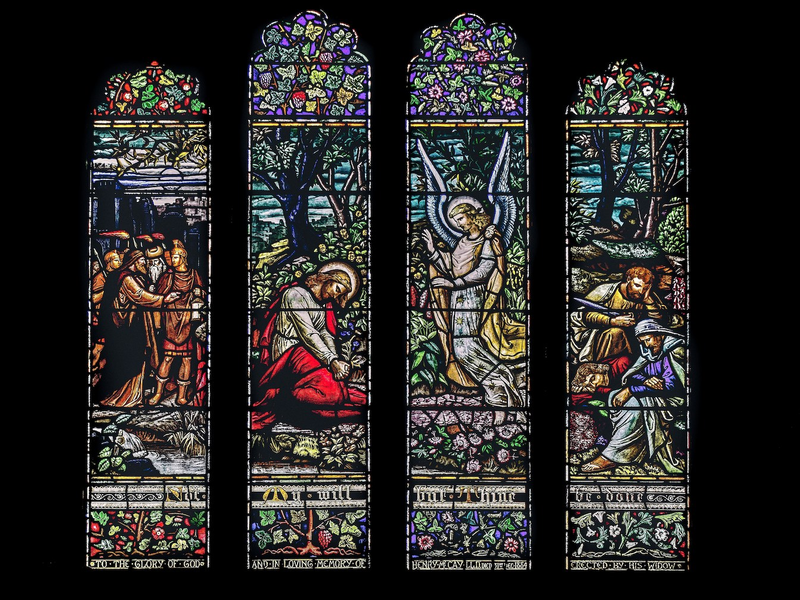
Jesus Did Not Pray to Avoid the Cross at Gethsemane

Several decades ago, a pastor (and friend) mentioned in passing at one of our regular breakfasts together that he wasn’t satisfied with the usual reading of Jesus’s prayer in Gethsemane, the usual reading being that Jesus asked the Father to avoid the Cross at Gethsemane. We turned to the passage,…

by James R. RogersMarch 19, 2024
alexandre-dinaut-alh1npgebd4-unsplash
Church Music

Holy Toledo: A Critique of Eclecticism

On May 21, 1604, the cathedral of Toledo in Spain held job interviews for the post of choirmaster, the head of music at the church. The position had been vacated when the previous occupant, Alonso Lobo, was poached by the nearby cathedral of Seville, and Toledo needed a replacement who…

by John AhernMarch 5, 2024
kelly-sikkema-ggs0_g6wi-i-unsplash
Covenant

The Docetic Covenant and Phantom Church Membership

Imagine — counterfactually: on the night he was betrayed, the Lord Jesus held up an empty hand and said, ‘This is the blood of the covenant poured out for you. Drink of it.’ But there was no cup, no wine, nothing. If there’s no sign of the covenant, is there…

by John CarpenterFebruary 27, 2024

Showing page 22 of 309

See all
See all

Jesus in the Fatherland

According to Davies and Allison, Matthew organizes the incident at Nazareth as a chiasm: A. Jesus comes to his patris and teaches in the synagogue B. People are amazed C. Where did he get these powers? Don’t we know his family? B’. People are scandalized A’. Jesus speaks about His…

May 31, 2008

Discipled scribe

Matthew quotes Jesus in 13:52 saying that a scribe “discipled by the kingdom” brings out old and new treasures. Davies and Allison note that this has sometimes been taken as a play on the author’s name: “Matthew” puns with the Greek of “disciple” ( matheteutheis ). Davies and Allison dismiss…

May 31, 2008
History

Marketing Time

Levine again: “Samuel P. Langley, who was eventually to become Secretary of the Smithsonian Institution, was the first to cash in on the growing demand for time coordination. In 1867, Langley took over the directorship of a struggling observatory in Allegheny, Pennsylvania, and quickly developed its timekeeping capabilities. He then…

May 30, 2008
History

Aromatic time

Levine writes, “The Chinese developed an incense clock. This wooden device consisted of a series of connect small same-sized boxes. Each box held a different fragrance of incense. By knowing the time it took for a box to burn its supply, and the order in which the scents burned, observers…

May 30, 2008
History

Labor saving

Robert Levine ( Geography of Time ) notes that “recent research indicates that farm wives in the 1920’s, who were without electricity, spend significantly less time at housework than did suburban women, with all their modern machinery, in the latter half of the century. One reason for this is that…

May 30, 2008
History

What Hath the Clock Wrought?

Why don’t longshoremen or sailors or assembly-line workers sing as they work? Blame it on the clock. Lewis Mumford wrote in the 1950s, “To keep time was once a peculiar attribute of music: it gave industrial value to the workshop song or the tattoo or the chantey of the sailors…

May 30, 2008

Showing page 1511 of 2212

Browse by Category

In Medias Res

Your weekly digest for all things Theopolis.

Donate

Theopolis is nearly 100% donor-supported. Consider joining us on our mission.