Theopolis Logo

Writing

Explore our collection of theological essays, biblical studies, and reflections on faith and culture.

See all
aaron-burden-h8s0pf2rcqs-unsplash
Galatians

The Restoration of the Galatians

While controversies over the writings of Paul continue in various corners of the intellectual globe, the word of God given through Paul and his scribe and all of the church’s interpreters and translators over the last two millennia is still readily available to the lofty and the lowly. Paul, as…

by Grace LangnessMarch 25, 2013

kiwihug-l4gw27xzn1i-unsplash
Deuteronomy

Law and History: How to Read the Law of Moses (Part 2)

The second in a series of studies in Deuteronomy. Deuteronomy 22:30: A man shall not take his father’s wife, and shall not uncover his father’s wing (Hebrew: kanaf ). There are a number of unusual features in this law that mark it out from the previous context, indicating that it…

by Ralph Allan SmithMarch 20, 2013
200403-moss-pilate-tease_pncfq5
History

Victimhood and the Gospel

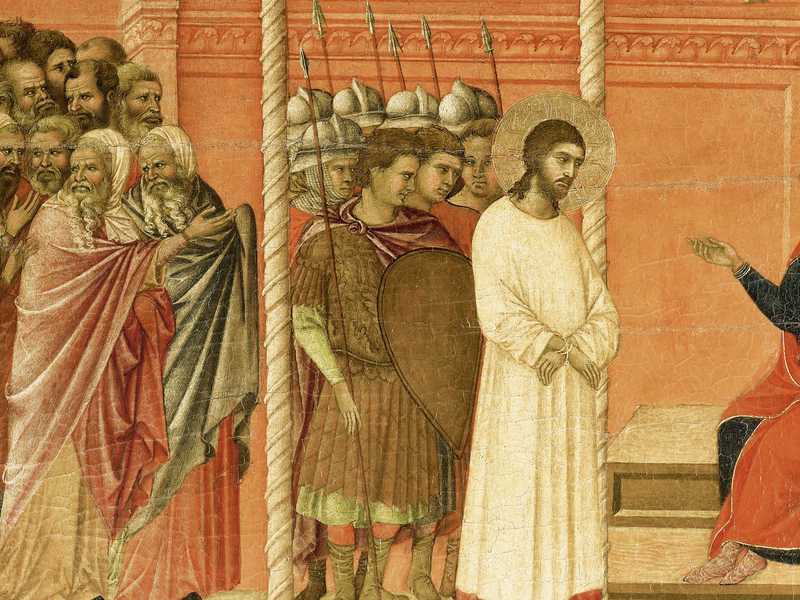
The texts of Christianity have been slowly at work, under the power of the Holy Spirit for 2000 years now. If we could be magically transported back into the world of two millennia ago, modern Americans would be shocked at the cruelty of that world. There was no concern for…

by Richard BledsoeMarch 18, 2013
aaron-burden-1ebsmyrau-s-unsplash
Luke

The Dysfunctional Family of the Gadarene Madman

The Story of the Gadarene Madman is told in all three synoptic Gospels (Matthew 8:28-34, Mark 5:1-20, Luke 8:26-37). Jesus ventures into a Gentile area when He passes over the Sea of Galilee. Upon disembarking from his boat, he is immediately met by a demon-possessed madman. Upon meeting Jesus, he…

by Richard BledsoeMarch 13, 2013
aaron-burden-1ebsmyrau-s-unsplash
Deuteronomy

Law and History: How to Read the Law of Moses

Part 1 of a multi-part series of studies on Deuteronomy 22:30-23:8. Eric Auerbach, in his classic work on Western literature, devotes his first chapter to contrasting Homer with the Bible. Of Homer, he writes of the “need of Homeric style to leave nothing which it mentions half in darkness and…

by Ralph Allan SmithMarch 12, 2013
markus-winkler-aid-xyrtlec-unsplash
Theopolis News

James Jordan in Korea, Japan

Trinity House Fellow James B. Jordan will be a speaker at an International Conference on Biblical Symbolism that will be held in Seoul on Monday, May 27 in 2013. He will address "The Importance of Biblical Symbolism and Symbolic Interpretation of the Bible." The conference will have three other speakers…

by Peter LeithartMarch 9, 2013

Showing page 197 of 309

See all
See all

Dangers of Retirement

Brian Vickers taught and researched English literature at Zurich for several decades. He is an impressive literary scholar and historian who has written on Shakespeare, rhetoric, tragedy, edited Bacon and others, and produced a nice shelf full of deeply researched books. He also seems to have run out of things…

May 23, 2008

God’s upside down kingdom

Postmillennialists like to point out that leaven doesn’t always represent evil or corruption, which is true enough. But it’s hard to avoid the fact that leaven often does represent evil. That might form some of the background to Jesus’ parable of the leaven. David Garland writes: “The parable is not…

May 23, 2008

Wheat of the world

“Sowing” is a common image in the prophets for Israel ’s return from exile. But Matthew 13:38 says that the field is not the land but the “world.” So, I think the sowing is the scattering of the seed of Israel at the time of the exile. Israel is scattered…

May 23, 2008

Parabolic timing

Typically, the parable of the tares and wheat has been understood as a description of church history. Jesus is the owner sowing the field, the devil sows tares into the church (like Judas), and for that reason the church remains a “mixed multitude” until the end of the age. The…

May 23, 2008

Universal lyre

Athanasius again: As a musician brings out “a single tune as the result, so also the Wisdom of God, handling the Universe as a lyre . . . produces well and fittingly, as the result, the unity of the universe and of its order, himself remaining unmoved with the Father…

May 22, 2008

Kinetic souls

Classical theology is often charged with dealing in static timeless categories, and there is no doubt something to this in some writers. But, not all by any means. In his account of sin, Athanasius says that sin has momentum because of the nature of the soul. The soul is “mobile”…

May 22, 2008

Showing page 1515 of 2212

Browse by Category

In Medias Res

Your weekly digest for all things Theopolis.

Donate

Theopolis is nearly 100% donor-supported. Consider joining us on our mission.