Theopolis Logo

Writing

Explore our collection of theological essays, biblical studies, and reflections on faith and culture.

See all
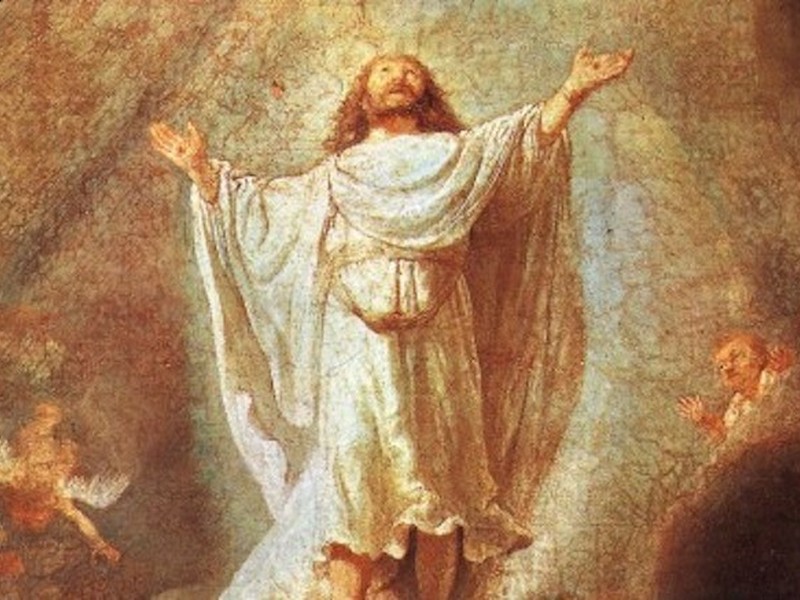
ascension-rembrandt
Ascension

On the Ascension of the Lord

Leo the Great's second sermon on the Ascension, Sermon 74 . I. The mystery of our salvation, dearly-beloved, which the Creator of the universe valued at the price of His blood, has now been carried out under conditions of humiliation from the day of His bodily birth to the end…

by TheopolisMay 25, 2017

cross-grunwald
Ecclesiology

Church on the Cross

Life, Eugen Rosenstock-Huessy says, is suffering, battle, pain, shock, failure, elation. Human beings are always torn, always riven. Much of human life, individually and col­lectively, is an effort to deal with suffering and death. By being the first Man, Jesus establishes the possibility of a different stance toward suffering and…

by Peter LeithartMay 23, 2017
e99a2313
Baptism

Baptism Impasse: Baptists vs. Presbyterians (Part 1)

Is Christian baptism given to believers only or to believers and their children? That’s the question that must be answered—but only if you’re Baptist or Presbyterian. That’s how the question is framed between these two denominations in this dispute, and it’s along these lines the debate unfolds as each side…

by Mani MarprelateMay 18, 2017
screen-shot-2017-05-01-at-1-09-10-pm
Political Theology

Philanthropic God

Again and again the liturgy of St Chrysostom calls God a lover of mankind. He is Philanthropolos Theos (man-loving God), Kurios Philanthropolos (man-loving Lord), Philopsychos (lover of the soul). Philanthropy wasn’t a Christian invention. Roman benefactors gave benefits to subordinates. What was new was the shape of philanthropy, for the…

by Peter LeithartMay 16, 2017
katharina_von_bora_900x600_213
Marriage

Marriage and Betrayal

Perhaps the most fearful of all possibilities in the world is the possibility of betrayal on the part of someone who is in a “position of trust.” This, unfortunately, is the first block in what ought to be the foundation of every marriage in the world. Every woman has a…

by Richard BledsoeMay 11, 2017
kevin-young-icmodywxuq-unsplash
City

Church in the Metropolis

It seems that denominationalism has had its day. A 2009 Barna survey found that denominational commitments have gone squishy in mainline Protestant churches, and Evangelicals don’t fare much better than the rest. After a similar survey, Ron Sellers of Ellison Research said that Protestants are as “loyal to their denominations…

by Peter LeithartMay 9, 2017

Showing page 112 of 309

See all
See all
Science

Devil’s Delusion

Of all the people I’ve seen on film recently, the one I’d most want to be is David Berlinski, whom Ben Stein interviewed extensively in his Paris apartment that reeked with sophistication and culture. Berklinski, by his own definition a “secular Jew” with no memory of Hebrew, has just published…

May 21, 2008

Obama’s subtexts

In an intriguing piece in TNR , writer Cinque Henderson - who identifies himself as one of the few remaining Clinton supporters among African-Americans - explains Obama’s use of “hoodwinked” and “bamboozled” (not the first words to spring to Obama’s lips, one would think) in the South Carolina primary: “It…

May 21, 2008
Philosophy

Flat souls

Kristeva says that contemporary culture separates affects from language, which leads to a loss of soul. Souls are empty. To help, our culture offers drugs and entertainment. Drugs flatten experience to a drone; entertainment dazzles momentarily with two-dimensional images. So do our solutions increase the problem. Flat remedies for flat…

May 20, 2008

Body/Language

Kristeva’s distinction of semiotic and symbolic is intended to overcome the dualism of traditional linguistic theories, the dualism of body and language, or matter and language. For Kristeva, the “semiotic” is the way drives are organized or “discharged” in language, and thus includes everything that is meaningful in language but…

May 20, 2008

Langue without speakers

Julia Kristeva notes that Saussure’s linguistic theory permits “linguistics to claim a logical, mathematical formalization on the one hand, but on the other, it definitely prevents reducing a language or text to one law or one meaning.” This latter point is true because by splitting the sign into signified and…

May 20, 2008

Limits of Dialectic

Desmond thinks that dialectic makes some gains: It affirms the “complex sense of unity,” appreciates mediation, critiques dualism, defends the “interplay and community of immanence and transcendence.” But dialectic cannot be the final moment of metaphysics. Why? “The problem is that if we privilege self-mediation and erect this into the…

May 20, 2008

Showing page 1516 of 2212

Browse by Category

In Medias Res

Your weekly digest for all things Theopolis.

Donate

Theopolis is nearly 100% donor-supported. Consider joining us on our mission.