
Theopolis Logo

Writing

Explore our collection of theological essays, biblical studies, and reflections on faith and culture.

See all
baptism
Baptism

Water, Spirit, and Fire, (Part 1)

John the Baptist says, “I baptize you with water for repentance, but he who is coming after me . . . will baptize you with the Holy Spirit and fire (Mt. 3:11).” Much debate surrounds the nature of this statement and what exactly it prophesies. Sacramental, baptistic, and charismatic Christians…

by Adam McIntoshAugust 16, 2016
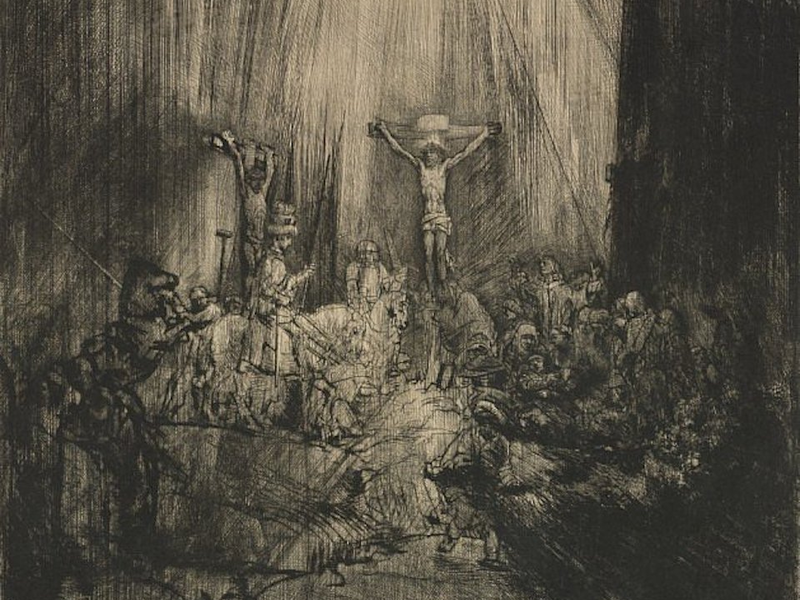
jesus-on-cross-rembrandt
Pastoral Ministry

Cruciform Pastoral Care

First Corinthians is not considered one of the Pastoral Epistles, but there is much to learn from Paul about pastoring a congregation by the way he writes to the Corinthians. Briefly, 1 Corinthians is an exposition of the cross and resurrection. In the first fourteen chapters, Paul gives an exposition…

by Bill SmithAugust 11, 2016
cross-2
Atonement

Bearing Sin

Fredrik Hagglund ( Isaiah 53 in the Light of Homecoming After Exile (Forschungen Zum Alten Testament) ) argues against the common notion that Isaiah 53 is about the atoning suffering of Yahweh’s Servant. The Servant’s suffering is vicarious (i.e., he suffers for the sins of others) but it is not…

by Peter LeithartAugust 9, 2016
screen-shot-2016-03-31-at-9-32-11-am
Biblical Theology

Brexit and the Binding of Satan: Part 2

With the inheritance of Canaan and the dividing up of this priestly territory among the tribes, Israel became a microcosm of the nations of the world. This division between Israel and the nations as a substitutionary “land and sea” would prevent another global rebellion, and thus another global judgment. ((For…

by Mike BullAugust 4, 2016
paul
Romans

Paul and James on the Meaning of Genesis 15:6

One of the more revealing aspects of Paul and James’ soteriology is the different ways they both use Genesis 15:6 (“And Abraham believed God and it was counted for him as righteousness,”) as a proof text to defend their comments about the gospel. The key observation to make is that…

by Gerald HiestandAugust 2, 2016
img_1456
Biblical Theology

Brexit and the Binding of Satan: Part 1

The disintegration of the EU is not the end of the world. It is a sign that the end of the world is anything but nigh. Western culture as we know it is dying at the hands of usurpers, traitors and prodigals. Even the worst rulers throughout Christian history at…

by Mike BullJuly 28, 2016

Showing page 127 of 309

See all
See all
Science

Devil’s Delusion

Of all the people I’ve seen on film recently, the one I’d most want to be is David Berlinski, whom Ben Stein interviewed extensively in his Paris apartment that reeked with sophistication and culture. Berklinski, by his own definition a “secular Jew” with no memory of Hebrew, has just published…

May 21, 2008

Obama’s subtexts

In an intriguing piece in TNR , writer Cinque Henderson - who identifies himself as one of the few remaining Clinton supporters among African-Americans - explains Obama’s use of “hoodwinked” and “bamboozled” (not the first words to spring to Obama’s lips, one would think) in the South Carolina primary: “It…

May 21, 2008
Philosophy

Flat souls

Kristeva says that contemporary culture separates affects from language, which leads to a loss of soul. Souls are empty. To help, our culture offers drugs and entertainment. Drugs flatten experience to a drone; entertainment dazzles momentarily with two-dimensional images. So do our solutions increase the problem. Flat remedies for flat…

May 20, 2008

Body/Language

Kristeva’s distinction of semiotic and symbolic is intended to overcome the dualism of traditional linguistic theories, the dualism of body and language, or matter and language. For Kristeva, the “semiotic” is the way drives are organized or “discharged” in language, and thus includes everything that is meaningful in language but…

May 20, 2008

Langue without speakers

Julia Kristeva notes that Saussure’s linguistic theory permits “linguistics to claim a logical, mathematical formalization on the one hand, but on the other, it definitely prevents reducing a language or text to one law or one meaning.” This latter point is true because by splitting the sign into signified and…

May 20, 2008

Limits of Dialectic

Desmond thinks that dialectic makes some gains: It affirms the “complex sense of unity,” appreciates mediation, critiques dualism, defends the “interplay and community of immanence and transcendence.” But dialectic cannot be the final moment of metaphysics. Why? “The problem is that if we privilege self-mediation and erect this into the…

May 20, 2008

Showing page 1516 of 2212

Browse by Category

In Medias Res

Your weekly digest for all things Theopolis.

Donate

Theopolis is nearly 100% donor-supported. Consider joining us on our mission.